
White Storks 'not native' and releases 'not a priority', says Natural England
Natural England has revealed that it does not believe White Storks to be native to Britain – and it views releases of the species as not a conservation priority.
In a blog published on Friday [8 May 2026] outlining its position, the government's nature agency said growing interest in rewilding projects involving storks had raised "challenging questions" about legality, ecological impacts and historical evidence for the birds' presence in England.
The post also discussed Black Stork, a species that is currently being bred at the Species Recovery Centre at Rewilding Coombeshead in Devon, alongside Black-crowned Night Heron, Black Grouse and Red-backed Shrike.
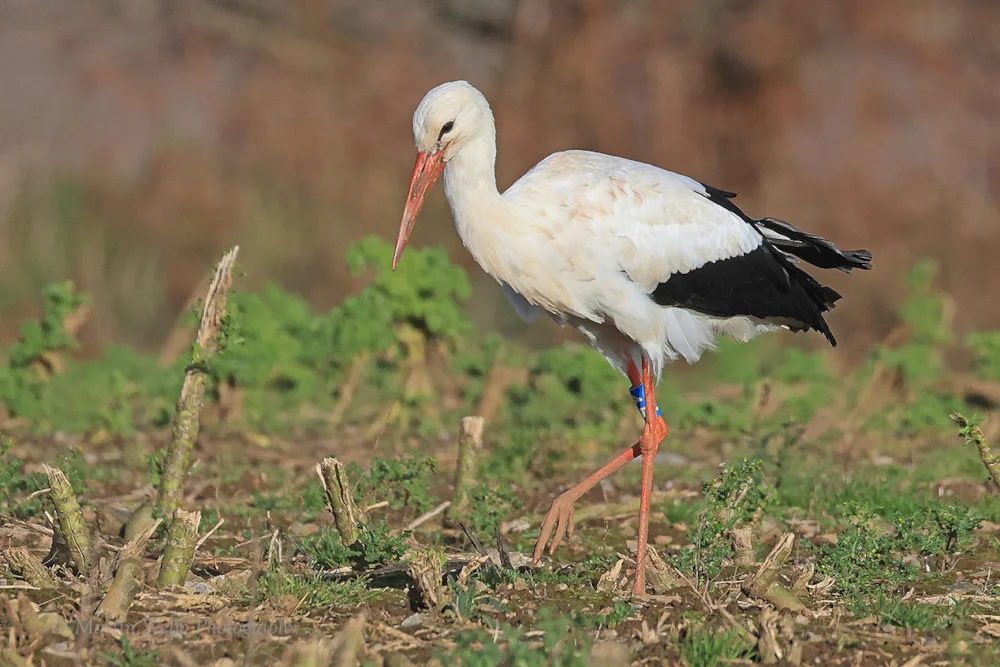
Natural England has announced that they do not believe White Storks to be native to Britain – and they view releases of the species as not a conservation priority (Martin Webb).
White Storks not native to Britain
Natural England said White Storks are classed as 'regular visitors' to Britain and are not listed under Schedule 9 of the Wildlife and Countryside Act 1981, meaning no licence is currently required to release them in England. However, Black Storks are regarded differently. The agency said the species is "neither ordinarily resident in, nor a regular visitor to Britain in a wild state", meaning any release would require a licence.
Natural England also cast doubt on claims that either species is historically native to Britain. There is only a single breeding record of White Storks in Britain, dating from Scotland in 1416, and no historic English breeding records for either species. Archaeological evidence was described as extremely limited, with only one medieval record of White Stork remains despite extensive evidence for other bird species, the post explained.
"By our definition, neither stork species was ever a native breeding bird," the blog stated.
Low conservation value
Natural England said all species releases should follow the Reintroductions and Conservation Translocations Code for England, including clear conservation need, risk assessments and long-term monitoring.
While acknowledging the public appeal of White Storks as "charismatic" birds, the agency stressed that releases are "not a priority for us". It added there is currently a "presumption against" licensing Black Stork introductions in England.
White Storks have been released at Knepp Castle Estate in West Sussex since 2016. In 2020, two pairs nested for the first time, one of them raising young, though the White Stork Project stated in 2024 that it will be a "long time" until the species is "properly established".
Similar stork schemes to follow
Several other sites have released birds, including in Cornwall, and plans are afoot for similar schemes in Derbyshire and London.
The storks have proved controversial among birders, with some feeling that there is a lack of historical breeding evidence of the species in Britain to merit an introduction programme – something reinforced by Natural England's recent public stance.
Furthermore, the possibility of unringed White Storks from the project at large in Britain has blurred the understanding of the wild status of the species.
