
Scotland looks to quieter winter refuges for Greenland White-fronted Goose
Measures to provide undisturbed feeding areas for Greenland White-fronted Goose are being reviewed in Scotland, as conservationists seek to improve the condition of birds before their spring migration.
NatureScot is assessing existing refuge schemes on Islay and Kintyre, where protected feeding areas have been supported since 2000, alongside considering whether similar provision could be made elsewhere. The work forms part of wider efforts to address declines in the bird, which breeds in western Greenland, winters in Britain and Ireland, and relies on Iceland as a staging point during migration.
Spring counts recorded some 36,000 birds in 1999 but this had fallen to 13,303 by 2025, including 8,217 in Britain and 5,086 in Ireland. The following spring saw the population recover to just under 15,000.
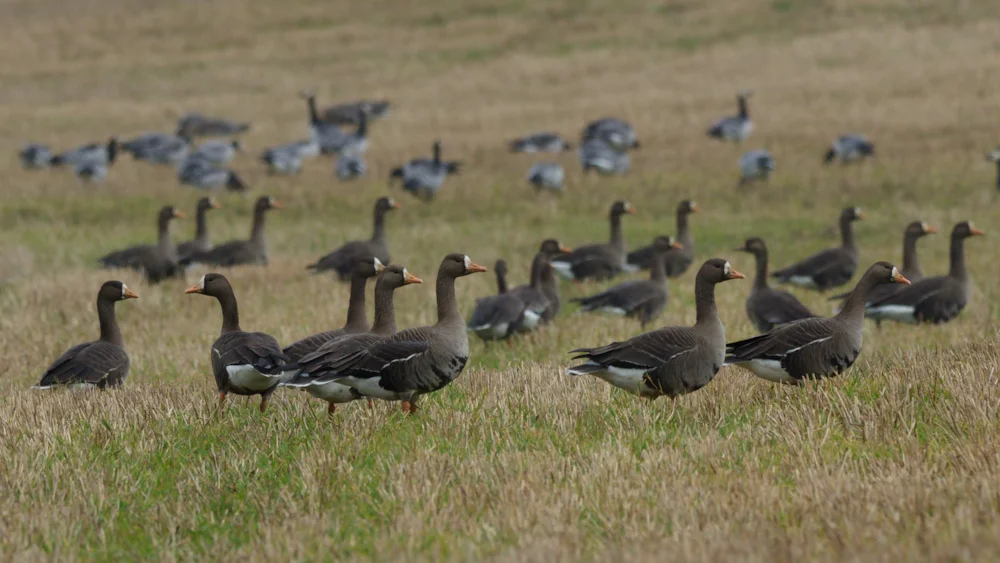
NatureScot is reviewing feeding schemes and peatland roosts as Greenland White-fronted Goose continues to face pressures across its migratory range (Dan Brown).
Long-term decline
The long-term decline has been attributed to poor breeding productivity, with changing conditions in Greenland and illegal hunting in Iceland among the suspected pressures. Scottish conservation measures focus on improving winter survival and ensuring birds can depart north in good condition.
NatureScot Goose Policy Manager Rae McKenzie said: "While we can't control many of the factors behind this decline, Scotland does play an important role in the conservation of these geese."
Alongside feeding areas, the agency plans to target peatland restoration to benefit roost sites in the Hebrides and western Scotland, while ensuring work is timed to avoid disturbance. Agricultural support could also help maintain suitable grassland.
Raft of proposals
The proposals include reducing accidental shooting, encouraging reporting of incidents and highlighting the population's conservation status to planning authorities, particularly in Kintyre where wind farm development is a concern.
No new protected areas or numerical population targets have yet been announced.
Read more about the plight of Greenland White-fronted Goose in the February 2026 issue of Birdwatch.
