
Saimaa Ringed Seal becomes full species
Europe has gained a new species of pinniped following the recent split of Saimaa Ringed Seal, a freshwater seal found exclusively in Finland's Lake Saimaa.
The International Society for Marine Mammalogy has accepted findings from Finnish and international researchers that the animal, long regarded as a subspecies of Ringed Seal, should be recognised as a distinct species.
Researchers from the Universities of Helsinki and Eastern Finland, the University of Copenhagen, Tokyo Museum of Natural History and the Natural Resources Institute Finland analysed the genetic and morphological traits of almost all Ringed Seal populations worldwide.
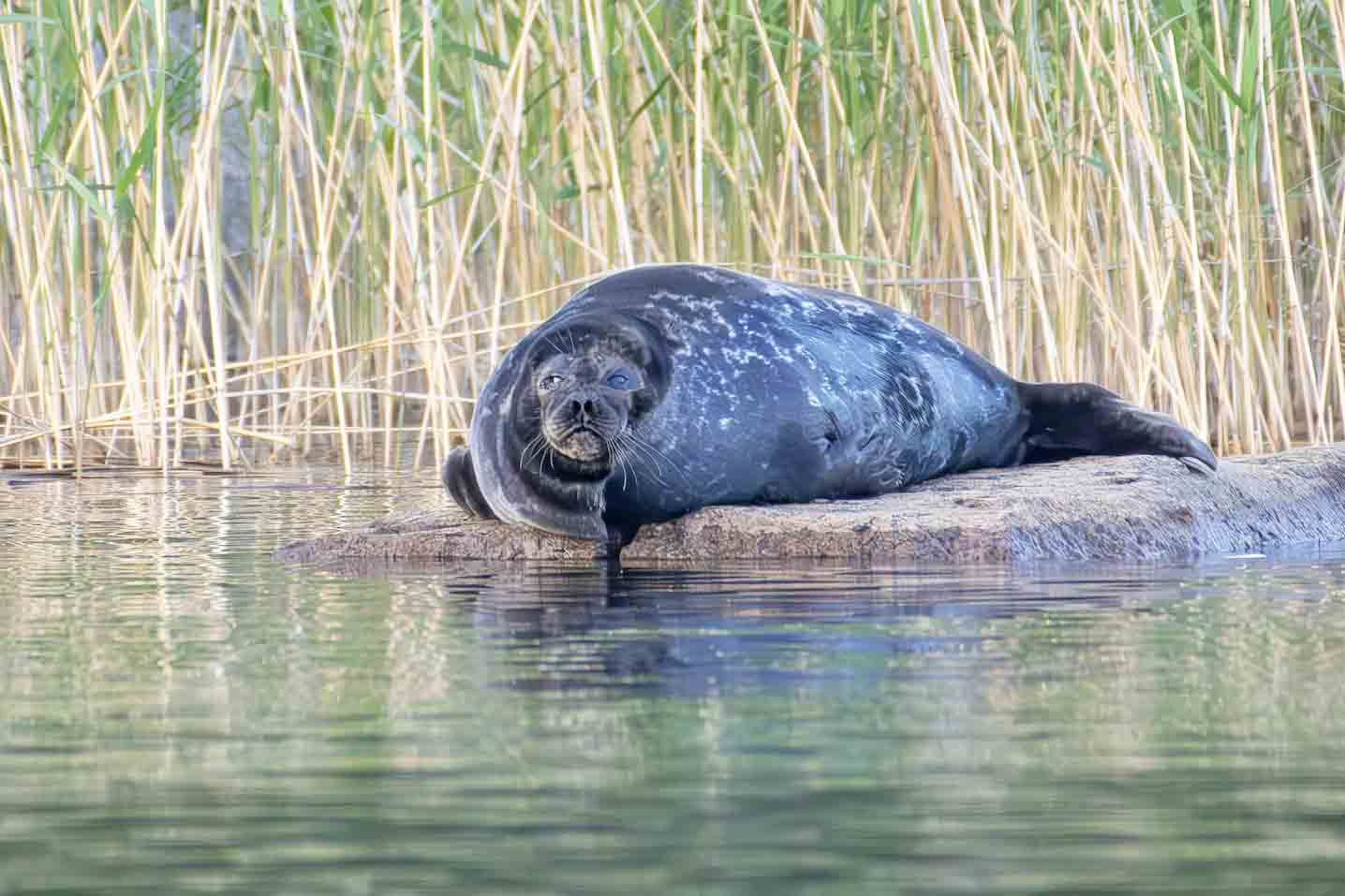
An adult Saimaa Ringed Seal hauled out on a lair in Lake Saimaa (Ed Stubbs).
Different diet and deep divergence
Their results, published in Proceedings of the National Academy of Sciences, show that Saimaa Ringed Seal diverged from other Ringed Seals more than 60,000 years ago – long before Lake Saimaa itself formed some 10,000 years ago. Genetic evidence suggests the species spread to the region from the east during the Ice Age, mixing with western Ringed Seals along the way.
Detailed examination also revealed unique dietary adaptations. While marine Ringed Seals feed on fish and crustaceans such as krill, filtering water through specialised teeth, Saimaa Ringed Seal's dentition is optimised solely for fish. Differences were also found in its tongue and digestive tract, supporting its long independent evolutionary history.
The change elevates its scientific name from Pusa hispida saimensis to Pusa saimensis.
Newly split but still threatened
The reclassification highlights the seal's ecological uniqueness and adds urgency to its conservation. Once numbering only a few hundred individuals, the population has grown to some 500 through sustained protection efforts and, this spring, a record 111 pups were born. However, it remains under threat from climate change, human activity and habitat loss.
"This is a truly unique relic – the last representative of the Ringed Seals of the ancient glacial lakes," said Dr Mervi Kunnasranta of the University of Eastern Finland. "It's sobering to think how close we came to losing it forever."
