
Red-headed Bunting moved to Category A of British list
Red-headed Bunting has been moved to Category A of the British list, the British Ornithologists' Union Records Committee (BOURC) has announced today [18 June 2024], with a bird in Shetland in 2010 becoming the first wild record of the species in Britain.
The bunting, a migratory breeder that nests in Central Asia and winters in the Indian Subcontinent, was previously languishing in Category D, with a long history of escaped birds in Britain.
The 2010 bird in question, present on Out Skerries from 2-8 October, was identified in the field as a Black-headed Bunting and accepted as such by the BBRC.
The addition of Red-headed Bunting takes the British list to 635 species.
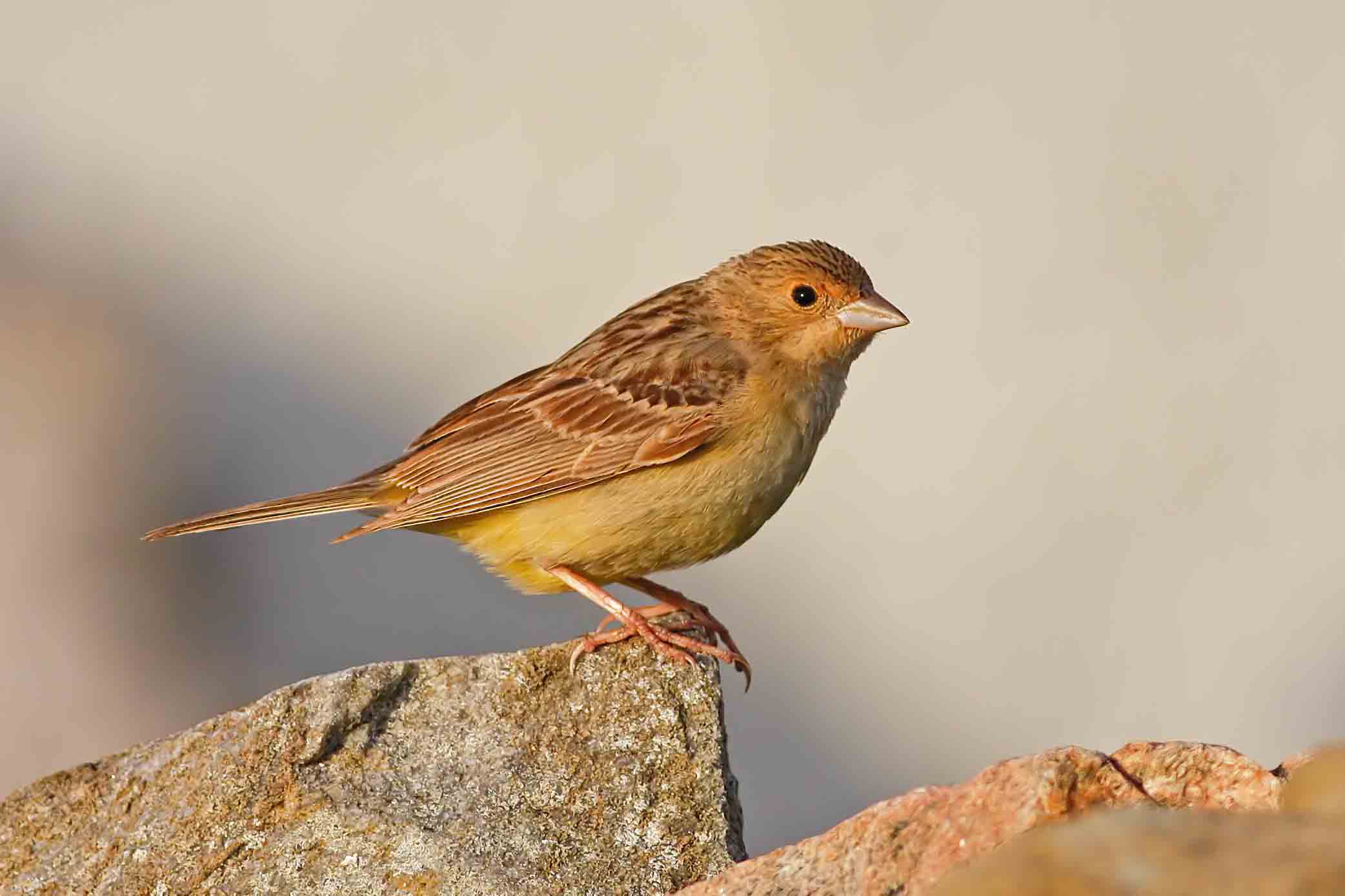
The 2010 Out Skerries Red-headed Bunting, which was originally believed to be Black-headed before recently being reidentified. It has become the first accepted record for Britain (Chris Turner).
Norwegian review
However, the Norwegian Rarities Committee later undertook a review of the status of Red-headed Bunting in Norway and, using plumage characteristics elucidated by Tor Olsen and confirmation from genetic evidence, demonstrated that Red-headed Bunting had occurred in Norway in October 2017. Olsen, while undertaking his research, noticed that the bunting in Shetland in 2010 was actually a first-calendar-year male Red-headed Bunting and not a second-calendar-year female Black-headed Bunting.
This reidentification was later independently supported by an analysis of sound recordings of flight calls, and on review by BBRC the identification as Red-headed Bunting was accepted unanimously.
Now, the BOURC has rubber-stamped the occurrence and the Out Skerries bird subsequently becomes the first accepted Category A record of Red-headed Bunting in Britain.
Central Asian vagrant
Red-headed Bunting has a range and migration pattern similar to other species already on the British list, such as Long-tailed Shrike, Sykes's Warbler and Masked Wagtail.
However, unlike those species, Red-headed Bunting has a long history of escaped individuals in Britain as it was previously held commonly as a cagebird, hence many records being placed in Category D. Many known escaped Red-headed Buntings have occurred in spring at migration traps and this precluded the determination of the occurrence of genuine wild vagrants in Britain.
Previously, Red-headed Bunting was added to the British List based on a second calendar year male on North Ronaldsay, Orkney, on 19 June 1931. However, following a BOURC species review in 1971, it was moved to Category D of the British List at which time it was considered that most, if not all, of the numerous records here were escaped cagebirds.
Category D to A
In 2010, later records of Red-headed Bunting were reviewed by BOURC and the species was retained on Category D. At this time, Keith Vinicombe demonstrated a correlation between the cessation of the legal importation of Red-headed Buntings to Europe and an immediate decline in records of the species in Britain. The frequency of occurrences has rapidly decreased since the ban and there are only three additional records since the turn of the century: at Baldhoun, Isle of Man, on 16-17 June 2001, Cattawade, Essex, on 21 May 2002; and Monreith, Dumfries and Galloway, on 8-9 June 2004.
Red-headed Bunting is still listed as held in captivity in north-west Europe and the last proven escape was in April 2014 in the Netherlands. That the 2010 Shetland record was a first-calendar-year bird in autumn at a location which regularly hosts Asian vagrants resulted in it unanimously considered to be wild by BOURC.
On 21 October 2023, a first-winter male Red-headed Bunting was found at Flamborough Head, East Yorkshire. It lingered until 29 November 2023 and is expected to be accepted as a wild bird.
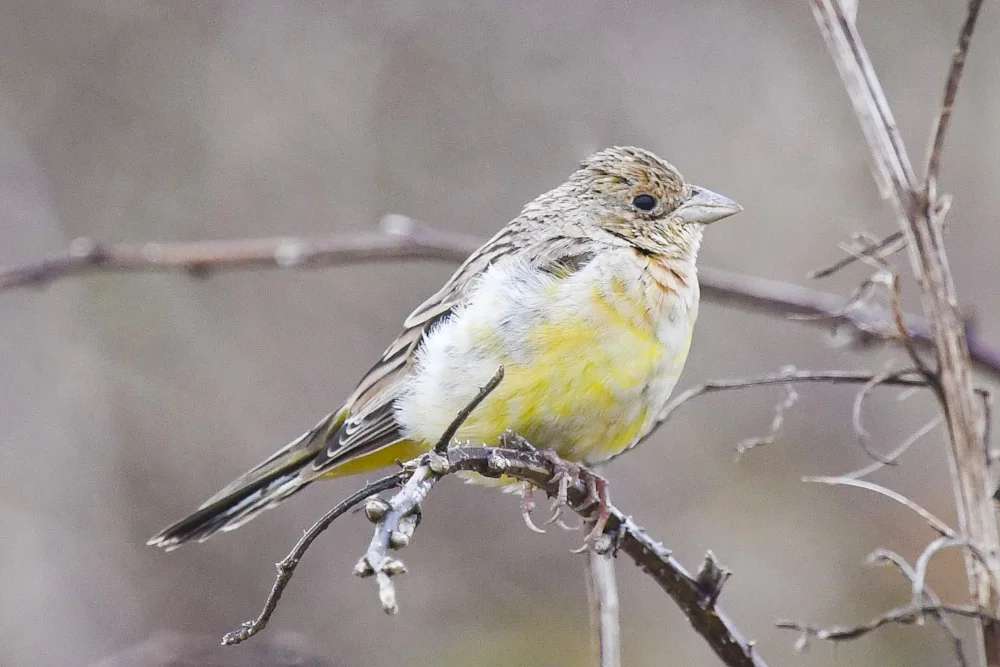
This Red-headed Bunting at Flamborough Head was widely twitched in autumn 2023 (Andy Hood).
