
Pairs down, chicks up: 2026 Farnes Puffin season revealed
The number of Puffins breeding in the Farne Islands has fallen by 12% in a year, despite improved productivity among monitored burrows, according to the National Trust's latest seabird census.
The 2026 count recorded 33,939 breeding pairs, down from 38,559 in 2025 and almost 23% lower than in 2018. However, monitoring of 132 occupied burrows on Brownsman and Inner Farne recorded an average of 0.89 chicks fledging per burrow, compared with 0.78 last year and 0.51 in 2024.
The contrasting figures highlight the difference between breeding-population size and breeding success among birds that return to the islands. The census follows a winter marked by three severe North Atlantic storms, during which more than 38,000 seabirds were stranded along the Atlantic coasts of France, Spain and Portugal, with hundreds of Puffins also washing ashore in south-west England.
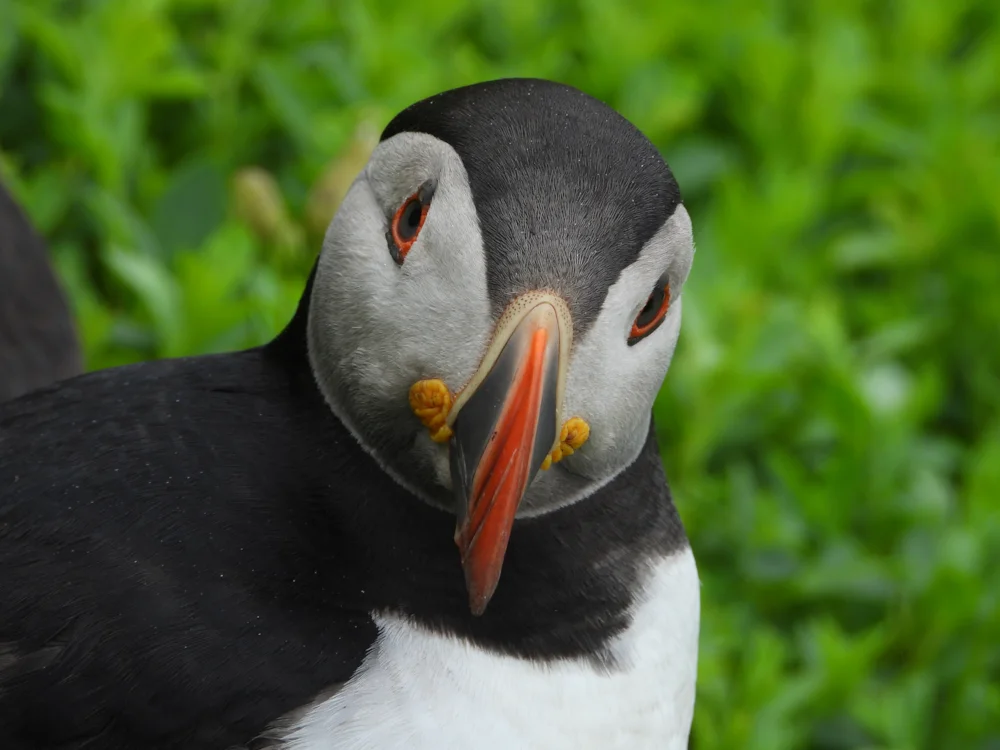
The 2026 Puffin census in the Farnes recorded fewer breeding pairs, although burrows on Brownsman and Inner Farne had their best fledging success in three years (Mick Sherwin).
Little respite
National Trust senior ranger Sophia Jackson-Chaytor said: "When severe storms come one after another there can be very little respite."
Other seabirds also recorded mixed results. European Shag numbers fell from 96 to 56 breeding pairs, while Northern Fulmar declined from 235 to 186 pairs. Razorbill increased from 408 to 478 pairs, while Guillemot numbers fell from 44,059 to 39,059 individuals. Black-headed Gull, recovering from the impacts of avian influenza, increased from 128 to 198 pairs.
Inner Farne held 20,323 Puffin pairs, slightly higher than last year's approximately 20,000, although still well below the 26,552 recorded in 2024.
