
New GPS tracking reveals African vulture migration from northern Morocco
A major tracking initiative from the vulture rehabilitation centre at Jbel Moussa, Morocco, has shed new light on the movements of African vultures into Europe, thanks to GPS tags placed on individuals of two species.
The work is being carried out by AMPOVIS (Association Marocaine de Protection des Oiseaux et de la Vie Sauvage) in partnership with Moroccan forestry authorities and international conservation organisations.
Between April and August 2025, AMPOVIS equipped 11 Rüppell's Vultures with GPS transmitters as part of a broader conservation and scientific monitoring programme at the Jbel Moussa Vulture Rehabilitation Centre (CRV).
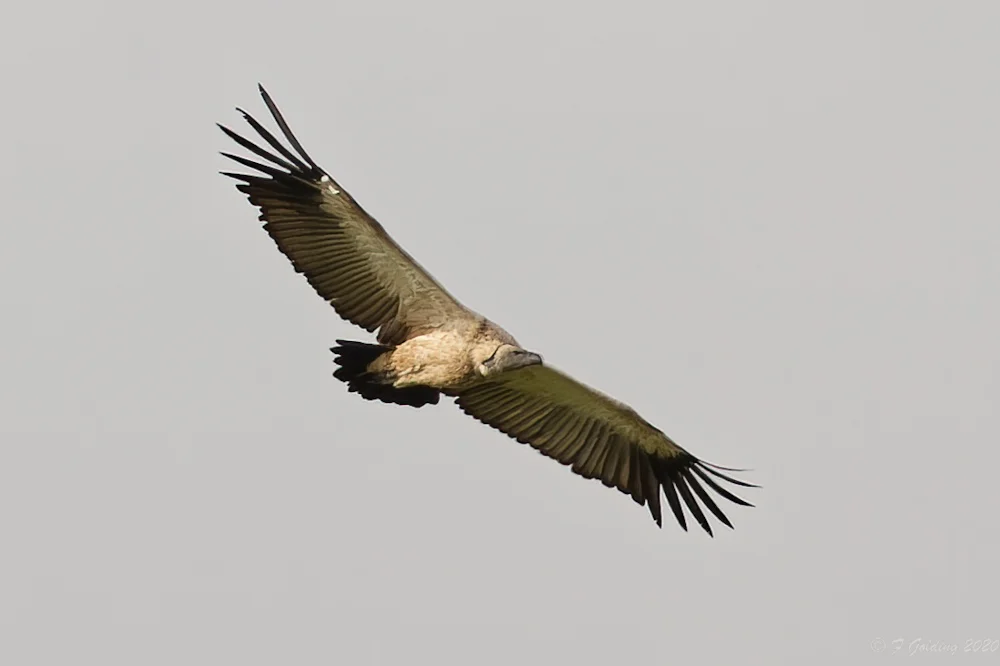
GPS-tracking Scientific of Rüppell's and White-backed Vultures (pictured) in northern Morocco has highlighted critical movement patterns (Frank Golding).
Understanding vulture movements into Europe
This effort builds on earlier tagging work and aims to map dispersal routes, migration into Europe, and movement within the Sahel.
In the same campaign, AMPOVIS tracked a two-year-old White-backed Vulture, using a GPS device donated by the Andalusian regional government.
This is part of a broader international effort: previous studies have documented tagged White-backed Vultures making long-distance movements from Morocco into Spain and even deeper into West Africa.
Significant conservation implications
The GPS data are already producing insights: several Rüppell's Vultures appear to traverse the Strait of Gibraltar, as well as seasonal shifts between North Africa and Sahelian regions.
These patterns reinforce the role of Jbel Moussa not only as a rehabilitation hub, but also as a vital migratory corridor for African vulture populations.
The conservation implications are significant. Rüppell's Vultures are Critically Endangered on the IUCN Red List, threatened by poisoning, habitat loss and persecution across their range.
Better understanding of their movements will help target protection efforts, refine threat assessment and guide cross-border collaboration.
