
Artificial-nest scheme offers fresh hope for House Martin
A major scheme to provide artificial nest sites for House Martin is set to expand across Hampshire, with up to 900 nest cups planned as part of efforts to support the declining hirundine.
The project follows encouraging results from previous installations and will provide free artificial nests at selected homes, schools and businesses, helping compensate for the loss of suitable nesting opportunities. More than 500 House Martin nest sites were recorded across Hampshire during 2025.
House Martins traditionally construct their distinctive mud nests beneath the eaves of buildings, but modern construction methods and changes to older properties can reduce the availability of suitable sites. Artificial nest cups offer birds a ready-made alternative and can be particularly valuable where colonies have previously disappeared.
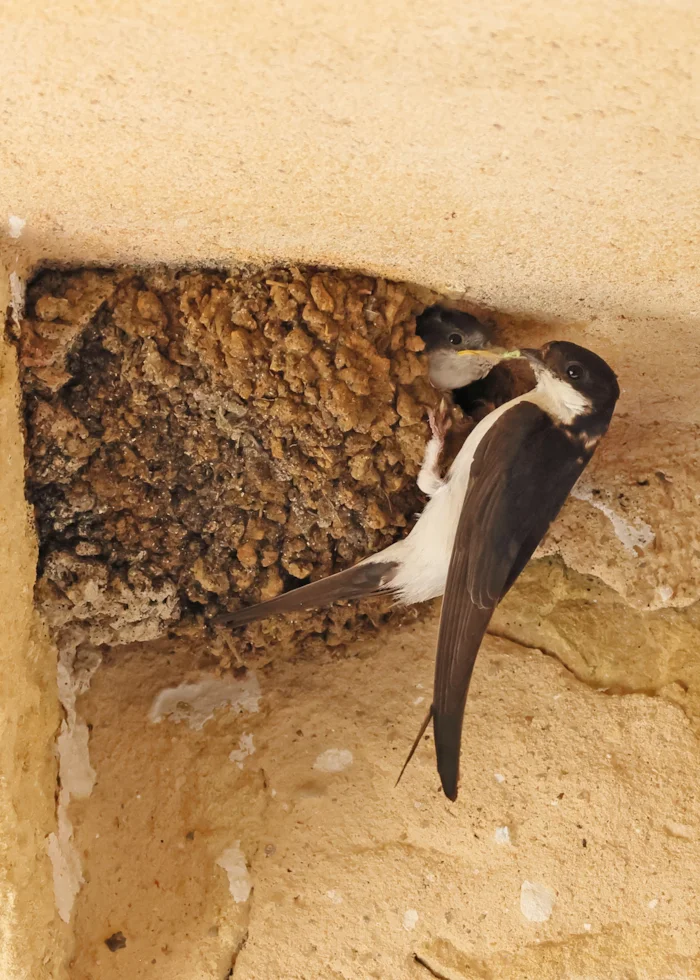
Hundreds of artificial nest cups are set to be installed across Hampshire as a conservation initiative expands efforts to support House Martin (Nigel Gardener).
British House Martin decline
The species has undergone substantial declines in Britain, making practical conservation measures increasingly important. Although the causes are likely to be complex, the availability of nesting sites is one factor that can potentially be addressed at a local level.
The Hampshire initiative is expected to build on previous work demonstrating that artificial nests can be readily adopted by House Martins. By installing cups in suitable locations, organisers hope to encourage new colonies while strengthening existing populations.
The scheme also provides an accessible opportunity for householders and communities to become directly involved in conservation. Unlike many wildlife projects requiring large areas of habitat, artificial nests can be installed on individual buildings, potentially creating a network of nesting opportunities across towns and villages.
