
Amur Falcon flies 5,700km non-stop from India to Somalia
A female Amur Falcon has flown approximately 5,700 km non-stop from north-east India to Somalia, completing the journey in 101 hours, according to satellite-tracking data reported by The Times of India.
The bird, named Alang, weighs 150 g and crossed vast stretches of open water during the four-day flight without landing. A second tagged bird, an adult male called Apapang, had covered approximately 4,100 km in 95 hours and was still over the Arabian Sea at the time of the latest signal on 21 November.
Both birds were fitted with lightweight satellite tags by researchers from the Wildlife Institute of India. Their journeys began in Tamenglong district, Manipur, following a 25-day stop-over during which they were reported to have fed heavily on termites, building up energy reserves ahead of their long-distance migration.
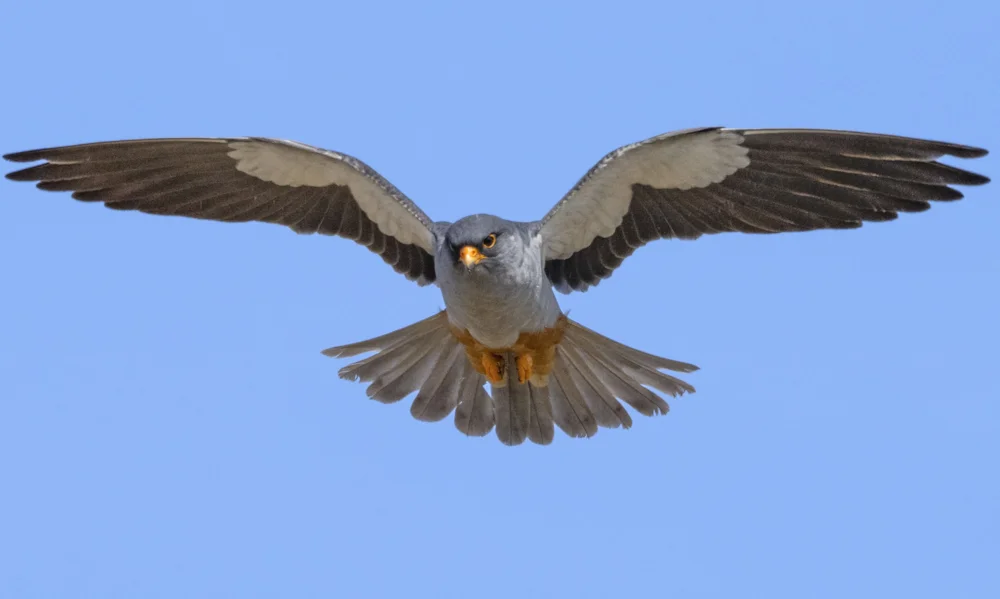
Satellite tracking has revealed an extraordinary four-day sea crossing by an Amur Falcon (Brian Meredith).
Long-distance migrants
Amur Falcons undertake an annual migration between breeding grounds in eastern Russia, Mongolia and China, and wintering areas in southern and eastern Africa. North-east India provides an important staging area in autumn, where the birds gather to exploit seasonal insect abundance before embarking on their sea crossing.
Wind conditions are thought to play a significant role in shaping their migration routes and flight efficiency. Research published in August 2026 highlighted the influence of air currents on the species' movements, although much remains unknown about their navigation and selection of stop-over sites.
Previous tracking has revealed that the two birds travelled more than 20,000 km across 23 countries during round-trip migrations, returning to Manipur in October.
Conservation efforts in the region have also been important. Amur Falcons were historically hunted in parts of north-east India, but community-led initiatives involving local people, researchers and forest officials have helped protect migrating birds and traditional roost sites.
