
We're well and truly into the heart of autumn now, a time of year when it doesn't take much for things to truly kick off. This season has felt rather parched as far as easterly winds and Siberian vagrants are concerned so far. However, the action continued out west, while the latest 'Challenger Expedition' returned from the Whittard Canyon region of the South-West Approaches with jaw-dropping news.
The Challenger 1 returns
Scott Reid's pioneering 'Challenger Expeditions' to the British edge of the European continental shelf, 300 km south-west of Cornwall and Scilly, have changed the status of Madeiran Storm Petrel in Britain over the past couple of years. When the Challenger team returned into signal range from their third trip on 23 September, many would have expected that species to be the headline news once again. However, they dropped an even bigger bombshell: a sighting of a White-faced Storm Petrel during the evening of 19th. It is the first modern-day record for Britain; the species currently resides on Category B courtesy of a wrecked bird collected alive by a stream on Colonsay, Argyll, on 1 January 1897.
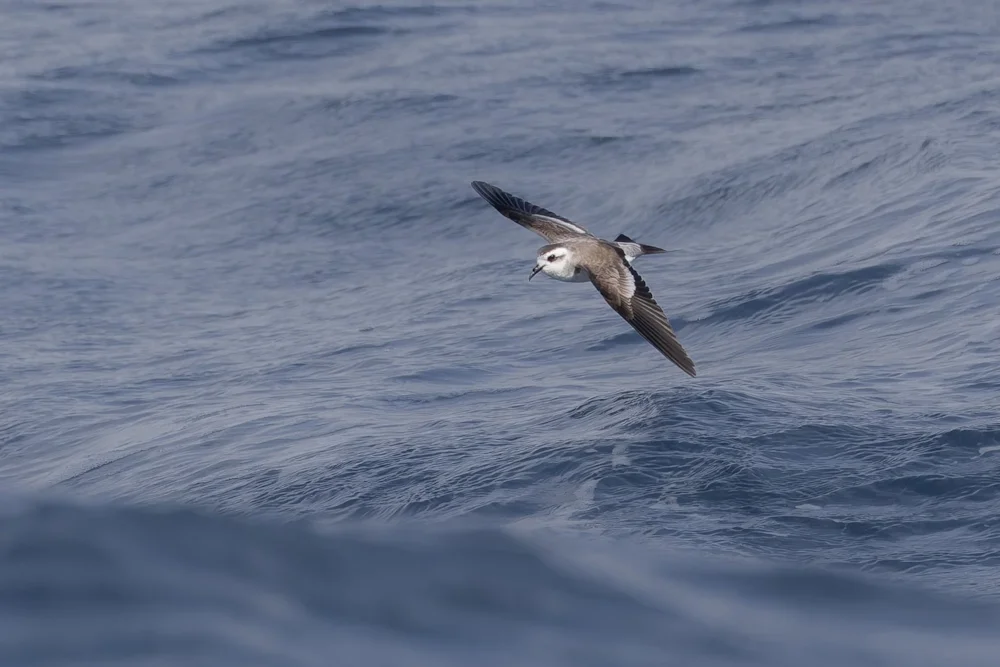
White-faced Storm Petrel, at sea, Britain (Scott Reid).
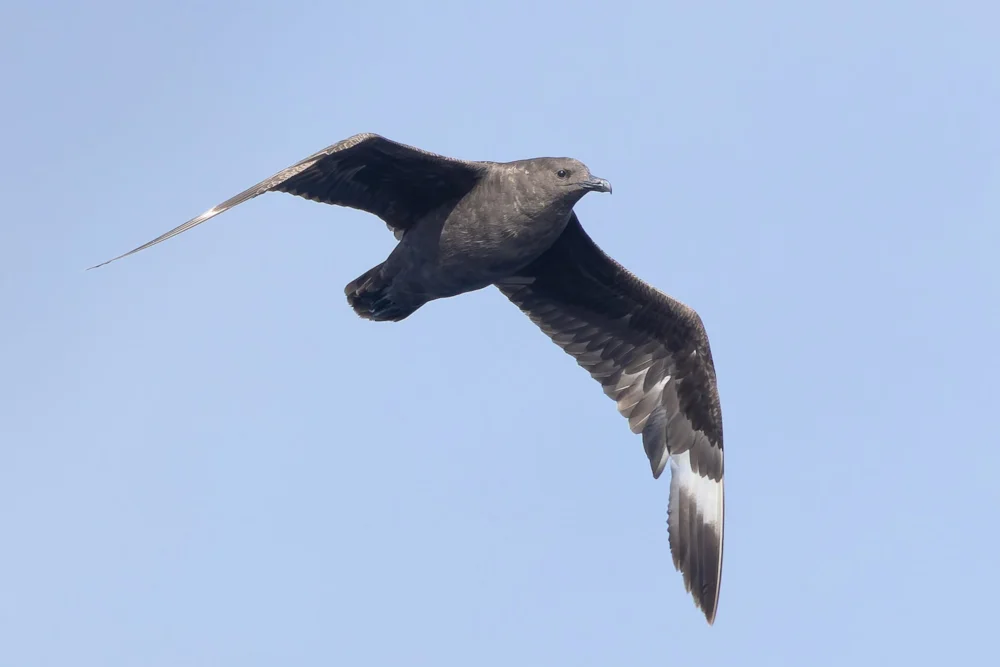
South Polar Skua, at sea, Britain (Scott Reid).
It was the headline act of what is surely the most thrilling 90 minutes of seabirding ever experienced in British waters, with South Polar Skua, Madeiran Storm Petrel, Desertas-type petrel, Barolo Shearwater and Scopoli's Shearwater all reduced to 'also-rans'! Additional sightings during their four days over Explorer and Dangaard Canyons included a further two Barolo Shearwaters (on 20th and 21st), 102 Wilson's Storm Petrels and even two European Turtle Doves, while there were also sightings of Leatherback Turtle, Northern Bottlenose Whale, three Fin Whales and a swordfish species.
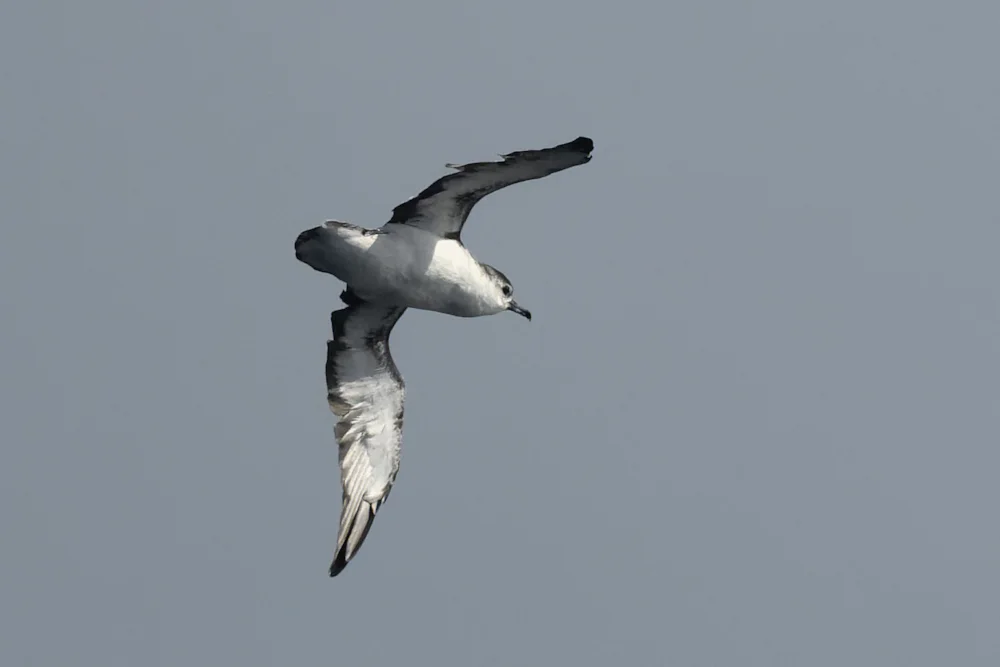
Barolo Shearwater, at sea, Britain (Thomas Willoughby).
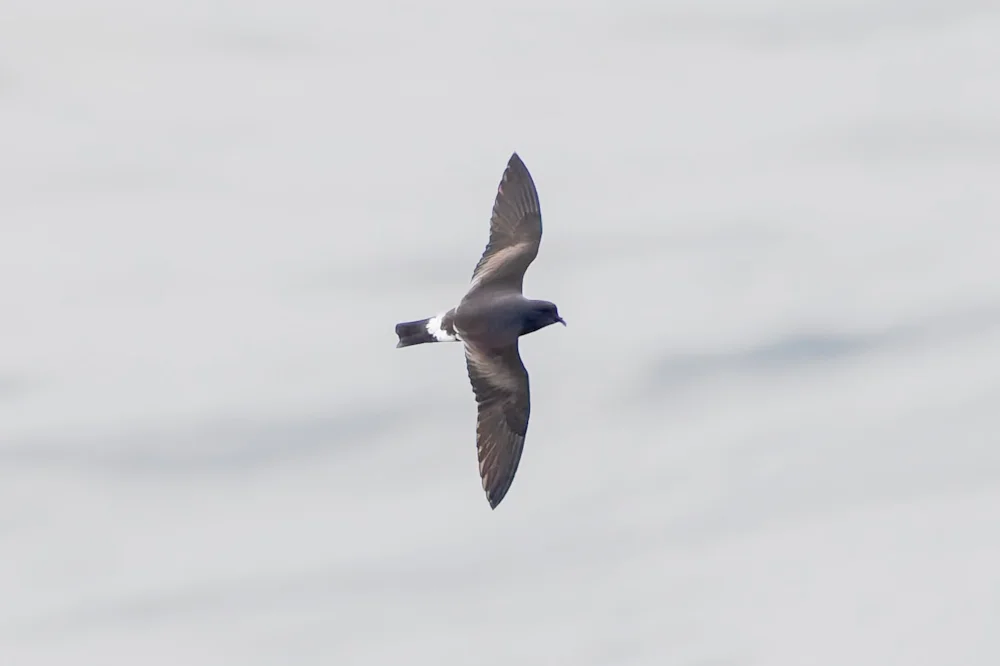
Madeiran Storm Petrel, at sea, Britain (Scott Reid).
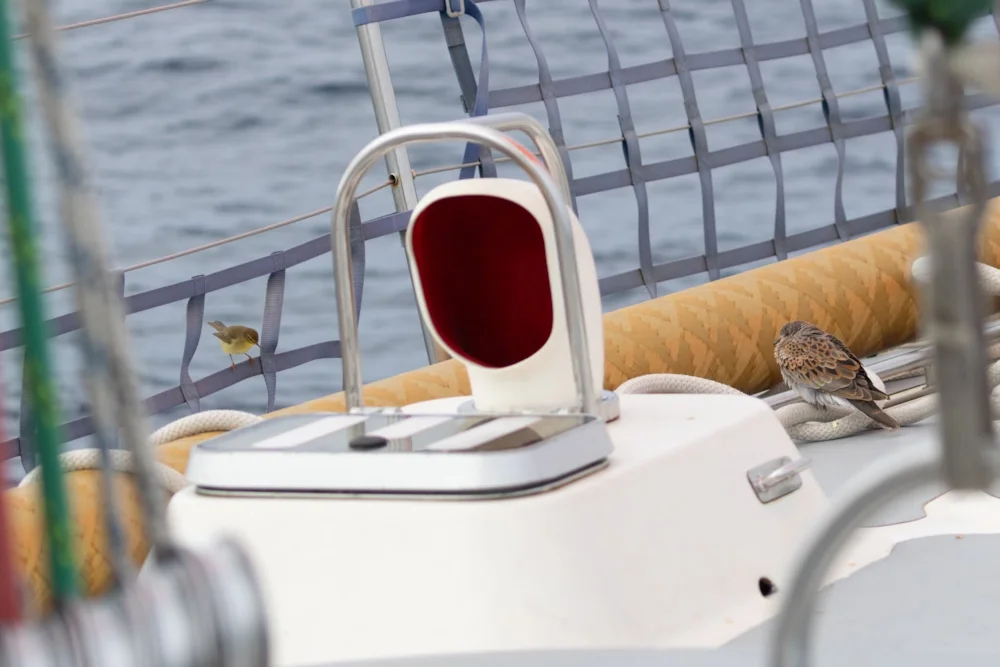
European Turtle Dove (right bird) with Willow Warbler, at sea, Britain (Scott Reid).
Dursey delight and Ayrshire American
Western Black-eared Wheatear has been in high demand ever since the split from Eastern Black-eared Wheatear in 2019 – in fact, it hasn't been seen anywhere in Ireland or Britain since one on North Ronaldsay, Orkney, in 2018. For British birders, the last twitchable individual was even further back on St Mary's, Scilly, in 2010. There was plenty of attention, therefore, when a first-winter male was found at the western tip of Dursey Island, Co Cork, on 23rd. It is the latest find in an incredible run for the island this September, following Ireland's second Blackburnian Warbler from 13-17th and a Swainson's Thrush on 15th.
The Irish Rare Birds Committee recently completed a review of all black-eared wheatear records in Ireland, following the split into two species. It saw three assigned to Western Black-eared Wheatear (Co Wexford in 1916 and 2010, and Co Cork in 1992), two assigned to Eastern Black-eared Wheatear (Co Wexford in 1987 and 2023) and one not confirmed to species level (Co Wexford in 1997).
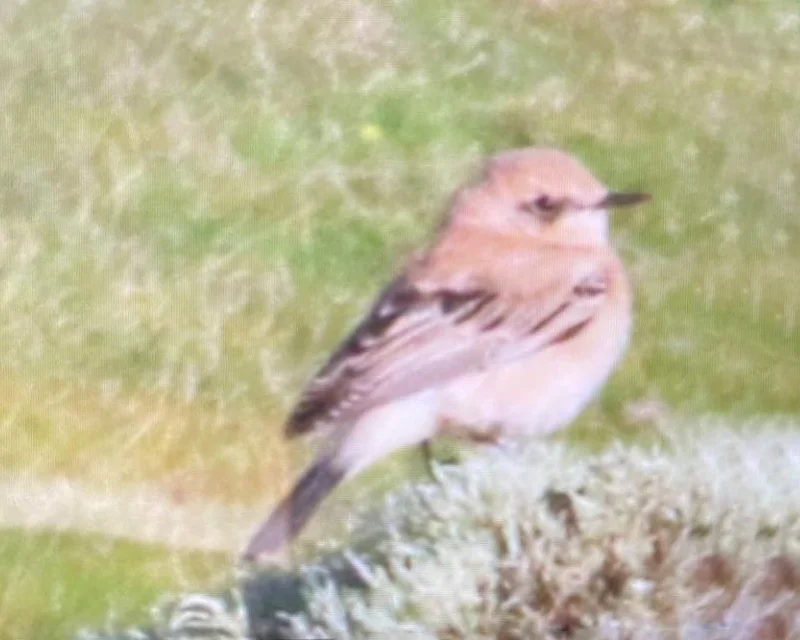
Western Black-eared Wheatear, Dursey Island, Cork (Noel Linehan).
The first American Pipit for the Scottish mainland was an excellent find at Saltcoats Harbour, Ayrshire, on 22-23rd. A further four put in appearances on Scottish isles: two on South Uist, Outer Hebrides, and singles on Fair Isle, Shetland, and North Ronaldsay, Orkney, while another continued on Skellig Michael, Co Kerry. Other passerine arrivals from the New World consisted of a Swainson's Thrush on Inishbofin, Co Galway, from 21st and a Red-eyed Vireo on Lundy, Devon, on 26th.
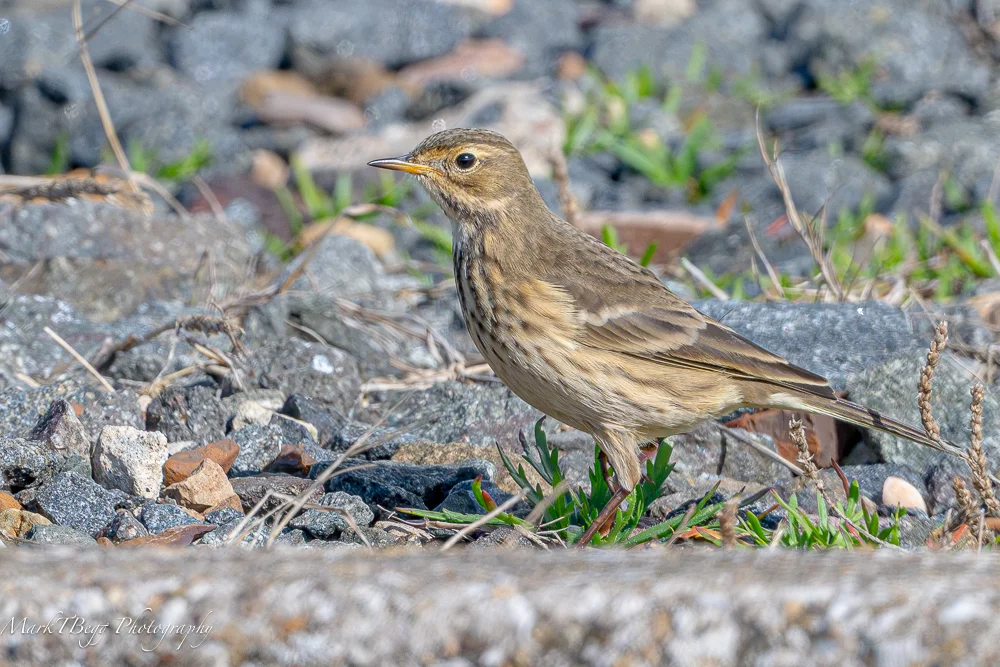
American Pipit, Saltcoats, Ayrshire (Mark Begg).
Managed to download a few shots from a very successful trip to Inishbofin Island, County Galway
— Born2Bird (@leturkbirder) September 23, 2026
My best shots of the Swainson's Thrush attached@BirdGuides pic.twitter.com/ON9UuSMWCE
A county-first Hume's Leaf Warbler at Helvick Head, Co Waterford, on 26th is only the sixth recorded in Ireland and the earliest-ever autumn occurrence there. Optimistically thinking, a Siberian vagrant from as far east as Central Asia arriving in Ireland so early could be seen as a positive sign for the rest of the autumn. A Booted Warbler was just reward for a day's birding at Zennor, Cornwall, on 23rd; other new warblers included a male subalpine warbler on St Mary's, Scilly, and a Greenish Warbler at Galley Head, Co Cork. Sadly, the Eastern Olivaceous Warbler on Gugh, Scilly, was found dead on 25th.
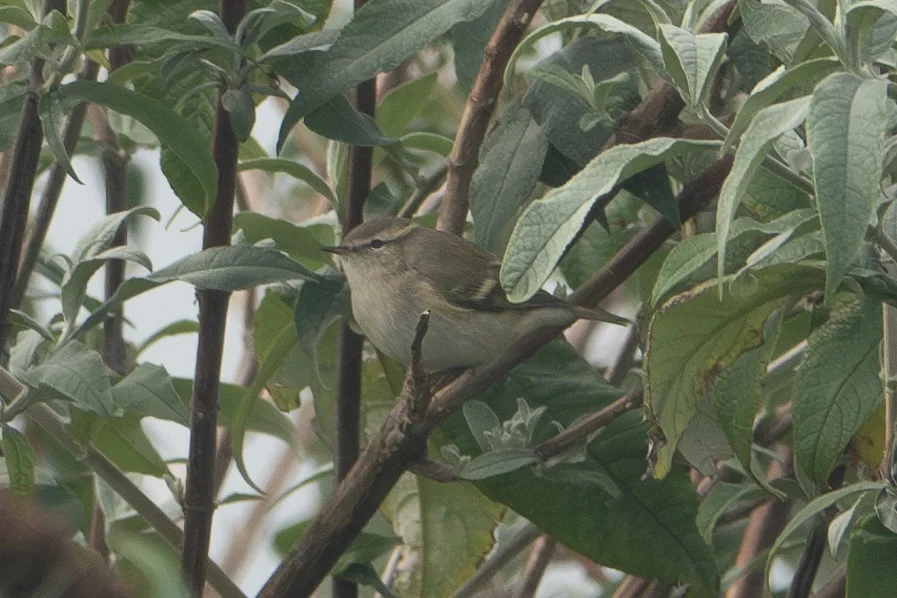
Hume's Leaf Warbler, Helvick Head, Waterford (Daniel Weldon).
My son James found this booted warbler in Zennor, Cornwall last thing today. Top find! #cornwallbirding
— Niall Machin (@niallmachin1.bsky.social) 23 September 2026 at 22:07
[image or embed]
The first Siberian Stonechat of the autumn at The Naze, Essex, on 26th appeared a close match for the West Siberian maurus subspecies. Other new finds were a Red-throated Pipit over Portland, Dorset, a Woodchat Shrike in Highland and a Rosy Starling in Anglesey, plus three Citrine Wagtails, four Red-backed Shrikes, five Hoopoes and 10 Wrynecks.
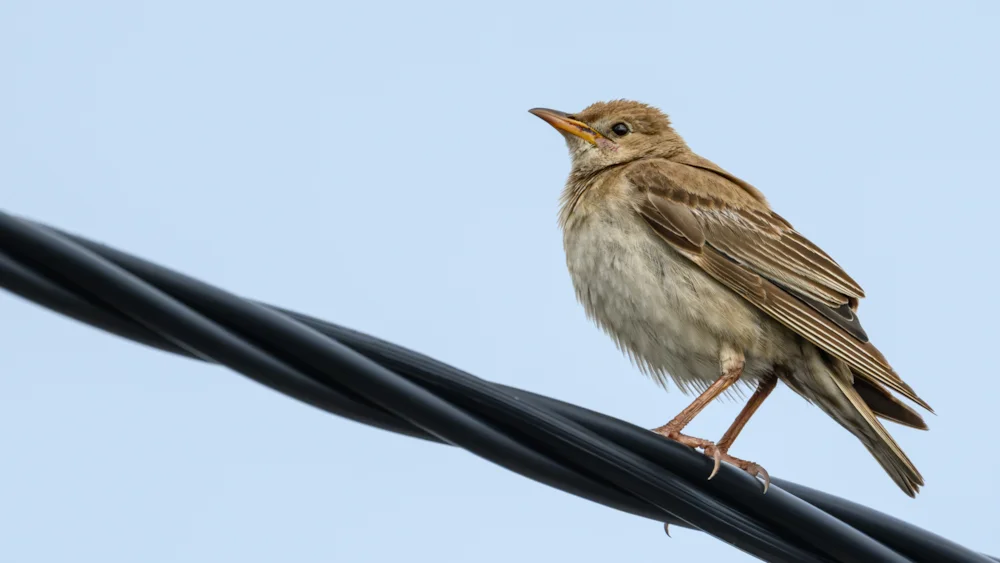
Rosy Starling, Moelfre, Anglesey (J Martin Jones).
Shetland 2026 - Day 2
— Paul Baker (@BakerBoySOG) September 26, 2026
Finally connected with the Citrine Wagtail at Quendale this afternoon at the 4th attempt.
Other highlights: Buff-breasted Sandpiper nr Fleck, Pied Fly, 2 Merlin, Sparrowhawk, 4 Slav Grebes, ♂️ Scaup, Jack Snipe & a Minke Whale 🐋 - & my luggage arrived 😊 pic.twitter.com/Z5pwJqGd0T
Citrine Wagtail, Quendale, Shetland (Paul Baker).
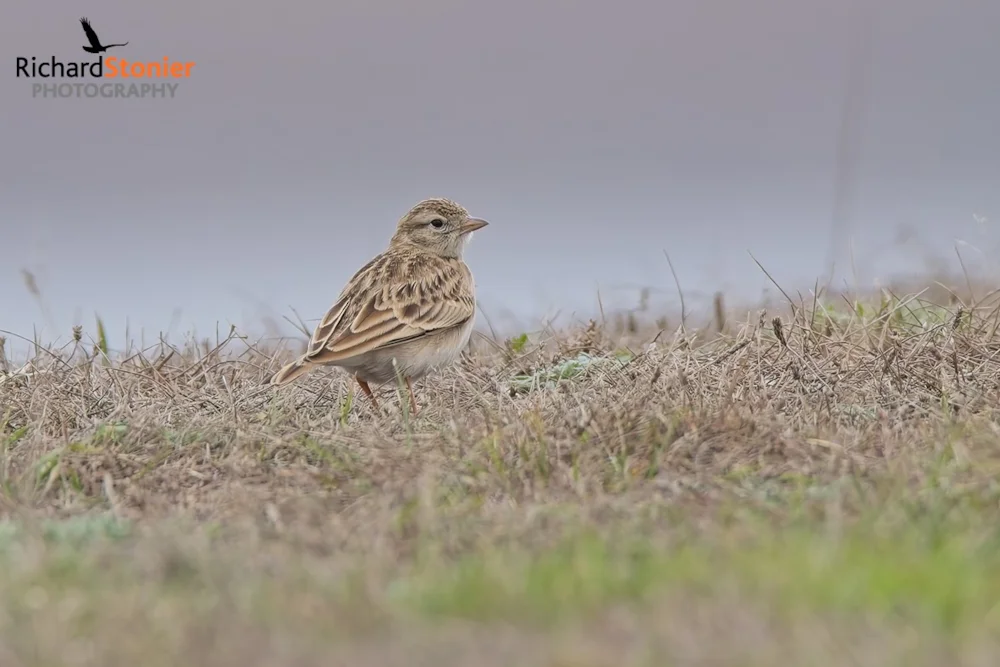
Greater Short-toed Lark, St Mary's, Isles of Scilly (Richard Stonier).
Scilly scores an Upland
Another big Scilly bird came in the form of an Upland Sandpiper on St Agnes from 25th. The species is notoriously hard to catch up with in Britain, with the only recent twitchable birds being one in Cornwall in September 2023 and one on St Mary's, Scilly, in October 2011.
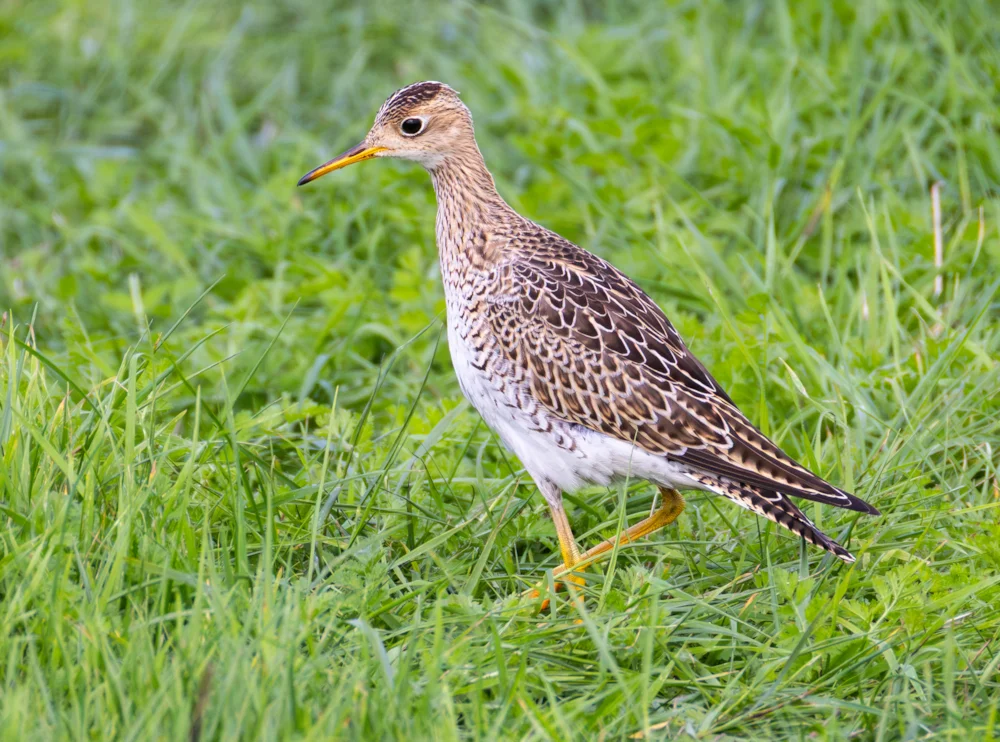
Upland Sandpiper, St Agnes, Isles of Scilly (Peter Garrity).
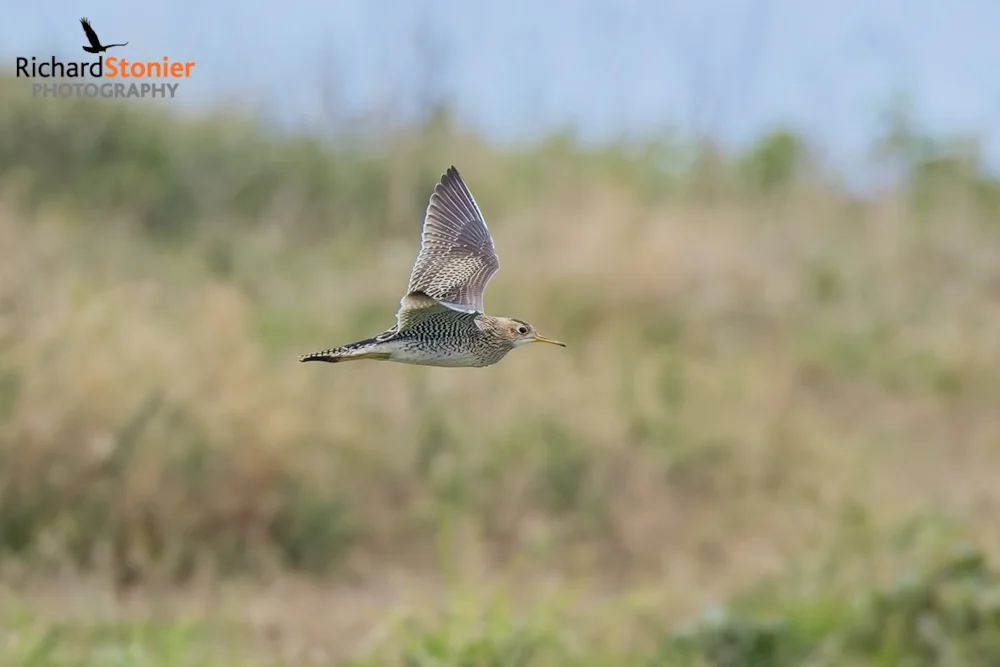
Upland Sandpiper, St Agnes, Isles of Scilly (Richard Stonier).
The Orkney hot-spot of North Ronaldsay has been on a shorebird roll so far this autumn, with Baird's Sandpiper and White-rumped Sandpipers joining the lingering Long-billed Dowitcher and Buff-breasted Sandpiper this week. Up to four Buff-breasted Sandpipers, at least two American Golden Plovers and a Pectoral Sandpiper have also been present on the island in recent weeks.
Possibly our second Baird's Sandpiper of the year @NRonBirdObs courtesy of @George_NRBO. This one showed much better than the first! pic.twitter.com/SGrmZkCw9h
— Maddy Hine (@maddyhine280) September 27, 2026
A further 13 Baird's Sandpipers (including noteworthy finds in Northumberland and Caernarfon) added to this autumn's record-breaking tally, as two each of Spotted Sandpiper (at Voxter, Mainland Shetland, and Drift Reservoir, Cornwall) and Semipalmated Sandpiper (at Keyhaven Marshes, Hampshire, and on Westray, Orkney) made for other top wader finds.
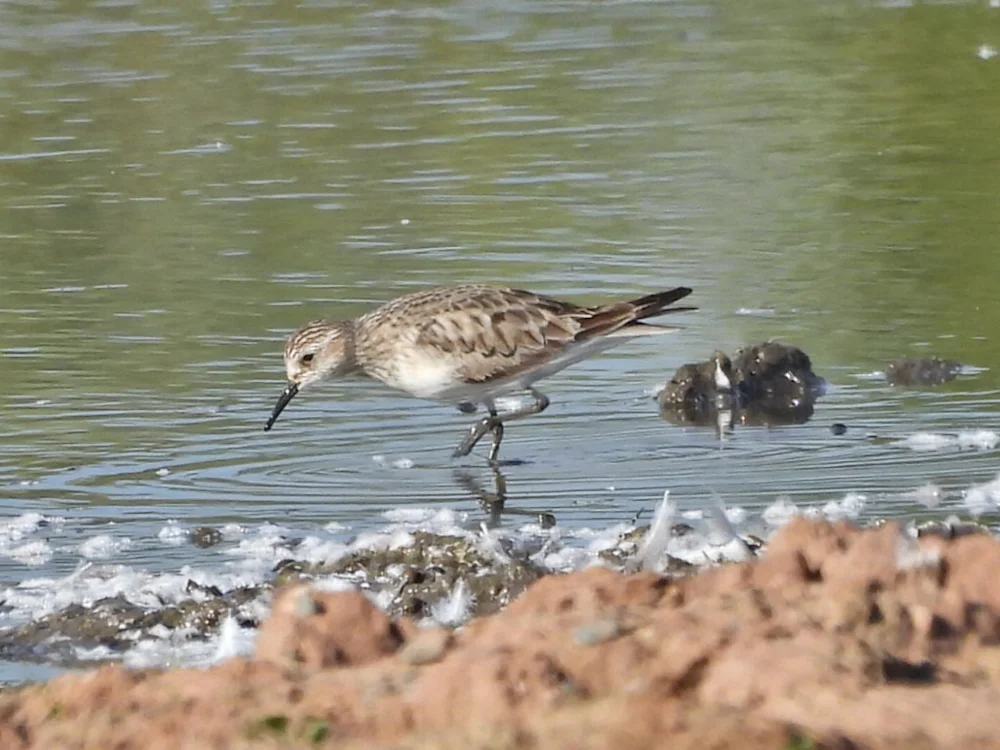
Baird's Sandpiper, Coxbank, Cheshire (Peter Atherton).
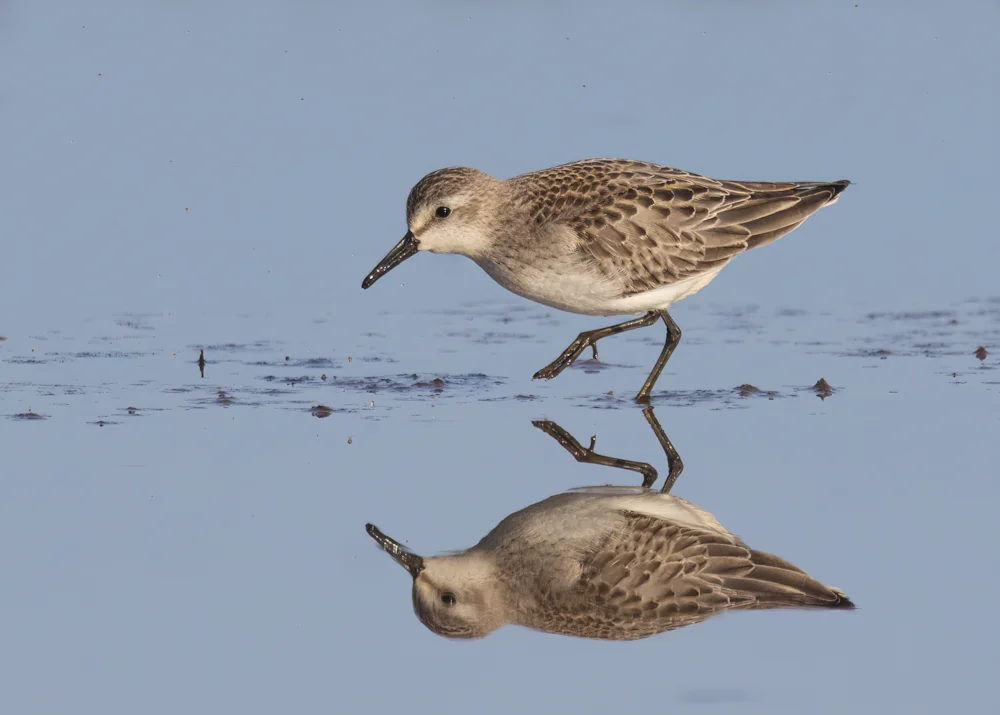
Semipalmated Sandpiper, Keyhaven Marshes, Hampshire (Ashley Howe).
Three dowitchers were found – Long-billeds in Outer Hebrides and Co Wexford and a fly-past not identified to species in Northumberland. Other new shorebirds consisted of three Lesser Yellowlegs, seven American Golden Plovers, 13 Pectoral Sandpipers and 19 Buff-breasted Sandpipers, including one of the last species at Grafham Water, Cambridgeshire.
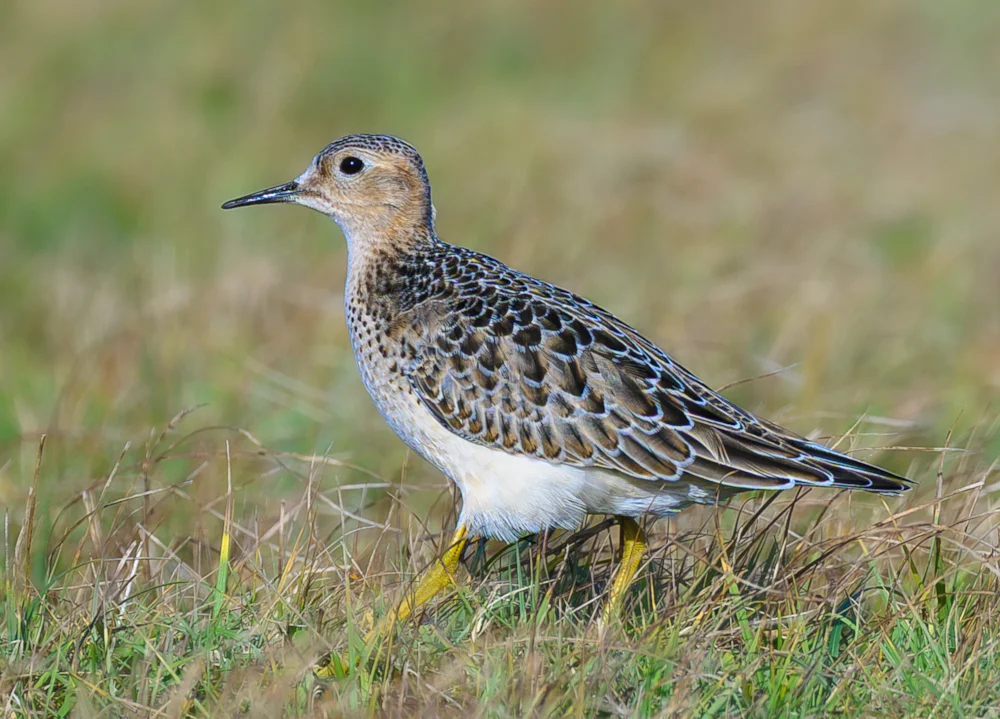
Buff-breasted Sandpiper, South Uist, Outer Hebrides (Ron Macdonald).
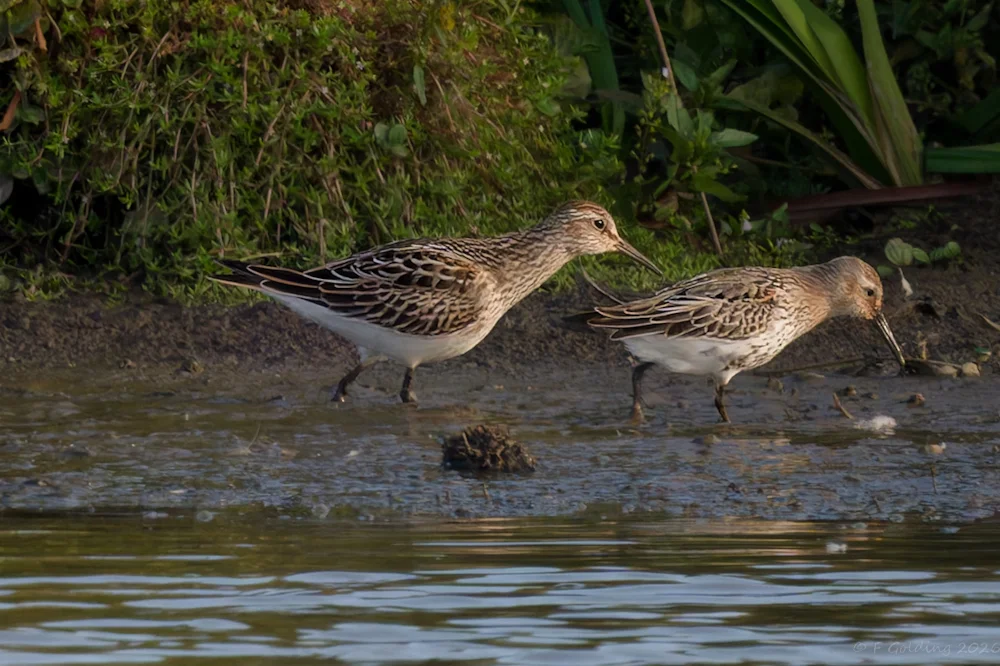
Pectoral Sandpiper (left bird) with Dunlin, Druridge Pools, Northumberland (Frank Golding).
Best of the rest
An adult Black Brant was a surprise among returning Pale-bellied Brent Geese at Budle Bay, Northumberland, from 23rd. Unexpectedly, it looked to be paired with one of the Pale-bellied Brents and was also accompanied by a single hybrid juvenile. The only previous sighting of Black Brant in Northumberland was in 1999. On 21st, a Todd's Canada Goose was in Perth and Kinross.
Heavy crop of the oroginal video. pic.twitter.com/e2V0p2VqGc
— SteveR (@SteveR418531118) September 23, 2026
Black Brant, Budle Bay, Northumberland (Steve Routledge).
A drake Surf Scoter was found accompanying the continuing King Eider at Lerwick, Mainland Shetland, while both Surf and White-winged Scoter were available on the Angus coast. Five American Wigeon were found across Britain.
A pale-morph Booted Eagle flew over East Soar, Devon, on 18th. Pallid Harriers were in Kent, Lancashire, Wiltshire and Shetland, and a brief Red-footed Falcon was at Bough Beech Reservoir, Kent.
Bonaparte's Gulls included one at Newcastle, Co Down, and three in Co Galway.
Western Palearctic
Anticipation remains high at the prospect of the current Northern Nutcracker invasion reaching British shores this winter. A total of 48 migrated south-west out to sea over Falsterbo, Sweden, on 27th, the same day one was near Rotterdam, Netherlands, and four were trapped and ringed at Lista Fuglestasjon on the south-west Norwegian coast.
Northern Nutcracker, Falsterbo, Sweden (Måns Karlsson).
There was a fantastic record of a Red-eyed Vireo hopping around in short grass among sheep on Nólsoy, Faroe Islands, on 22nd while the finder monitored a colony of European Storm Petrels. It is the second record for the archipelago. Tennessee Warbler, Northern Waterthrush, American Yellow Warbler and Black-and-white Warbler kick-started the autumn on Corvo, Azores, though even rarer in a local context was the island's first-ever Hoopoe!
The appearance of an adult Rüppell's Vulture on Krk, Croatia, came as a surprise – and would be a national first if accepted. Dutch ringers netted a Lanceolated Warbler on 27th. A Lesser Moorhen was on Sal, Cape Verde, a Striolated Bunting was in Kuwait and a Black-winged Kite was on Alderney, Channel Islands.

