
It felt like winter arrived this week, with bouts of snow widely spread much of northern England and Scotland. The Outer Hebrides had a surprise from the New World in store, and a handful of rarities came out of the woodwork elsewhere.
Britain's first-ever American Barn Swallow appeared from left field at Balranald on North Uist, Outer Hebrides, late on 17th. The erythrogaster subspecies of Swallow has long been predicted as a potential vagrant to Britain, with additional Western Palearctic records from Iceland and the Azores. The lack of a dark-blue breast band is the main identifying feature, with the European rustica subspecies instead having a broad blue breast band. An extensive, large red throat patch connecting to the ventrum is another feature of erythrogaster, in addition to a honey-yellow ventrum, underwing and vent.
This Swallow at Balranald, N Uist this afternoon appears to be the American subspecies: erythrogaster due to the lack of a dark band across the lower throat.
— Steve Duffield (@wiwildlife.bsky.social) 17 November 2025 at 19:10
[image or embed]
November went from strength to strength as far as Hume's Leaf Warbler was concerned, with 14 tallied this week. Best of the bunch this week was a Bedfordshire county first lingering at Marston Vale Millennium Country Park from 21st, while eight in Norfolk included an incredible trio at Holkham Pines. A Dusky Warbler at Kilbogget Park was an exciting find for Co Dublin birders, with a further nine in Britain. Otherwise, two late Barred Warblers were along the Welsh coast and up to 12 Pallas's Warblers were in England.
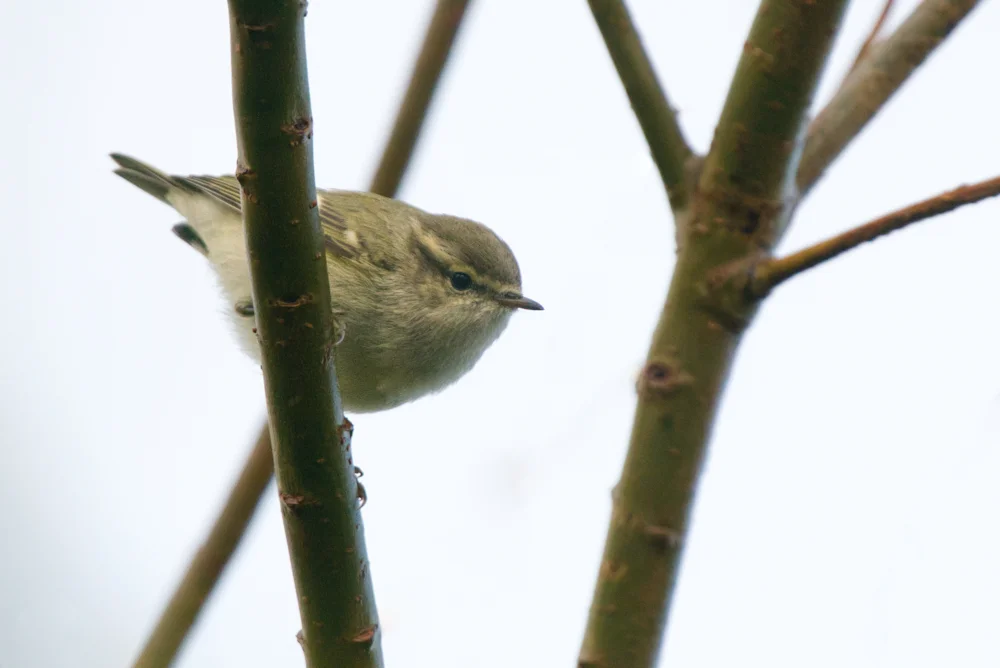
Hume's Leaf Warbler, Sandwich Bay, Kent (Jonathan Bull).
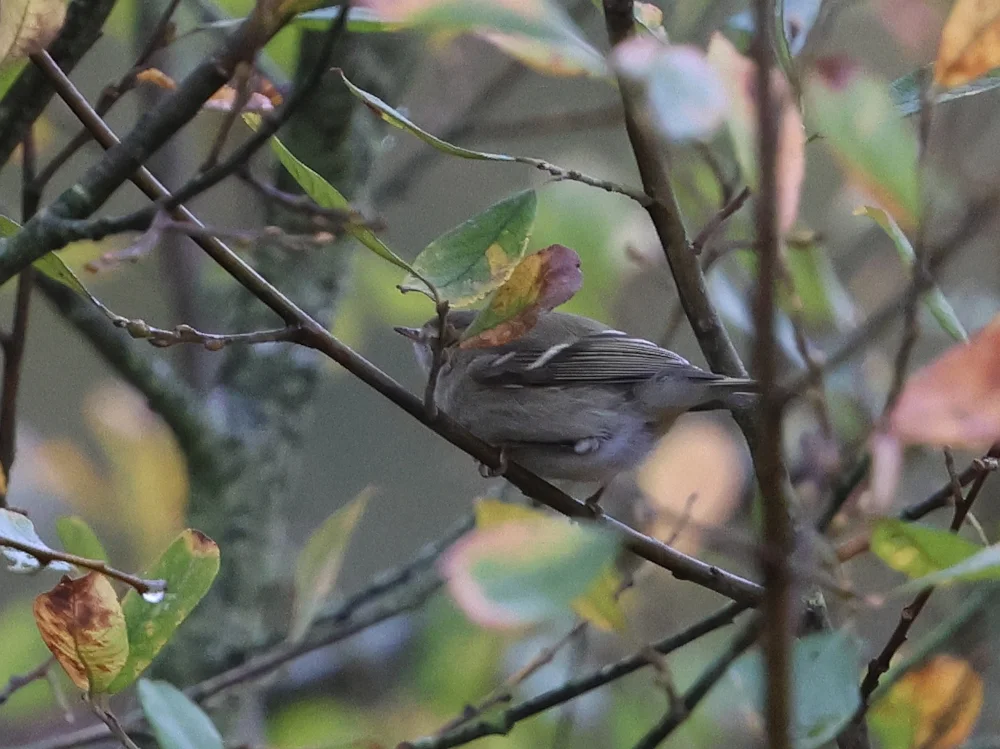
Hume's Leaf Warbler, Marston Vale Millennium CP, Bedfordshire (Neil Wright).
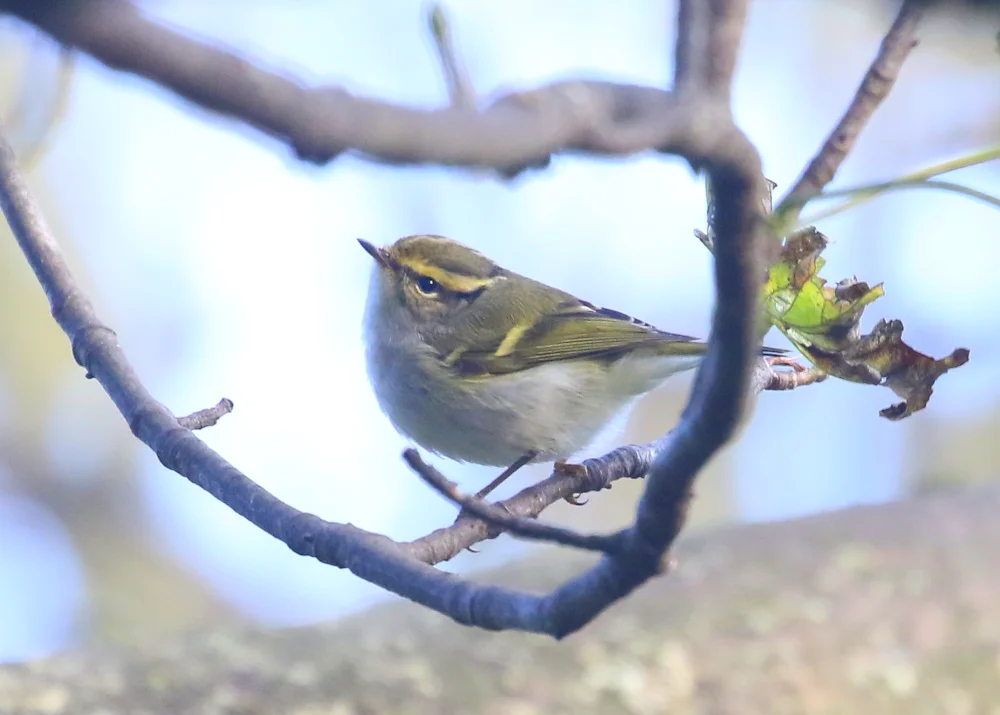
Pallas's Warbler, Cromer, Norfolk (Julian Thomas).
A female Desert Wheatear near Weymouth was Dorset's first since 2021. New Great Grey Shrikes in Lincolnshire and Dumfries & Galloway doubled the week's tally, though the cold proved too much for the first-winter Isabelline or Red-tailed Shrike, which moved on after 20th. A mid-November treat at the tip of Spurn Point, East Yorkshire, was an Olive-backed Pipit on 17th.
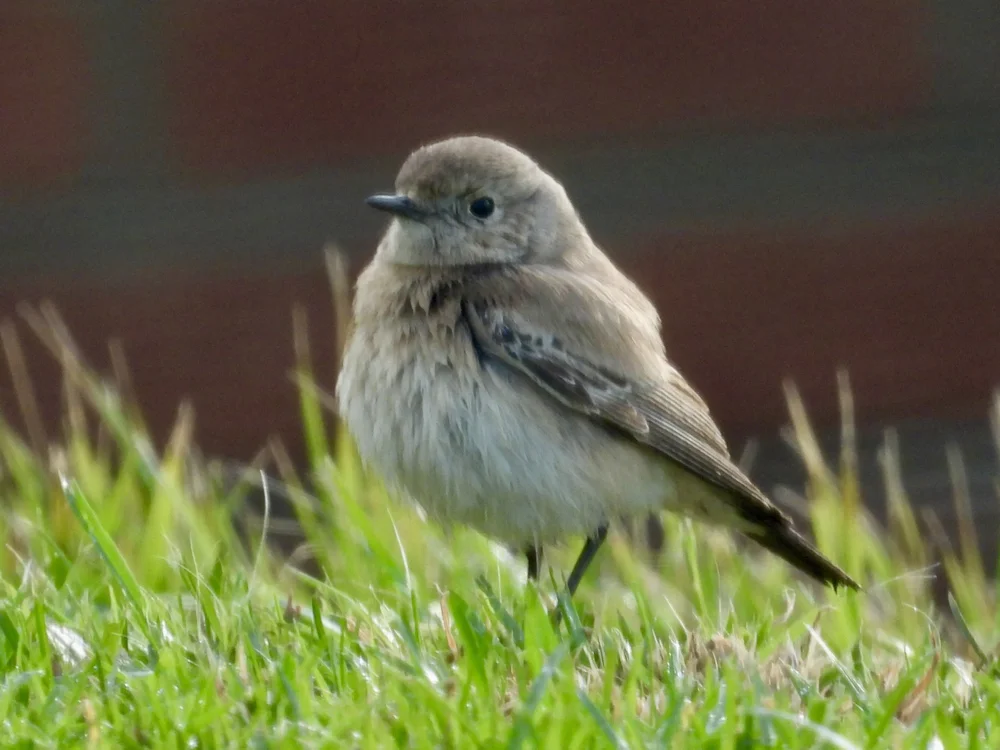
Desert Wheatear, Wyke Regis, Dorset (James Leaver).
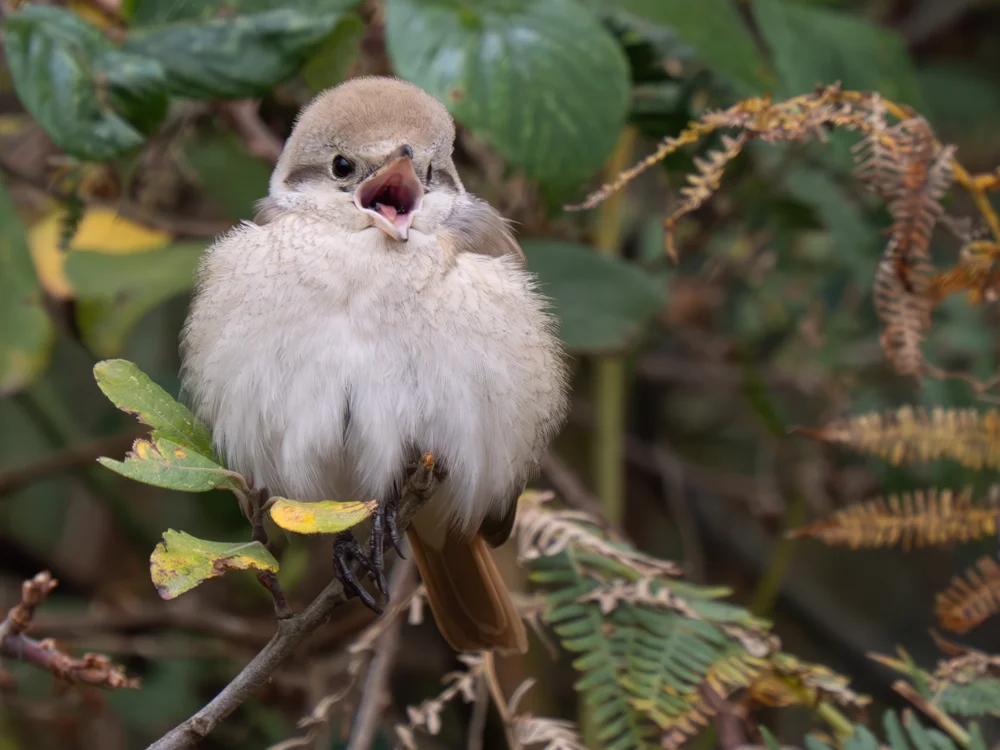
Isabelline/Red-tailed Shrike, North Warren RSPB, Suffolk (Jim Mountain).
Surprisingly, the ringed first-winter female Black-faced Bunting resurfaced on Fair Isle on 23rd. Two more Northern Long-tailed Tits were on Trondra, Shetland, and a first-winter Bluethroat persisted at South Gare, Cleveland, throughout, with a faecal sample collected with the aim of identifying it to subspecies level. In Hampshire, the male Boat-tailed Grackle was again a popular draw to the streets of Holbury. Additional sightings comprised Common Rosefinch (on Mull, Argyll), two each of Richard's Pipit and Little Bunting, three European Serins (all in Kent) and five Hoopoes. Shore Larks in six counties included birds on the west coast in Caernarfon and Dumfries and Galloway.
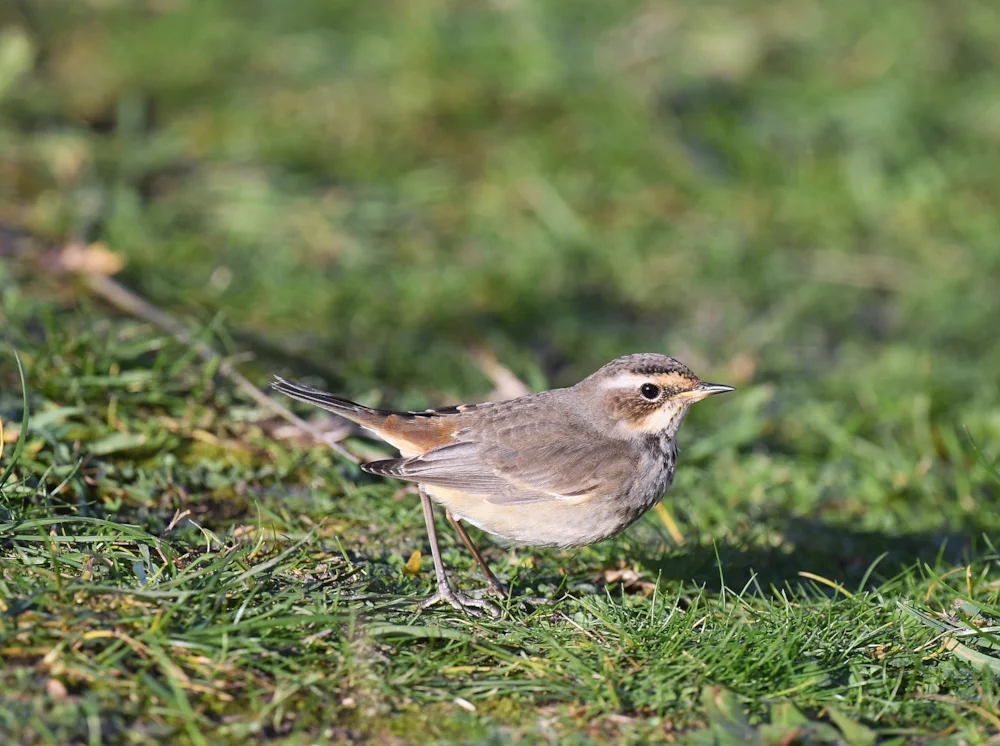
Bluethroat, South Gare, Cleveland (Damian Money).
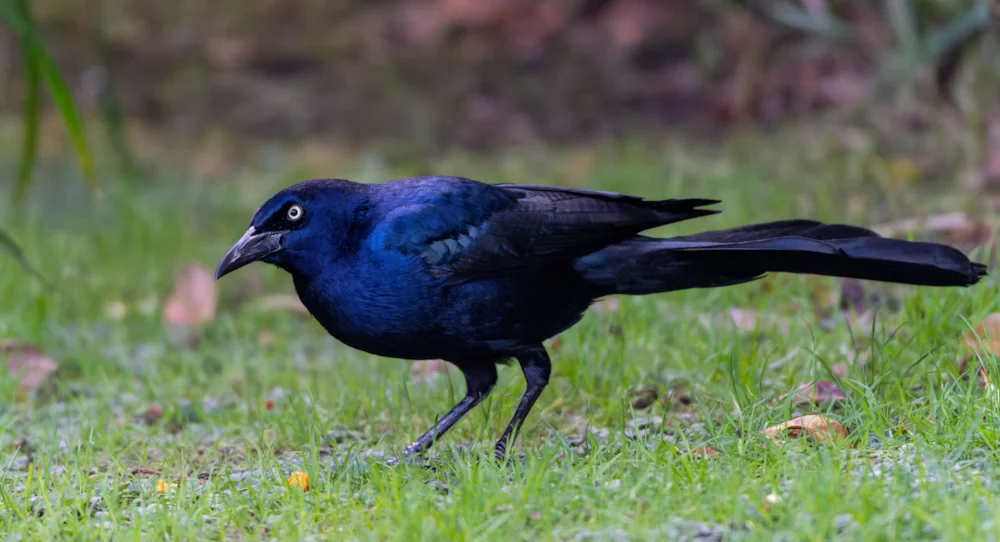
Boat-tailed Grackle, Holbury, Hampshire (Tracey Jolliffe).
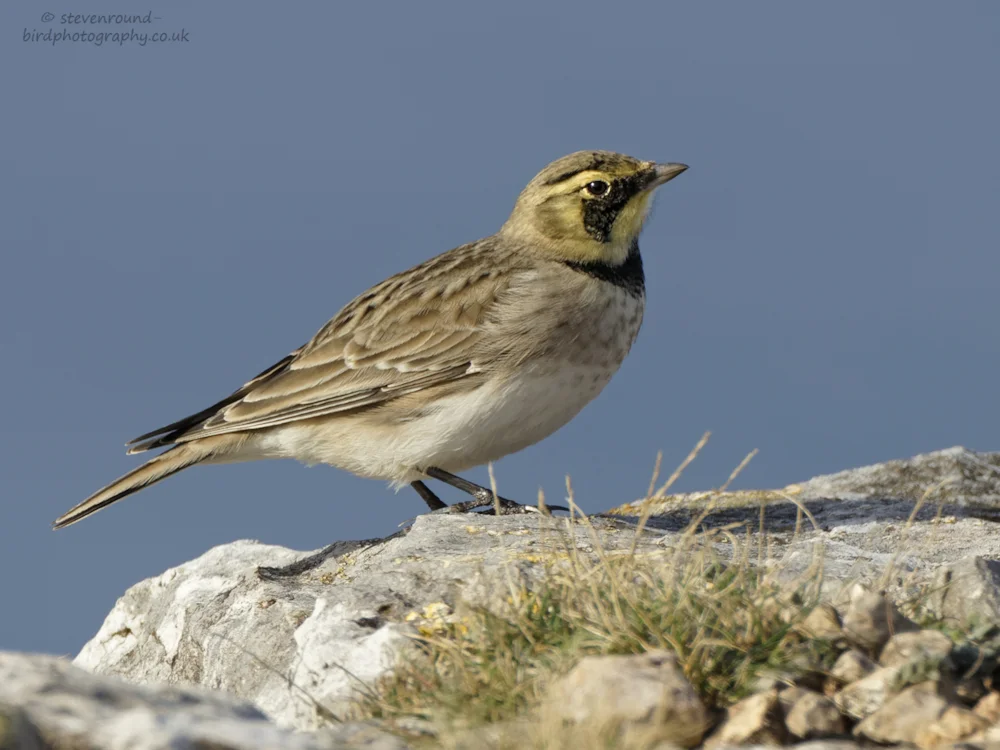
Shore Lark, Great Orme, Caernarfon (Steve Round).
One of the most surprising finds of the week saw a Little Bittern found in a suburban park at North Shields, Northumberland, and taken into care. It is the first county record since 2018. A Purple Heron was again in Somerset.
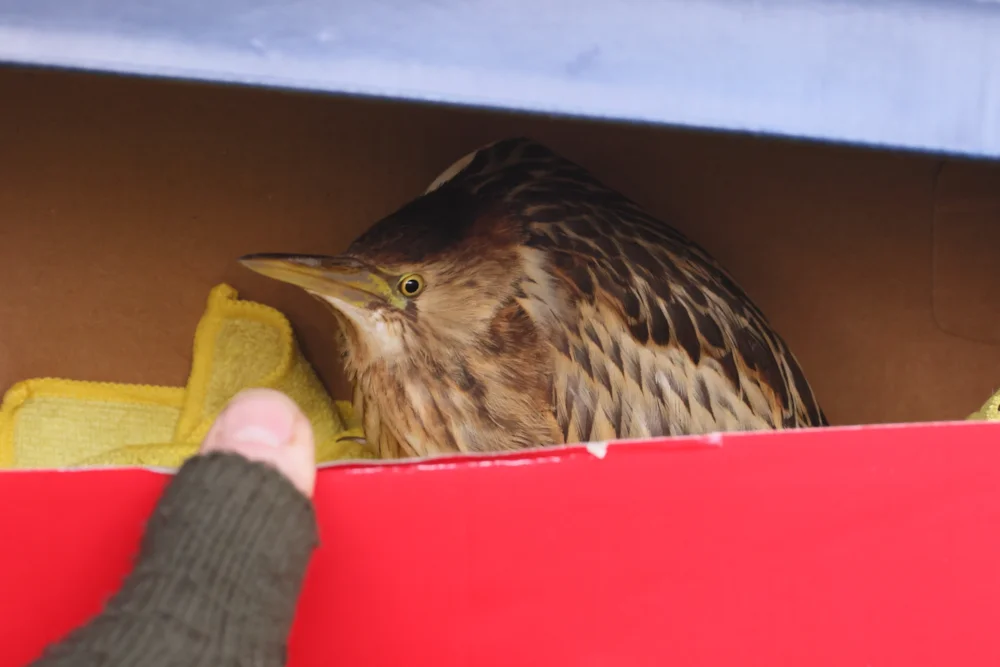
Little Bittern, North Shields, Northumberland (Alan Jack).
Rough-legged Buzzard is no longer the annual winter visitor it once was, particularly in southern England, making one along the Norfolk coast a welcome arrival. Another juvenile was on Stronsay, Orkney. Three Northern Harriers remained in Co Wexford, as did a female Pallid Harrier along the Glamorgan-Carmarthen border.
A stunning adult drake Bufflehead was a popular find in Co Kerry at Lough Leane, Killarney, from 18-20th. It made for an excellent double act with the continuing Harlequin Duck in Co Donegal, which looks smarter week by week as it continues its moult into first-winter drake plumage. On 19th, a first-winter drake King Eider on Unst, Shetland, was a fantastic discovery from the comfort of the finder's living room!
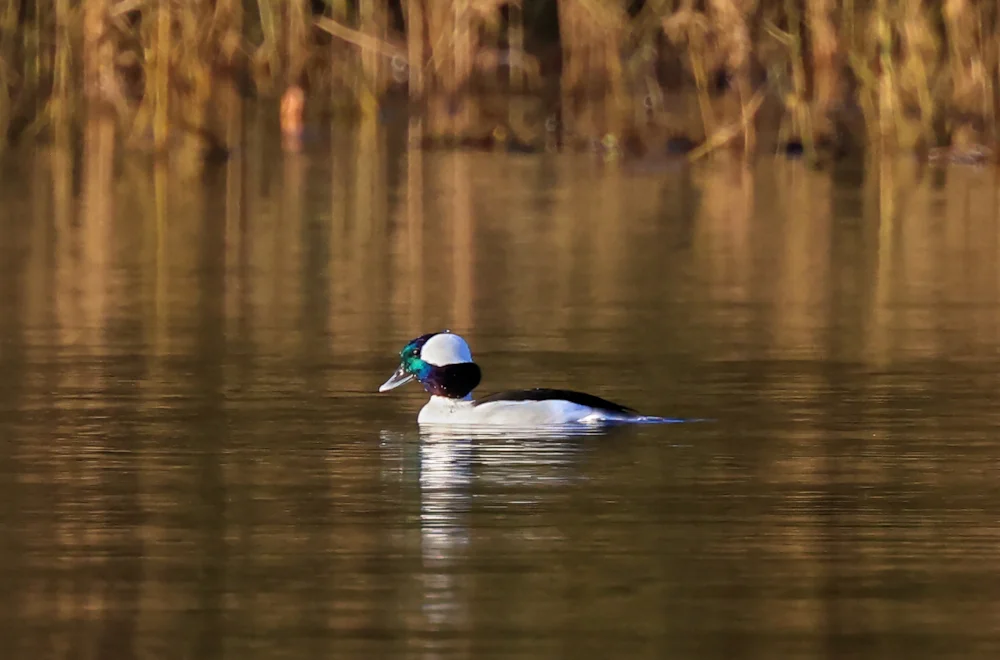
Bufflehead, Killarney, Kerry (Valerie O’Sullivan).
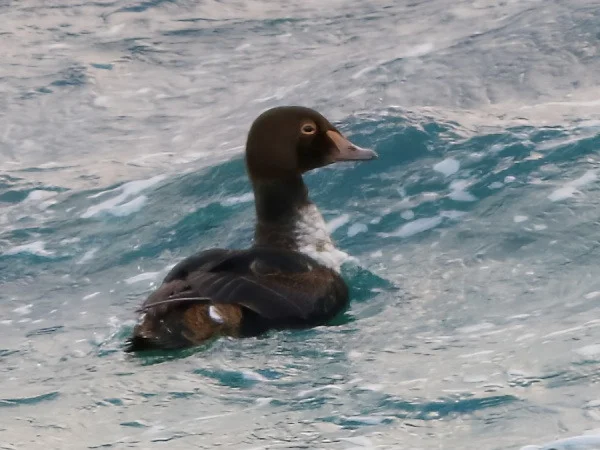
King Eider, Norwick, Unst, Shetland (David Cooper).
The drake Baikal Teal lingered in Dorset and the young female Blue-winged Teal was again at Hayle, Cornwall. Elsewhere were two each of Smew and White-winged Scoter, three Surf Scoter, seven American Wigeon, eight Lesser Scaup, 14 Green-winged Teal and 18 Ring-necked Ducks. Both Pacific Divers were new: a juvenile at Elly Bay, Co Mayo, and one off Cape Clear, Co Cork.
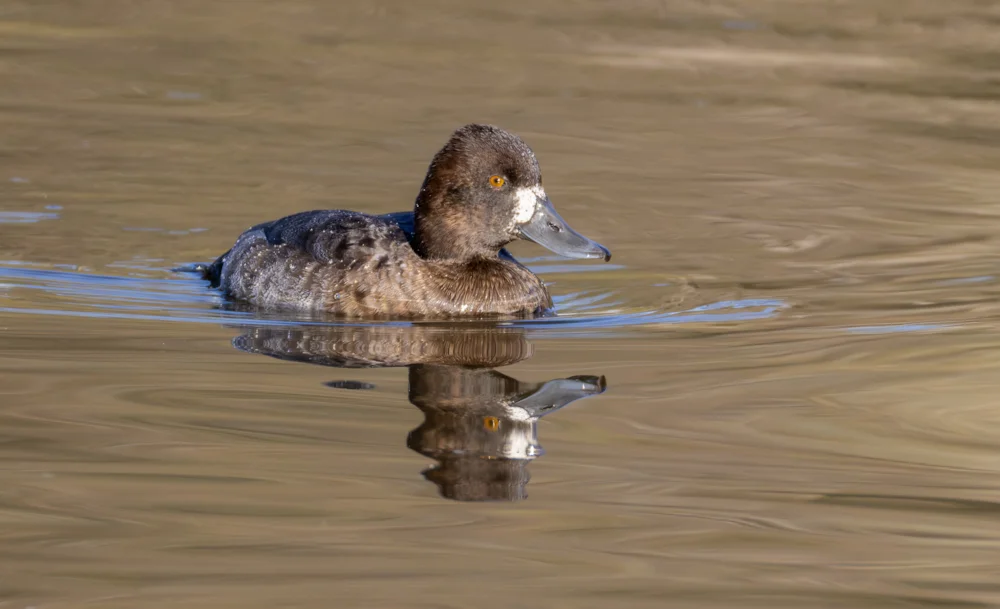
Lesser Scaup, Swithland Reservoir, Leicestershire and Rutland (Glyn Sellors).
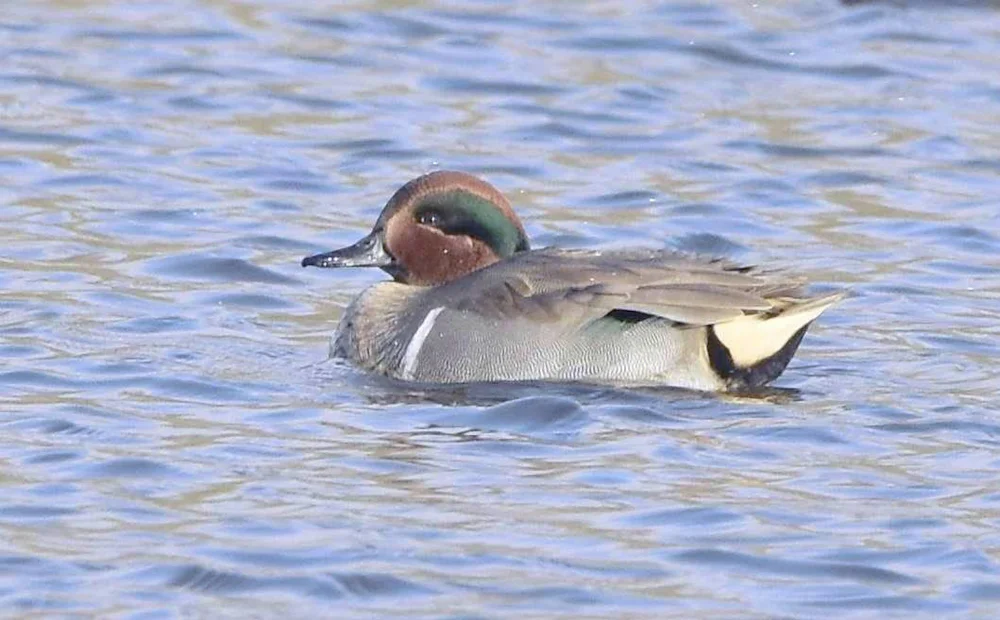
Green-winged Teal, Lackford Lakes SWT, Suffolk (Barry Woodhouse).
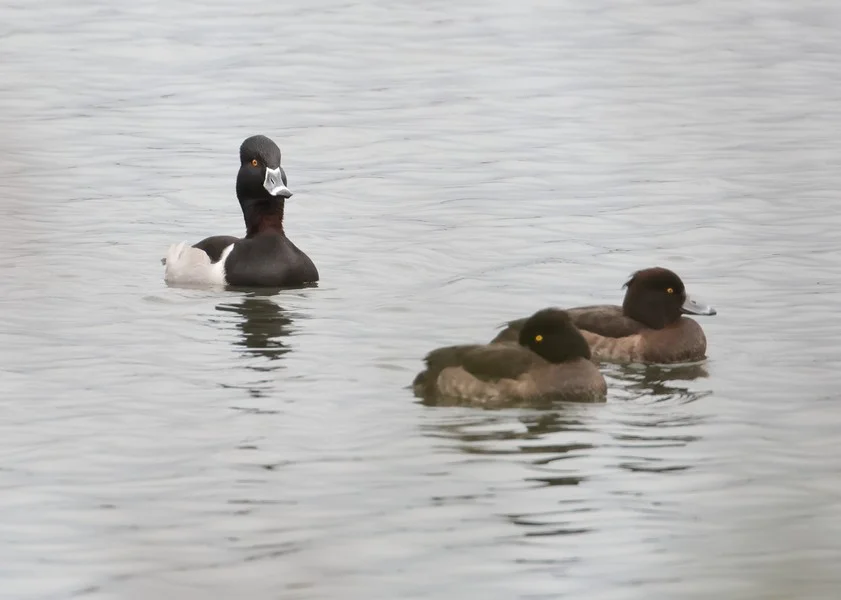
Ring-necked Duck, Beesands Ley, Devon (Alan Doidge).
There were bumper flocks of 21 Taiga Bean Goose on Westray, Orkney, 13 near Castletown, Caithness, and 11 still in Co Donegal, in addition to at least 48 in Forth. An adult Ross's Goose remained in Aberdeenshire and a Red-breasted Goose of unknown origin continued in Essex. Five Richardson's Cackling Geese included two new arrivals in Co Donegal, with two Todd's Canada Geese and three Black Brant elsewhere. Last reported in Lothian in early October, the returning adult Lesser White-fronted Goose relocated to one of last winter's favoured haunts on the outskirts of King's Lynn, Norfolk, on 20th. It has been deemed a presumed escape by the British Birds Rarities Committee and placed into Category E.
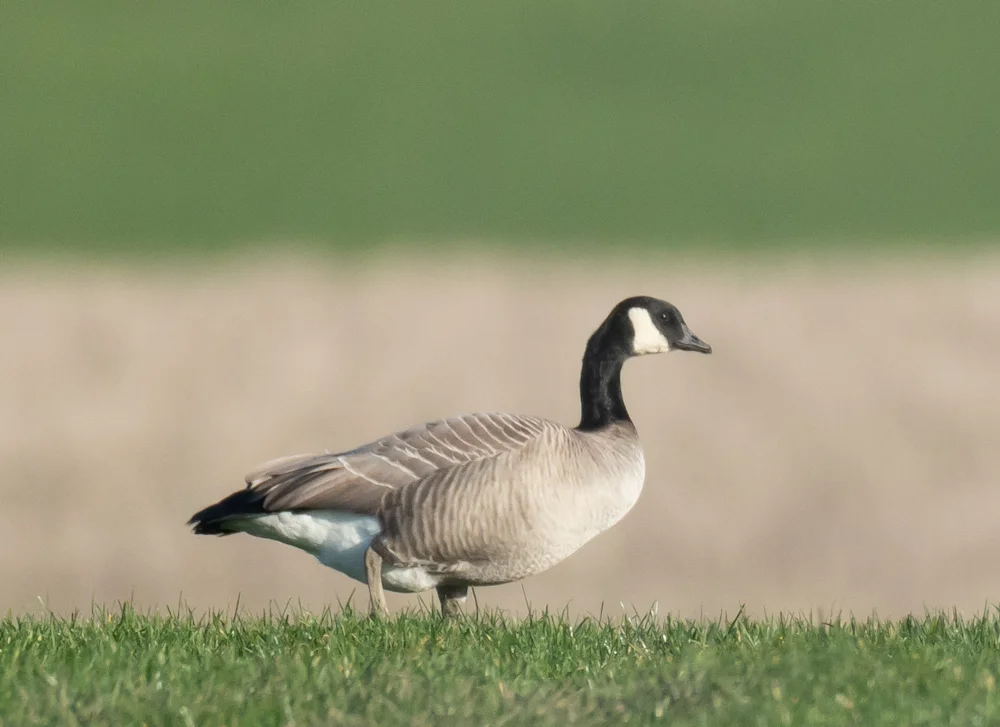
Richardson's Cackling Goose, Loch Gruinart RSPB, Islay, Argyll (Robbie Brookes).
As Bruce Taylor set out on a Larid hunt to Vatersay, Outer Hebrides, on 23rd, an adult Franklin's Gull made his job a little easier by landing on the road in front of his car. An adult Bonaparte's Gull was at Gormanston, Co Meath, and two Ring-billed Gulls lingered in Ireland. There had been murmurings in some circles that the Co Leitrim Double-crested Cormorant had been shot; its reappearance at Doon Lough for the first time in three months on 22nd meant rumours of its demise were greatly exaggerated.
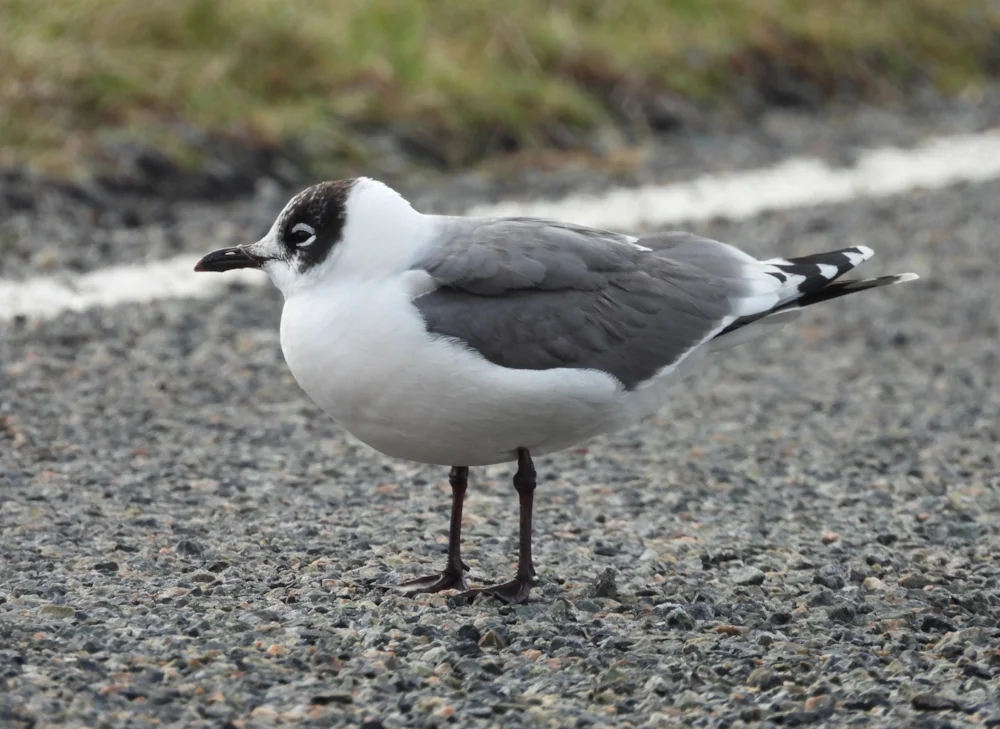
Franklin's Gull, Vatersay, Outer Hebrides (Bruce Taylor).
Three White-rumped Sandpipers completed a sixth week at Myroe Levels, Co Londonderry. Two Lesser Yellowlegs remained and the Somerset Kentish Plover was reported throughout. There would be no sign of the Spotted Sandpiper in Co Waterford after 18th.
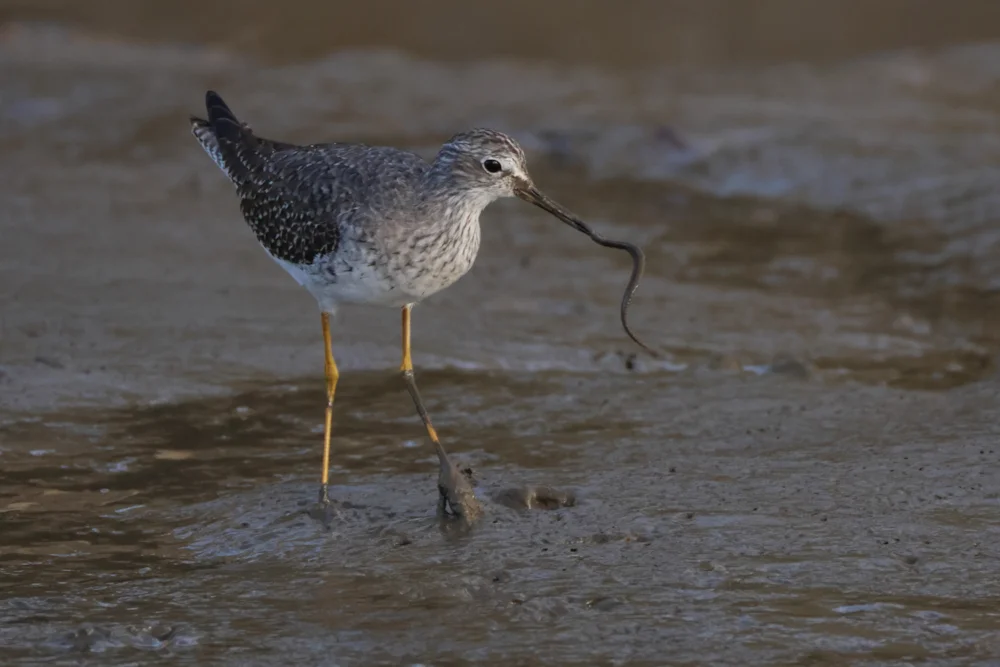
Lesser Yellowlegs, Truro, Cornwall (Andrew Jordan).
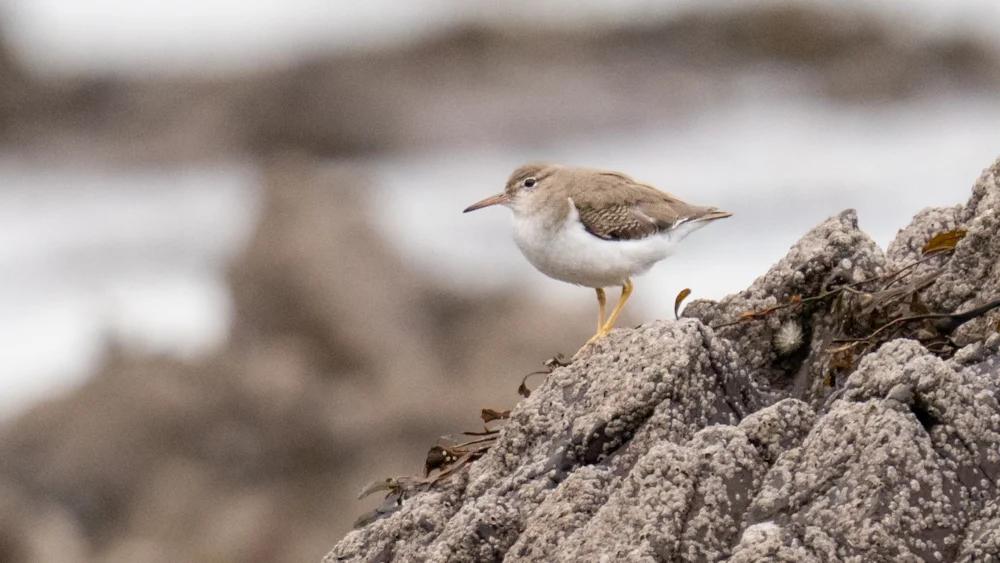
Spotted Sandpiper, Ballynagaul, Waterford (Aaron Long).
Western Palearctic
Intrepid late visitors to Corvo, Azores, found an exciting assortment of Nearctic vagrants, not least a Lincoln's Sparrow on 17th. The island's roll call also comprised Ruby-crowned Kinglet, Northern Parula, Rough-legged Hawk, Northern Harrier, Wilson's Snipe, Great Blue Heron, two American Black Duck and 13 Ring-necked Duck. Rare herons came to the fore elsewhere in the archipelago: American Bittern on Pico, Snowy Egret on Terceira, Great Blue Heron on Faial and American Great Egret on São Miguel. Two Northern Harriers were found on Flores.
An excellent week for vagrants in the Canary Islands icnluded Abyssinian Roller on Fuerteventura, Semipalmated Plover on Lanzarote and Black-capped Petrel off Tenerife. Regional listers will hope that a Black-headed Heron found on São Vicente, Cape Verde, proves a long stayer.
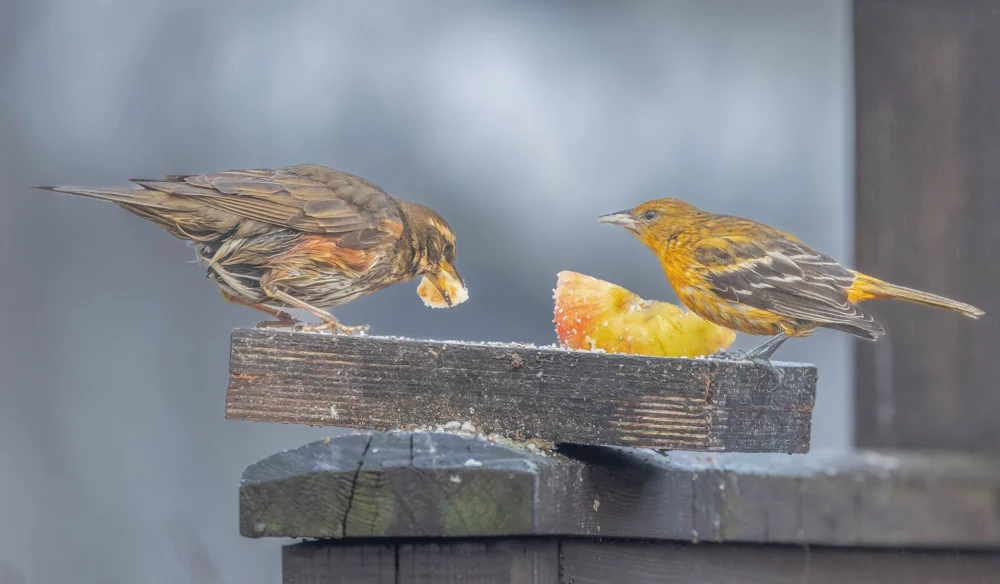
Baltimore Oriole (right) with Icelandic Redwing, Reykjavík, Iceland (Gudmundur Johannesson).
Brown-headed Cowbird, Baltimore Oriole and White-winged Scoter all remained in Reykjavík, Iceland. News from elsewhere in Europe consisted of Bonaparte's and Ivory Gulls in the Faroe Islands, returning Stejneger's Scoter in Denmark and Forster's Tern and Northern Harrier still in France, plus the third Olive-backed Pipit for Greece on Lesvos.
Two Siberian Pipits were a treat in Cyprus and an adult Verreaux's Eagle was still in Israel. There was belated news of Algeria's first Amur Falcon in Illizi in July-August.
- Keep up to date with by-the-minute sightings updates of autumn migrants, rarities and significant birds in your local area at www.birdguides.com/sightings or via the all-new BirdGuides app. New users are entitled to a one-month free trial.

