
Environment Agency staff told to ignore low-impact pollution events
The Environment Agency (EA) has told its staff to ignore reports of low-impact pollution events because it doesn't have the funds to investigate them, according to a leaked internal report seen by the Guardian and Ends Report.
This means that farm pollution or hazardous dumps by businesses may not be properly investigated, leaving an array conservation NGOs appalled.
Specifically, the order suggests that there is leadership support for "no response to unfunded low- and no-impact environmental incidents", which are knonw respectively as category 3 and 4 incidents.
The staff briefing, which was released in November 2021, suggests that the agency itself is frustrated at the lack of funding set aside for its work by government, and says "we cannot keep trying to do what we are not funded to do", while also claiming that EA's leadership has "made it clear to government that you get the environment you pay for".
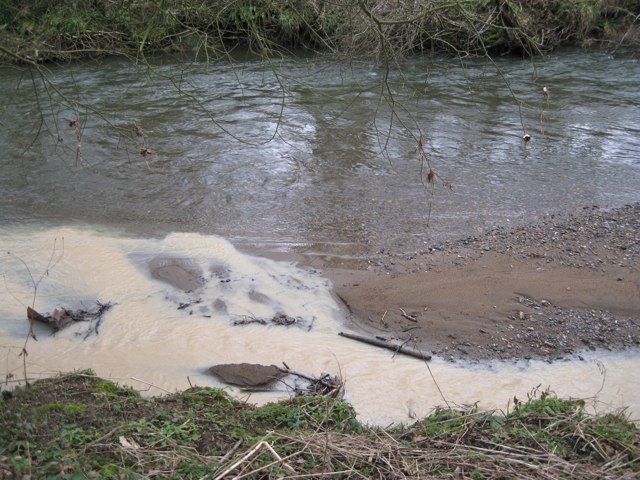
Pollution of the UK's rivers is an increasing problem (Robin Stott / commons.wikimedia.org).
Mark Lloyd, chief executive of the Rivers Trust, called the move an "appalling scandal", while campaigner Feargal Sharkey said: "The obscenity is that the Environment Agency has reduced its own staff to nothing more than political pawns in a cheap game of Whitehall politics."
Mr Lloyd added: "It is absolutely essential that there should be a credible threat of enforcement for all pollution incidents if we are to restore our rivers to good health for the next generation."
An Environment Agency spokesperson said: "We focus our incident response effort on those pollution incidents which pose the greatest risk to the environment.
"Our incident triage project is looking at how we can best use our resources and maximise benefits for the environment. While we continue to attend the most serious incidents, we concentrate our efforts on our regulatory activities which prevent incidents from happening in the first place. Intelligence from incident reporting helps us to plan and prioritise our work to protect the environment."
