
January can often feel like one of the more sedate British and Irish birding months, so few would have predicted the phenomenal start to 2026, as last week's putative Vega Gull was followed up by two more headline acts from across the pond.
Redhead is perhaps the rarest wildfowl species to reach Europe from the New World. To date, there are only six accepted records for the entire Western Palearctic, hailing from Britain, Iceland, Ireland, the Netherlands, the Azores and Madeira. Over the weekend, Brian Power pulled off an extraordinary find at Lough Yganavan, Co Kerry, when he discovered a female. A much more subtle identification than a drake would be in a vagrancy context, shape, structure and plumage are all supportive and separate it from the similar-looking Common Pochard. Lack of contrast between the breast and flank is another key feature, as are a white eyering and the large black nail to the bill. Amazingly, photo and video evidence emerged of its presence since 25 October at least, and multiple Ring-necked Duck have been reported in the weeks since (including 10 on 18 January). Might its continued presence have been overlooked? Ireland's only previous record was a drake on Cape Clear, Co Cork, from 12-15 July 2003.
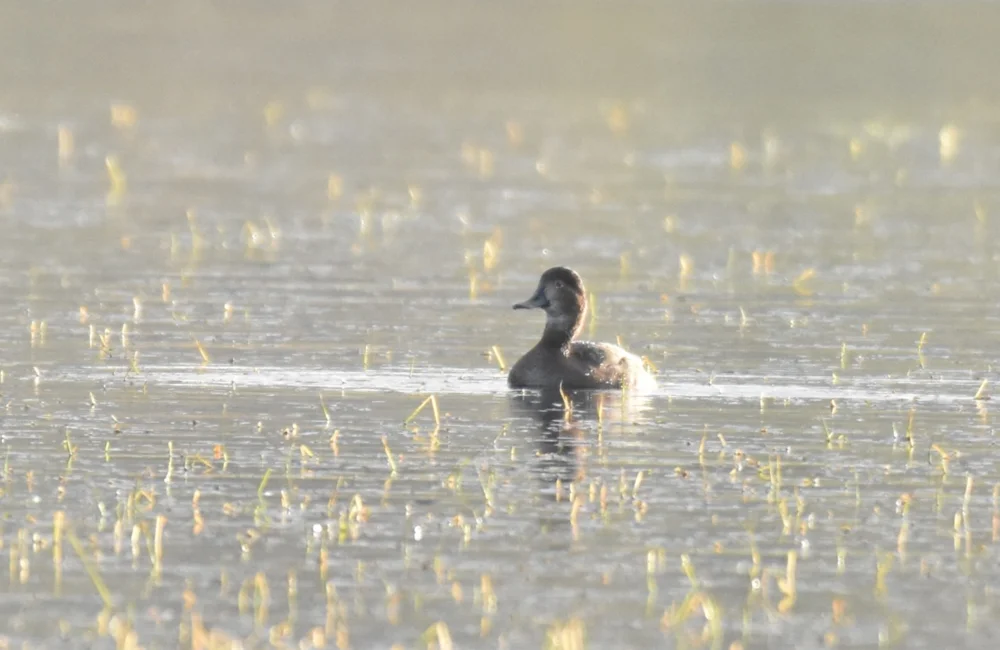
Redhead, Lough Yganavan, Kerry (Brian Power).
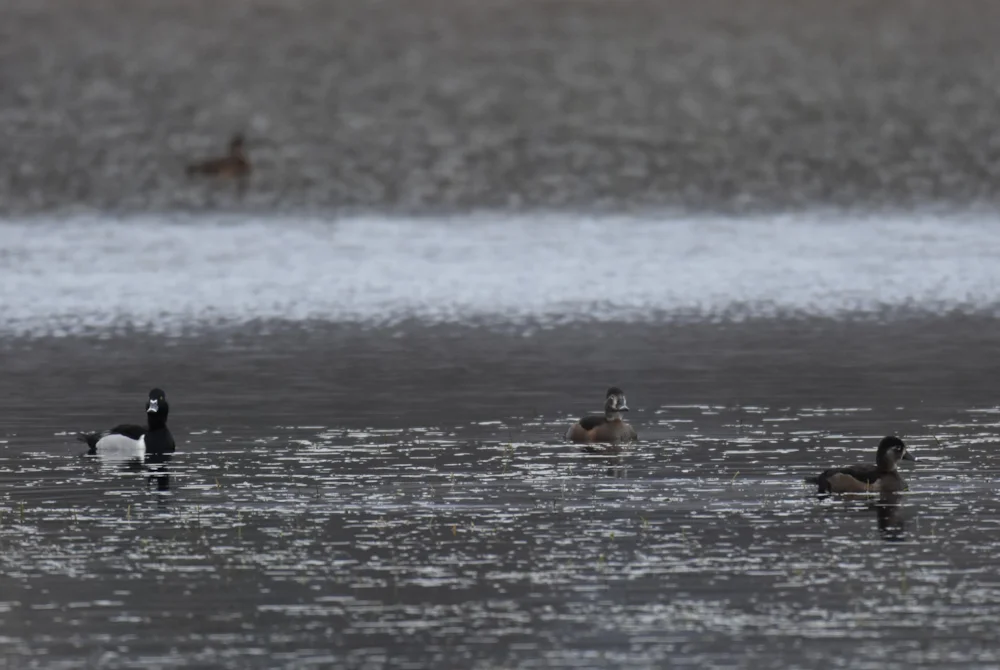
Ring-necked Ducks, Lough Yganavan, Kerry (Brian Power).
It has been a long 20-year wait for a twitchable Killdeer on the British mainland – the last was a three-day bird at Blakeney, Norfolk, in 2006 – so the discovery of a first-winter near Ripley, Hampshire, on 21st had twitchers moving towards the south coast. Those unable to make it before nightfall needn't have worried, as it remained in situ until the week's end. It seems likely to be one of the two birds found in Britain and Ireland during November, when birds arrived on Skokholm, Pembrokeshire, and at South Slob, Co Wexford. For many in Hampshire, it marks a welcome 'grip back' on the county list, with Hampshire's only previous occurrence comprising one at Keyhaven Marshes in September 1980.
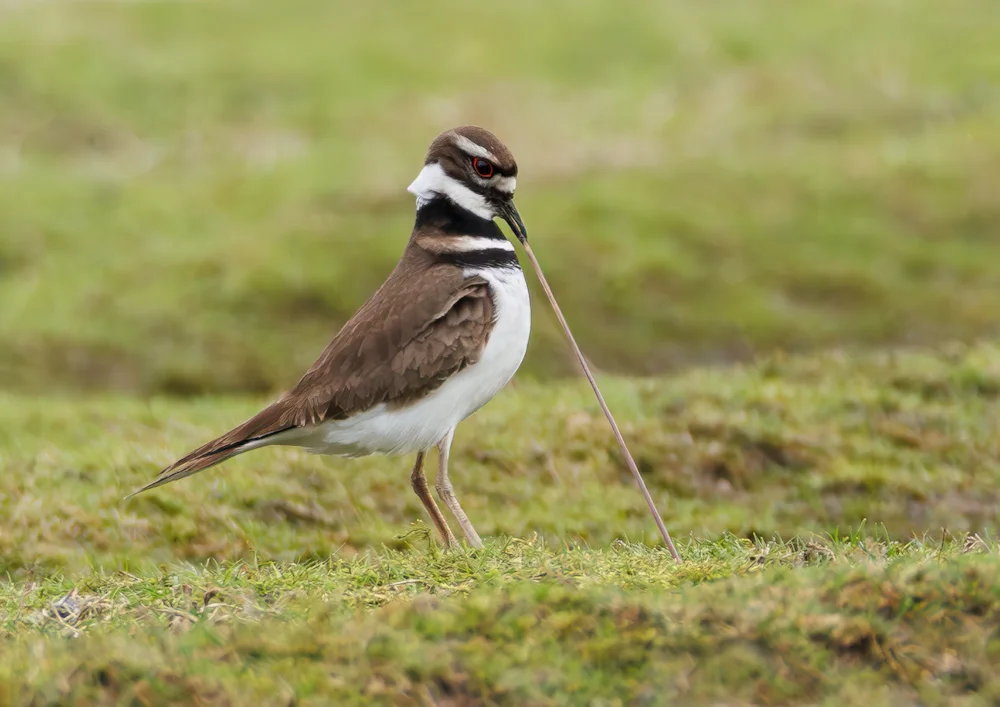
Killdeer, Ripley, Hampshire (Adrian Webb).
Killdeer, Ripley, Hampshire (Steve Laycock).
It was more of the same elsewhere on the shorebird front: lingering Long-billed Dowitcher in Angus, Spotted Sandpiper in Co Waterford, Semipalmated Sandpiper in Co Clare, Kentish Plover in Somerset and three Lesser Yellowlegs.
News of an 'unusual bird' on the Lancashire coast near Speke was confirmed as a male Great-tailed Grackle, the third British record of this ship-assisted vagrant. Incredibly, all three have occurred since 2023, with another – at Holbury, Hampshire – still present this week. It becomes the ninth record for the Western Palearctic, with additional sightings in France, Spain (two), the Canary Islands (two) and the Azores.
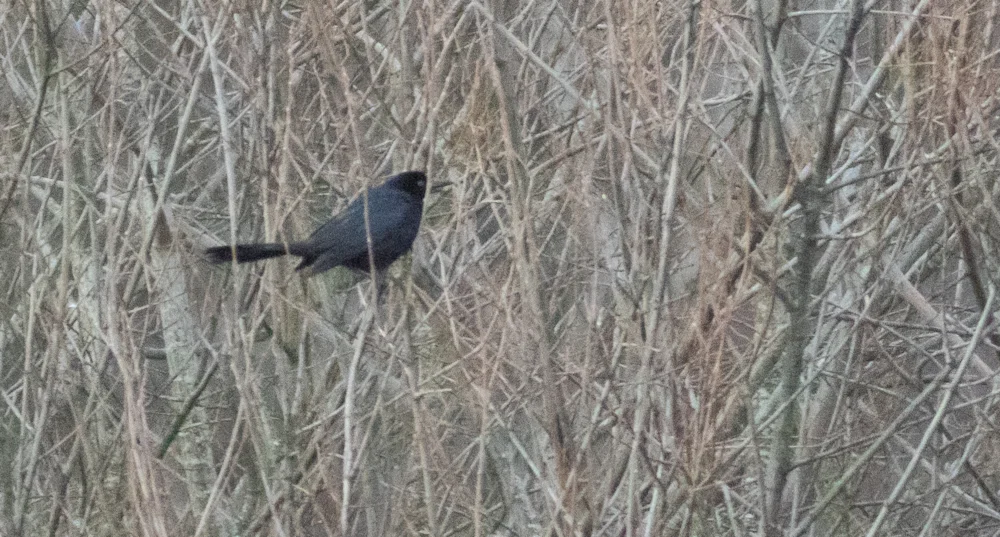
Great-tailed Grackle, Speke, Lancashire (Pierre Montieth).
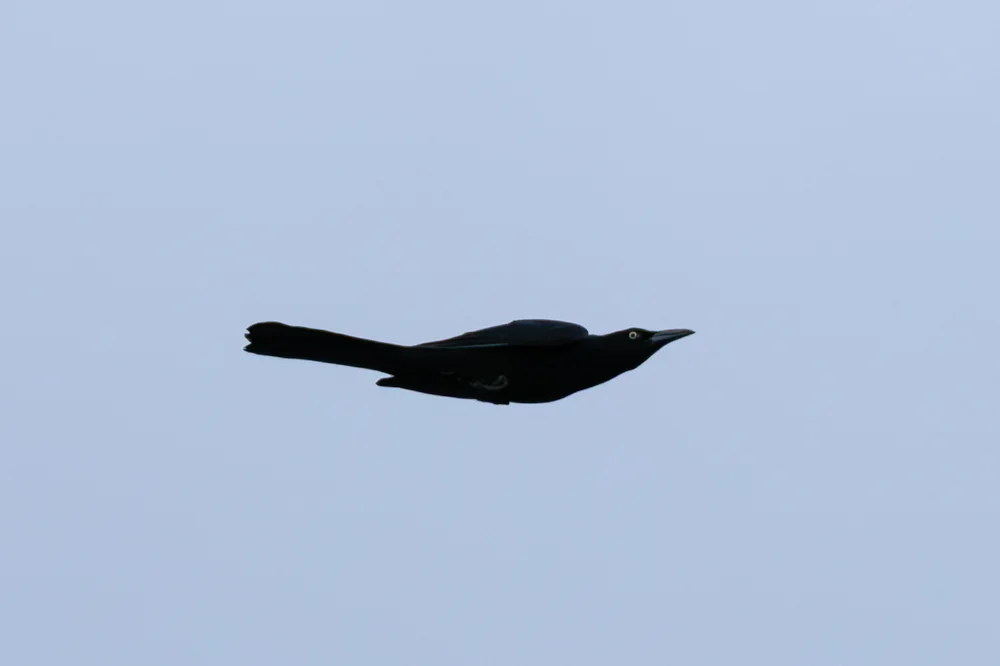
Great-tailed Grackle, Speke, Lancashire (Joe Downing).
A Pallas's Warbler found in Kent proved popular, a Hoopoe was in a South Yorkshire garden and a new Eurasian Penduline Tit in Somerset brought the county total to four. Shore Lark and Great Grey Shrike were at five and three sites respectively. Lingering rarities comprised Eastern Black Redstart and Black-bellied Dipper in Norfolk, three Zitting Cisticolas in Suffolk and Pied Crow in Co Galway.
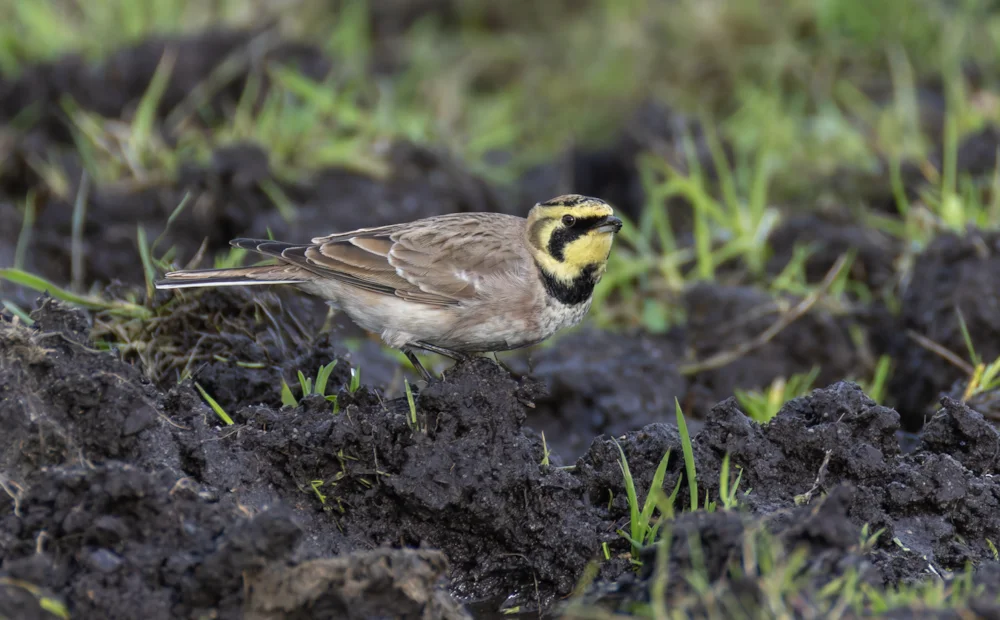
Shore Lark, Mow Cop, Cheshire (Glyn Sellors).
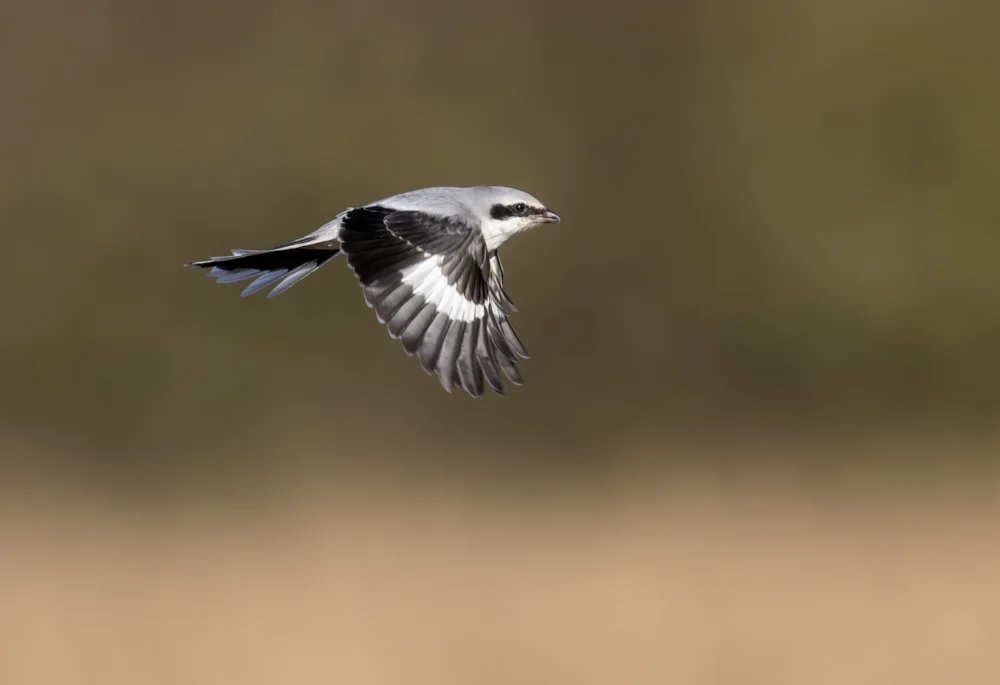
Great Grey Shrike, Fillingham, Lincolnshire (Glyn Sellors).
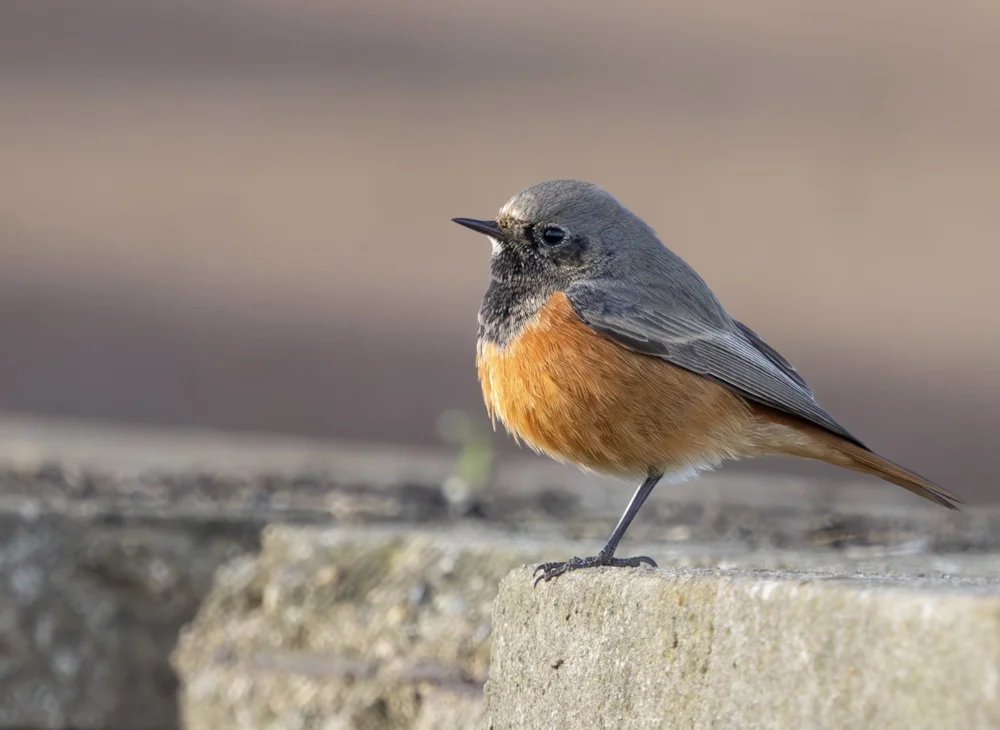
Eastern Black Redstart, Sheringham, Norfolk (Paul Gibbs).
Snowy Owl is an increasingly rare visitor to Britain, making a report of one in Caithness in early January intriguing. An apparent mini-influx of Rough-legged Buzzards was also a welcome event, with birds arriving in Durham, Essex and Suffolk. An adult male Northern Harrier near Moyasta, Co Clare, presumably refers to the bird that spent much of last summer in the county, while more of the same elsewhere comprised Black-winged Kite in Norfolk, Northern Harrier in Co Wexford and Pallid Harrier in Glamorgan.
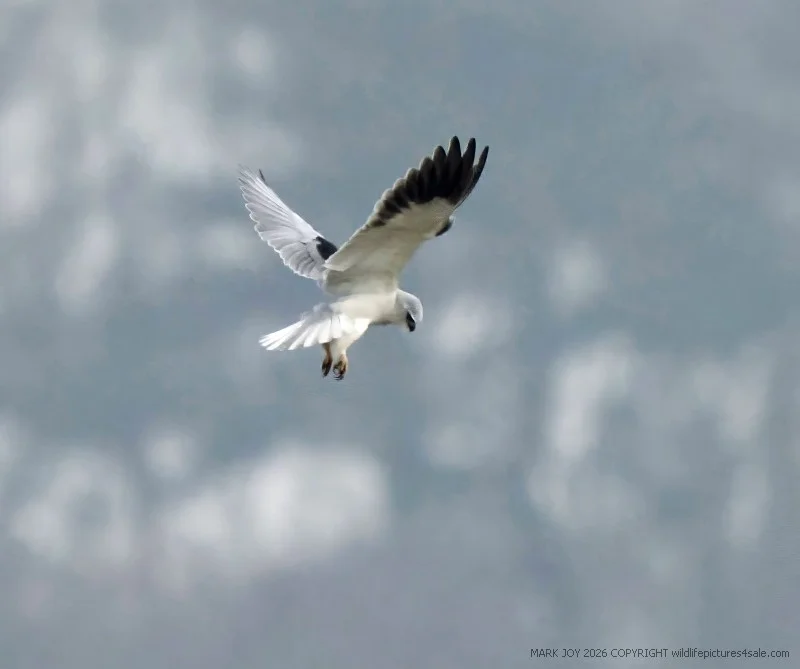
Black-winged Kite, Stubb Mill, Hickling Broad NWT, Norfolk (Mark Joy).
There would be no sign of the presumed Vega Gull in Galway after last Sunday's initial sighting, though twitchers on 19th wouldn't leave empty-handed as a first-winter American Herring Gull was discovered in the city. Three Bonaparte's Gulls were found (in Highland, Cornwall and Co Limerick) and eight Ring-billed Gulls included an appearance by the returning adult in Clyde. Birders on Unst, Shetland, were treated to the return of last winter's Kumlien's or Thayer's Gull, now in third-winter plumage.
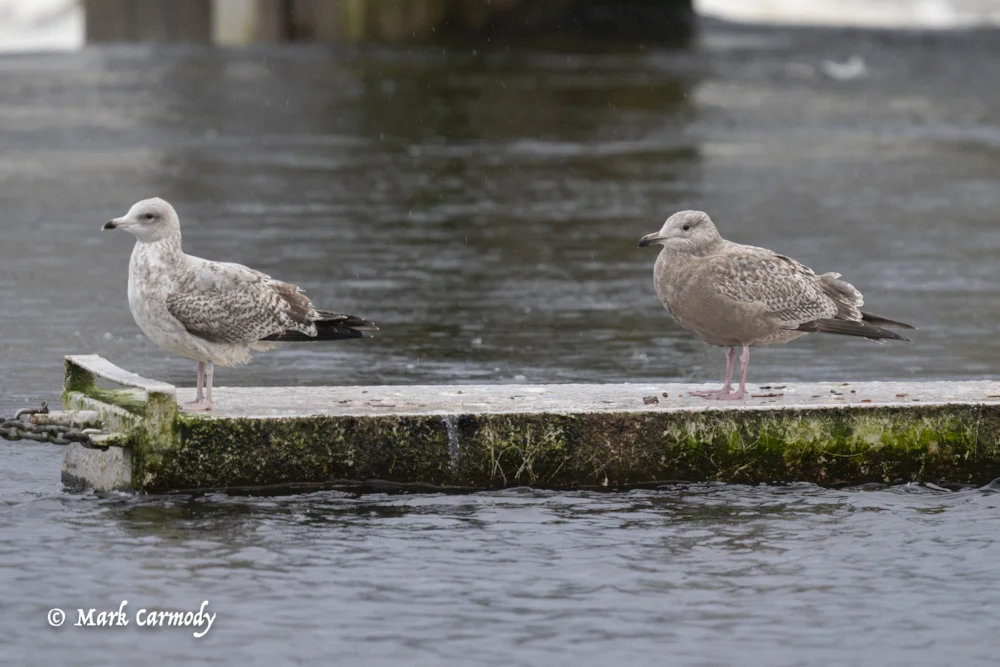
American Herring Gull (right) with European Herring Gull, Galway, Galway (Mark Carmody).
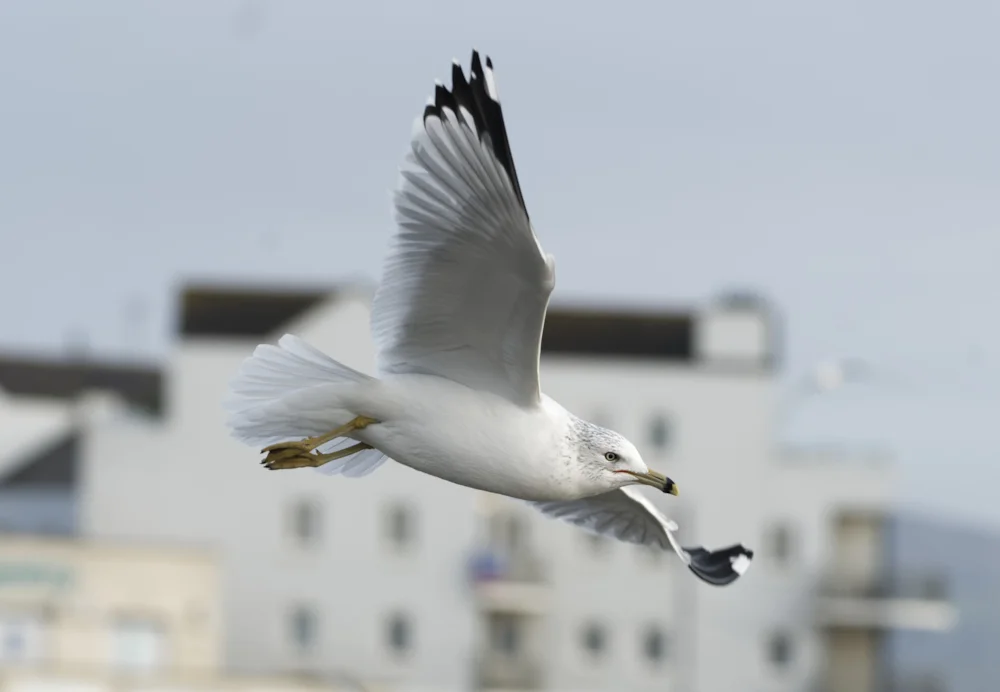
Ring-billed Gull, Blackrock, Louth (Fergal Stanley).
The adult drake Bufflehead in Caernarfon remained in place throughout, though there would be no sign of the Co Kerry individual after 21st. Two Pacific Divers remained in St Mount's Bay, Cornwall; also lingering were Harlequin Duck in Co Donegal, Baikal Teal in Glamorgan, White-winged Scoter off Fife and King Eider in Highland and Shetland. Northumberland's returning drake Black Scoter was off Bamburgh from 19th, with another still in Highland. Other notable quackers comprised six Surf Scoter, eight American Wigeon, 11 Lesser Scaup, 13 Green-winged Teal and 49 Ring-necked Ducks, plus a drake Ferruginous Duck in Cambridgeshire.
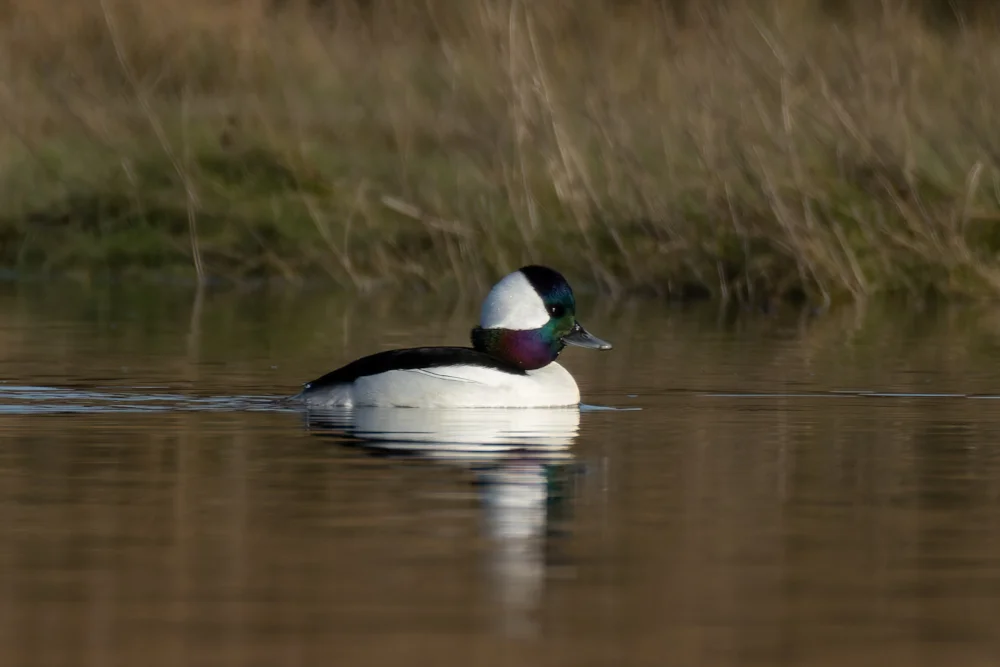
Bufflehead, Foryd Bay, Caernarfon (Joe Downing).
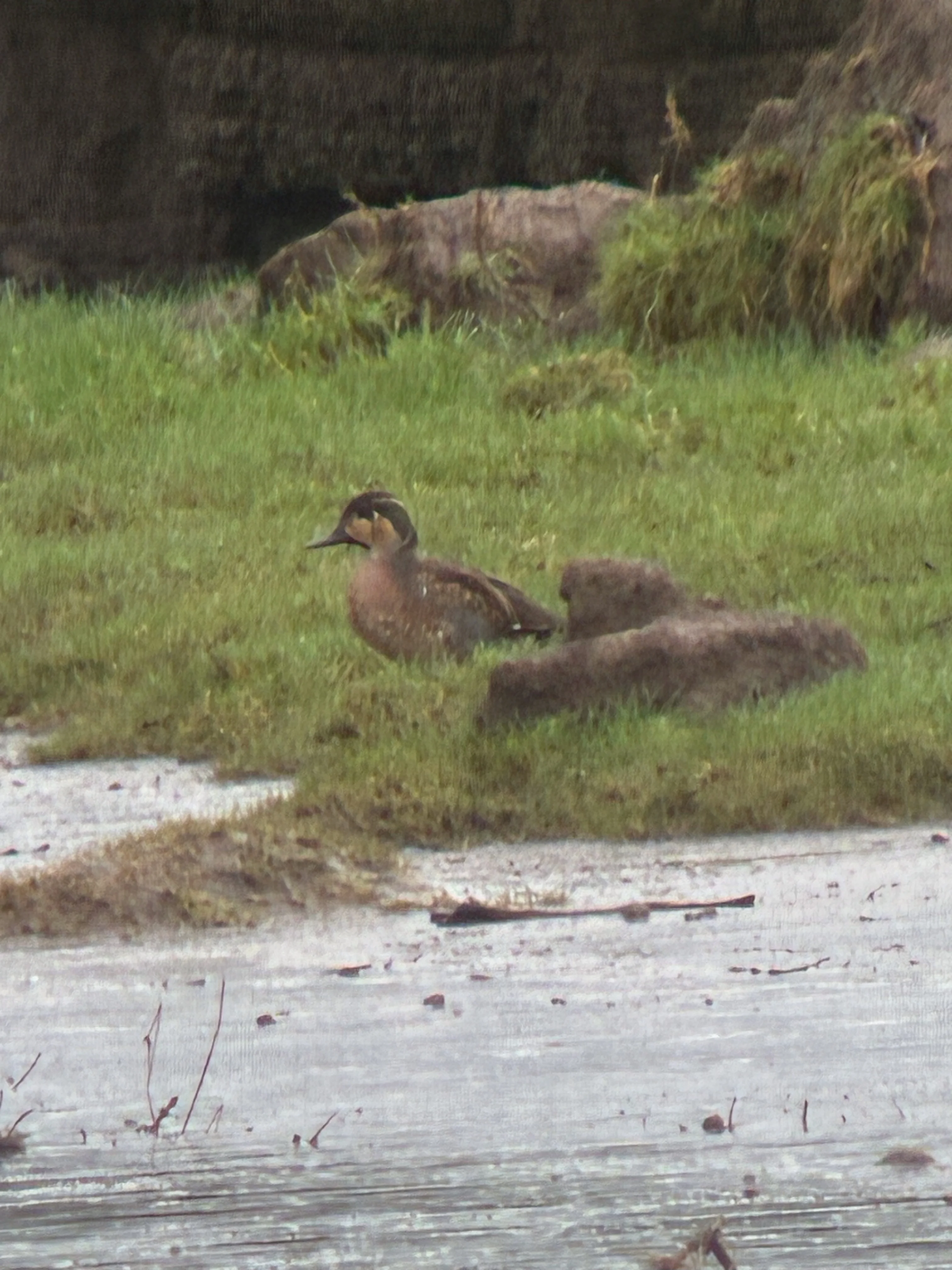
Baikal Teal, Waungron, Glamorgan (Peter Howe).
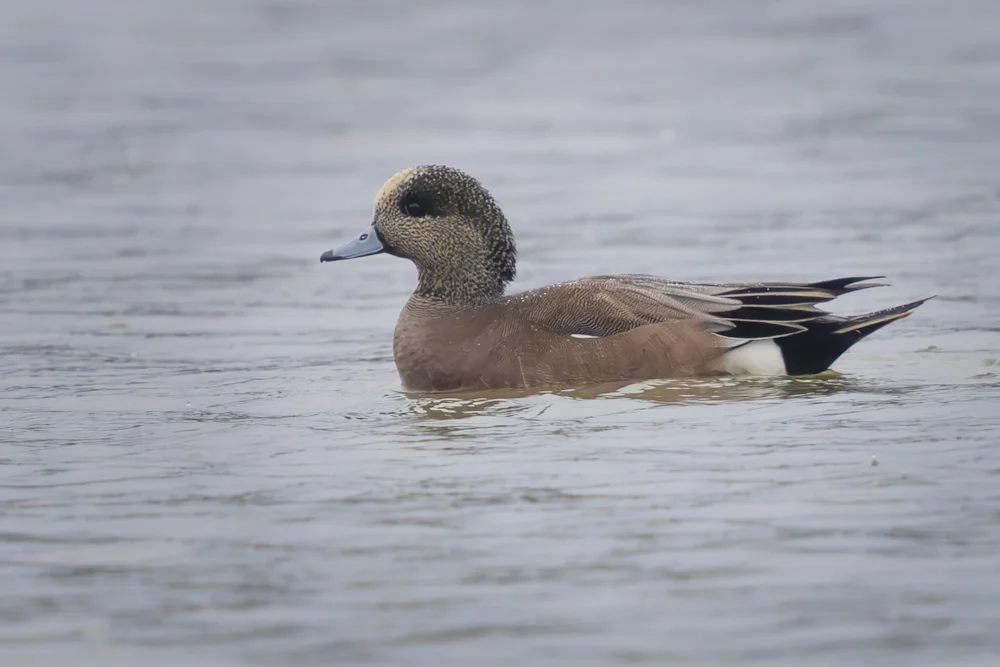
American Wigeon, Ferry Meadows CP, Cambridgeshire (Will Bowell).
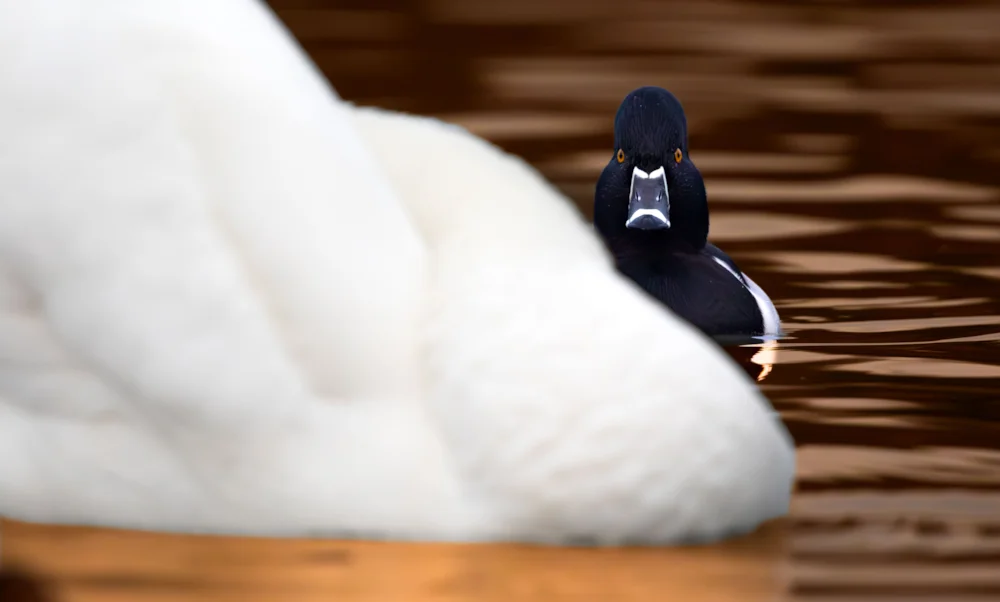
Ring-necked Duck, Ilkeston, Derbyshire (Sam Goddard).
A Richardson's Cackling Goose at Clifton Pits, Worcestershire, on 25th was a noteworthy occurrence, albeit its appearance with feral Canada Geese will likely see it accepted onto Category E as a presumed escape. Others in Cumbria and Argyll were with more expected carrier species. At least one of the week's Ross's Geese – at Lessonhall, Cumbria – was of similarly questionable heritage, and the origins of Snow and Red-breasted Geese are regularly open to debate. Four Snow Geese were logged this week, with Red-breasted Geese still in Essex and on Islay, Argyll. A Todd's Canada Goose was a welcome arrival along the North Norfolk coast; elsewhere, there were up to six Black Brant and a Grey-bellied Brant in Co Dublin.
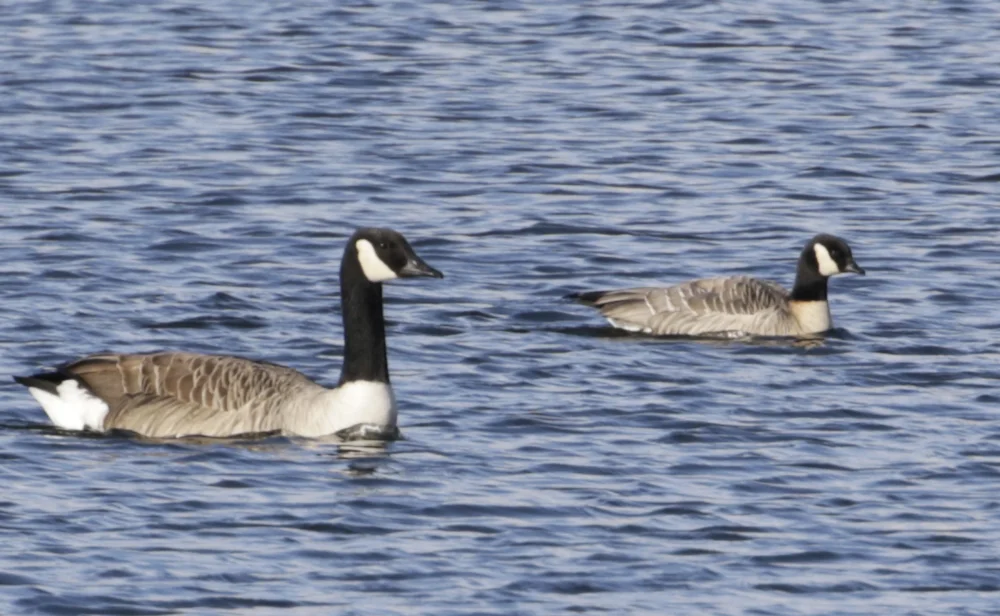
Richardson's Cackling Goose (right) with Canada Goose, Clifton Pits, Worcestershire (Andrew Warr).
Snow Goose, Deeping High Bank, Lincolnshire (Matthew Mellor).
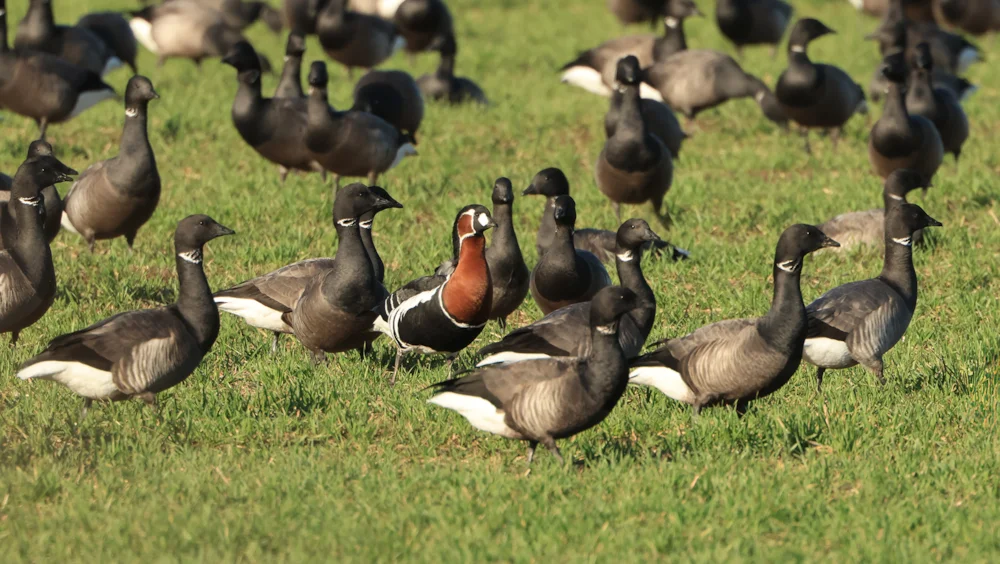
Red-breasted Goose (centre) with Dark-bellied Brent Geese, Paglesham Eastend, Essex (Steve Arlow).
Western Palearctic
Visitors to Cape Verde added to the island's excellent collection of Afrotropical herons, finding a Black Heron alongside continuing Black-headed Heron and Yellow-billed Egret on São Vicente on 25th. Disappointingly, however, there would be no sign of the Western Willet on Sal after 22nd.
The continuing Short-billed Gull on Vágar sparked the first-ever international twitch to the Faroe Islands, while an adult Ross's Gull was found on Eysturoy. News from Denmark included Dusky Thrush, Stejneger's Scoter and Black Scoter; Baltimore Oriole, Stejneger's Scoter, White-winged Scoter and American Herring Gull were in Iceland.
Two more Allen's Gallinules were found in Italy and a Black-faced Bunting persisted on Texel, Netherlands, with the third-winter Cape Gull still at Laredo, Spain, and a Pied-billed Grebe again in Portugal. The Belted Kingfisher-Pacific Diver duo remained in Brittany, France.
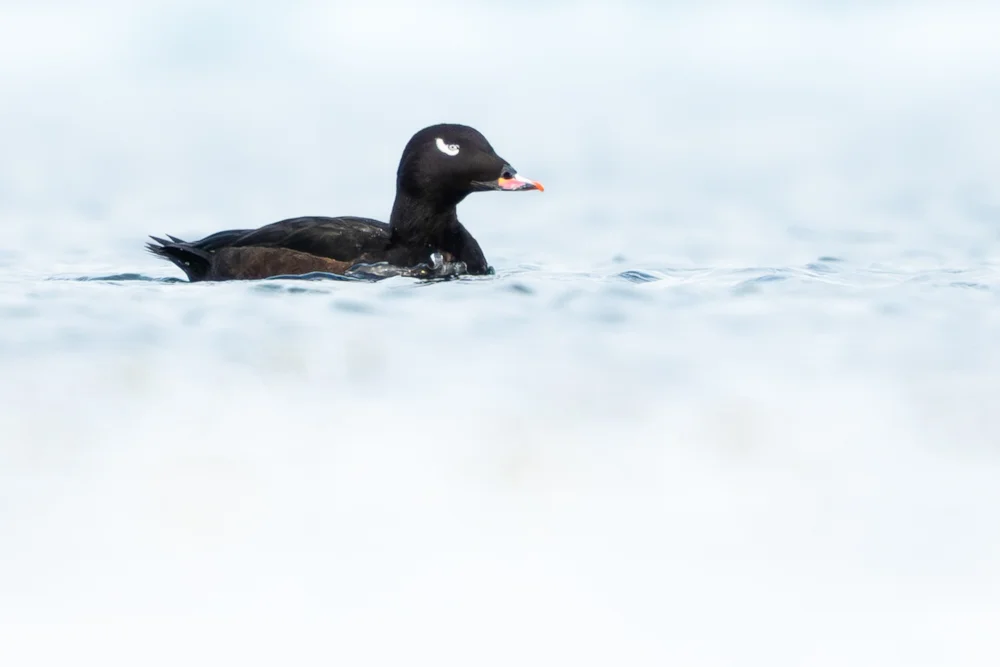
White-winged Scoter, Njarðvík, Iceland (Bjørn Penk).
- Get your 2026 year list off to a thrilling start and keep up to date with by-the-minute sightings updates of rarities and significant birds in your local area at www.birdguides.com/sightings or via the all-new BirdGuides app. New users are entitled to a one-month free trial.

