
Back-to-back transatlantic lows brought further exciting arrivals from the New World, including a Nearctic passerine or two, though it was the shorebirds that stole the headlines, with several delivering thrills to patch birders in central and eastern England. Cornwall enjoyed a monopoly on mega-rare seabirds, though more exciting still was some of the best Leach's Storm Petrel passage in the Irish Sea for several years.
Leach's in the Irish Sea
After such an extended period of westerly winds, it was perhaps no great surprise that so many Leach's Storm Petrels ended up in the Irish Sea this week. Perfect conditions for seeing this species had birders flocking to the coasts of North-West England and North Wales for one of the most exciting spectacles in the British birding calendar.
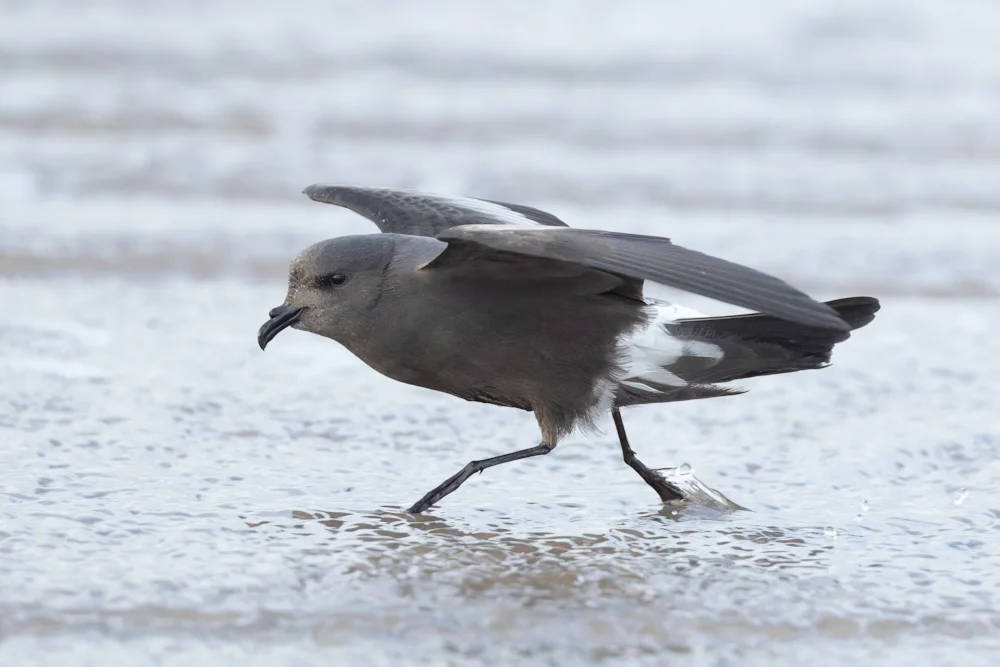
Leach's Storm Petrel, Wallasey, Cheshire (Joe Downing).
Leach's Storm Petrels are particularly vulnerable to winds in excess of their normal flight speed and things get even trickier in autumn, when many are in an advanced state of moult. The numbers seen over the weekend were some of the best experienced for several years, with high counts including 131 off Hilbre Island, Cheshire, 50 past Point of Ayr, Flintshire, and 47 from Seaforth, Lancashire, on 20th. One was seen inland at Pennington Flash, Greater Manchester, on 17th.
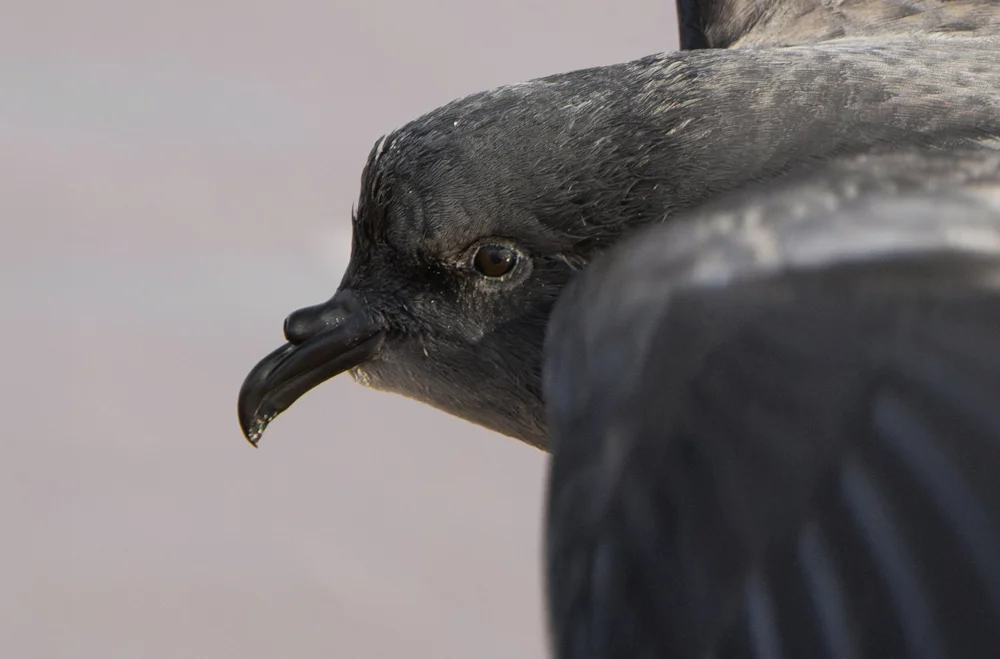
Leach's Storm Petrel, Wallasey, Cheshire (Miles Cluff).
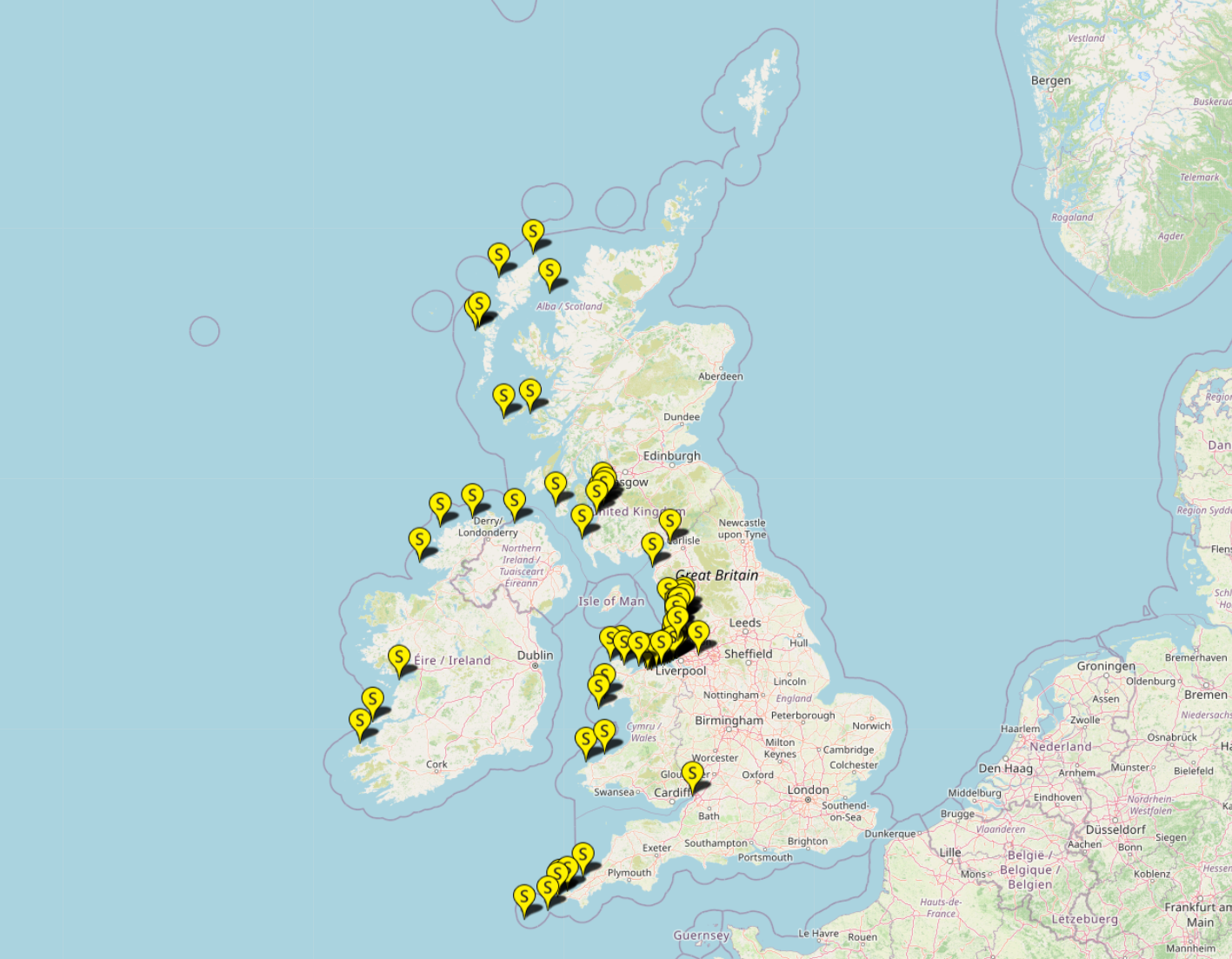
Leach's Storm Petrel sightings from 14-20 September 2026 (BirdGuides Sightings data).
Cornish seabird action
Things got a little silly off the Cornish coast on 20th when a Red-billed Tropicbird was photographed off Porthgwarra. The finder remarked that while walking his dog along the clifftop he saw "a small white dot flying with the Northern Gannets, so took a photo and got a surprise!" It certainly was a surprise – and is presumably the same bird first seen following yachts off Looe 14 days earlier. It appears that the tropicbird might be hanging around in south-west Cornwall, potentially feeding and loafing with Northern Gannets. Who is going to be the hero and track down the bird's favoured haunt?
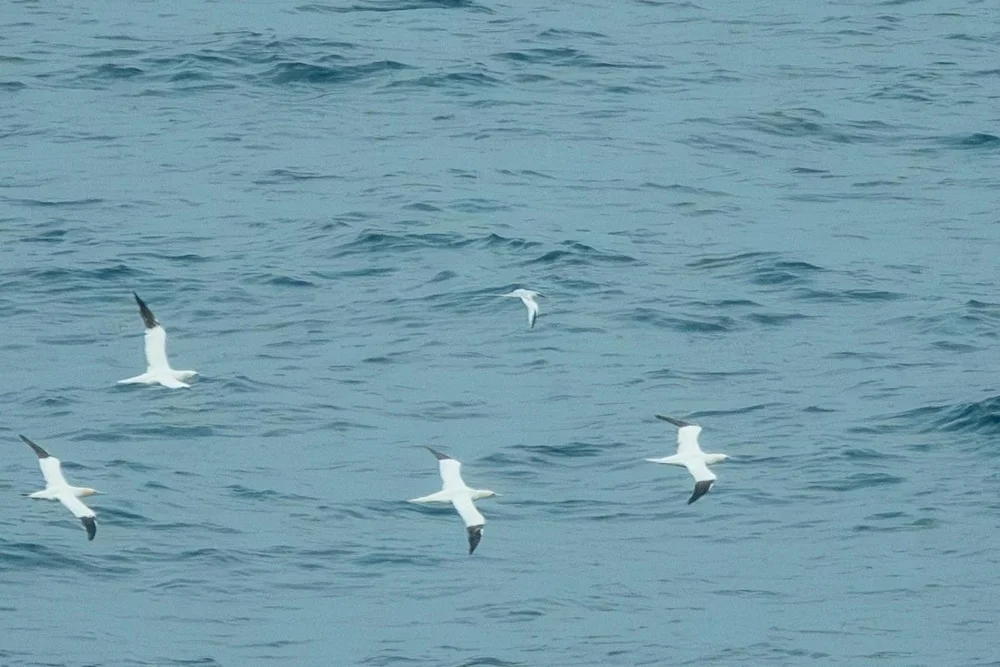
Red-billed Tropicbird (top) with Northern Gannets, Porthgwarra, Cornwall (Paul Hall).
A fantastic Grey Phalarope count from Land's End involved a minimum of 241 birds feeding offshore in a loose flock. While this count is exceptional, it has a long way to go to better the huge numbers seen off the South-West in September-October 1960, when there were counts of more than 1,000 off St Agnes, Scilly, on 15 September and at least 700 off Torquay, Devon.
Then, as we went to press this morning [21 September], news surfaced of an immature Red-footed Booby lingering for two hours in St Ives Bay the previous afternoon. If confirmed, it would become the fourth British record after birds in East Sussex in 2016, Scilly in 2023 and Dorset in 2024.
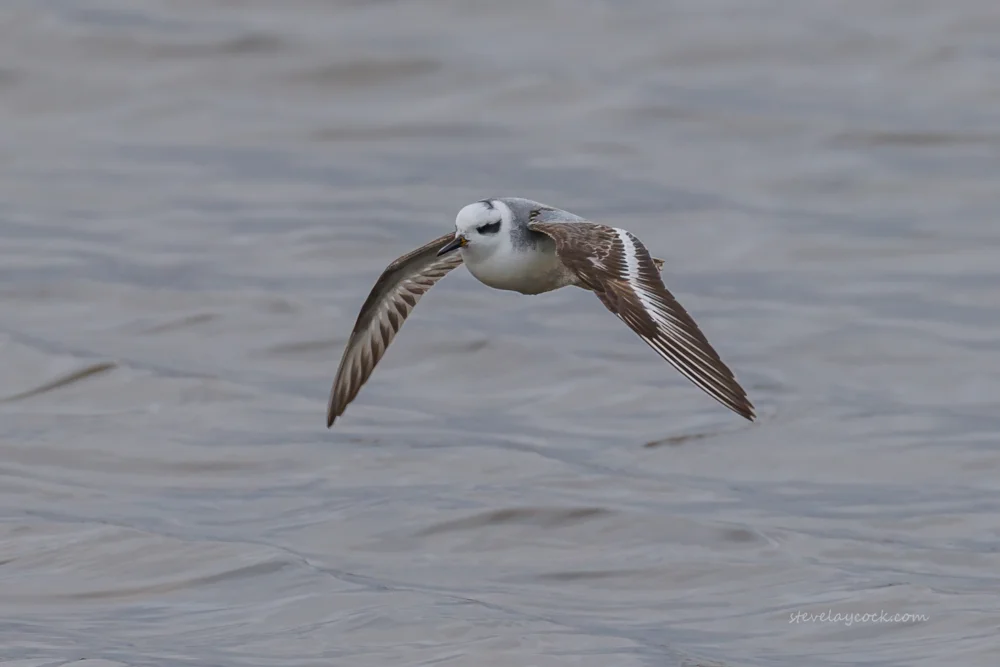
Grey Phalarope, Pennington Marshes, Hampshire (Steve Laycock).
Short-staying Short-billed
Cornish birders were also kept entertained by a moulting first-summer Short-billed Dowitcher at Drift Reservoir on 14th, with this tricky identification eventually settled after Long-billed Dowitcher was ruled out on call and plumage features. To the disappointment of many mulling a twitch the next day – including the author of this article – the dowitcher was flushed by a Peregrine Falcon some three hours after discovery and flew high east, never to be seen again. It is the first British record in 13 years.
Four key pics of the moulting first summer Short-billed Dowitcher at Drift Res (14th Sept). Observed for a couple hours before a Peregrine spooked it and then flew off high. It was video’d and the Turnstone-like call recorded. First record for Cornwall.
— Steve Rogers 🟰🟰 (@runnelstone.bsky.social) 15 September 2026 at 21:18
[image or embed]
Another excellent week for Baird's Sandpiper discoveries saw a further 10 unearthed, including several inland birds. An adult was at an unsuspecting pool near Whitchurch, Cheshire, while juveniles were at Rudyard Reservoir, Staffordshire, and Redmires Reservoirs, South Yorkshire, on 15th. Another juvenile followed at Ardley, Oxfordshire, on 20th.
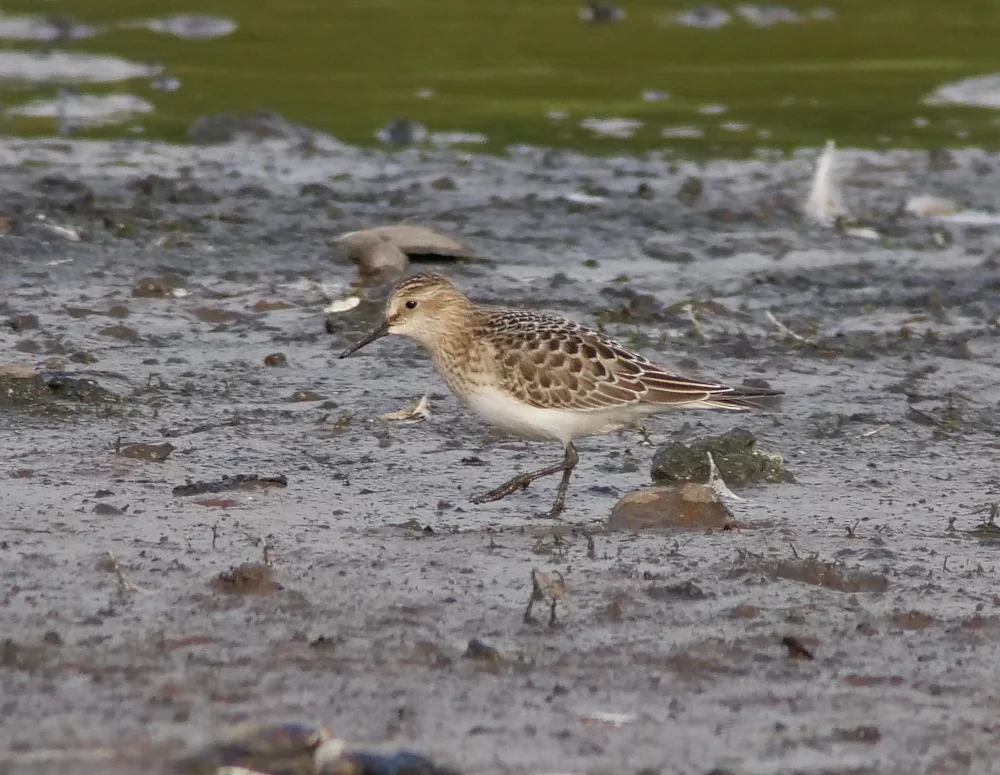
Baird's Sandpiper, Rudyard Reservoir, Staffordshire (Steve Nuttall).
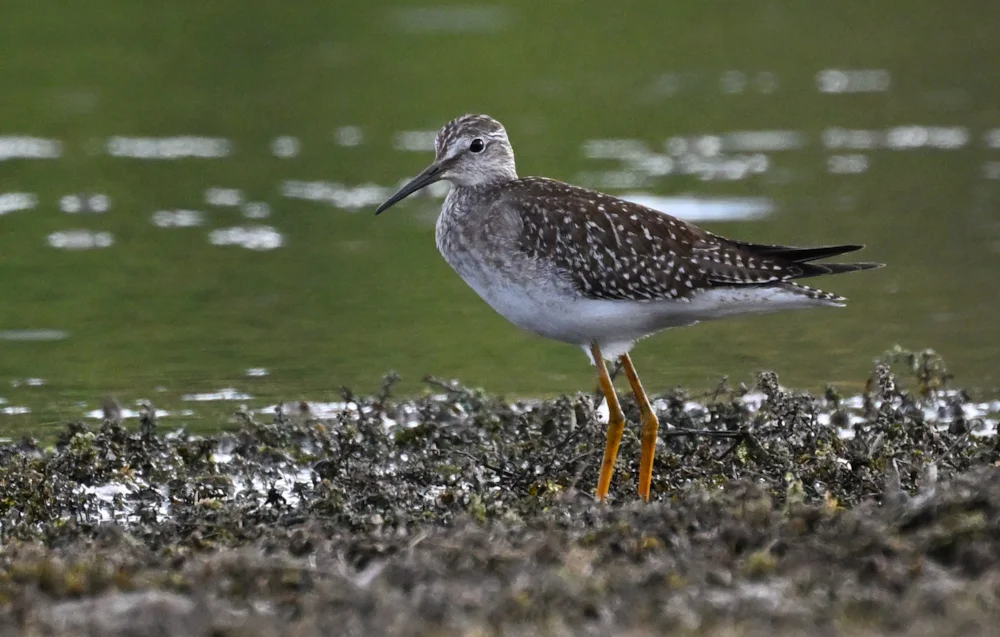
Lesser Yellowlegs, Chew Valley Lake, Avon (Brian Thompson).
A juvenile Least Sandpiper at Ventry, Co Kerry, on 19th was another excellent find and was complemented by three juvenile Semipalmated Sandpipers in western Ireland. Seven Lesser Yellowlegs included inland finds in Rutland and Bedfordshire, a first-winter Wilson's Phalarope spent four days at Meikle Loch, Aberdeenshire, and a Long-billed Dowitcher was new on Lewis, Outer Hebrides. Other new arrivals consisted of seven American Golden Plovers, 21 Buff-breasted Sandpipers and 29 Pectoral Sandpipers.
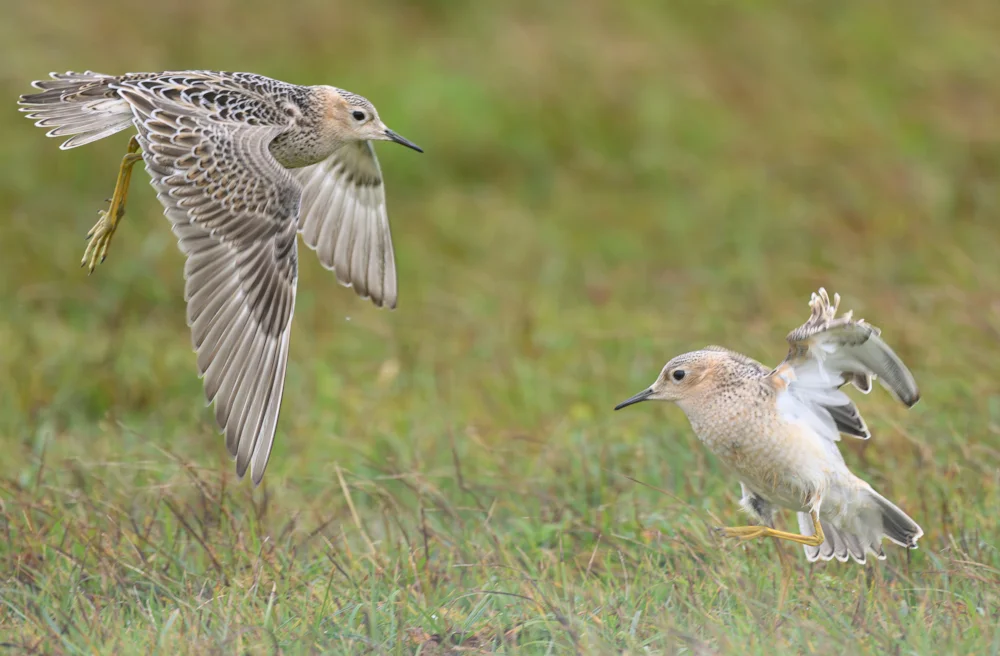
Buff-breasted Sandpipers, South Uist, Outer Hebrides (Ron Macdonald).
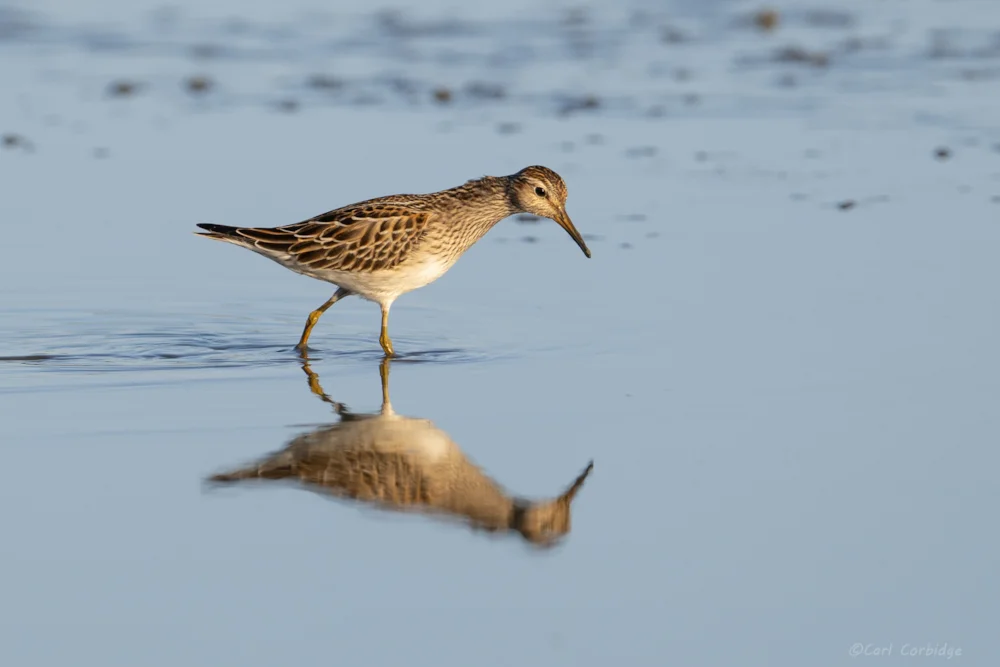
Pectoral Sandpiper, Adwick Washlands RSPB (Dearne Valley), South Yorkshire (Carl Corbidge).
New World landbirds
Twitchers visiting Dursey Island, Co Clare, for the continuing first-winter female Blackburnian Warbler (last seen on 17th) found an elusive Swainson's Thrush in the very same garden late on 15th, while a Red-eyed Vireo was found along the track to the garden on 17th.
The fog meant that photography was difficult, but here’s the 1cy female Blackburnian Warbler from Dursey Island, Co. Cork last weekend. The 20th species of American passerine I’ve seen in Ireland. @BirdGuides pic.twitter.com/4fKeMYG7Qn
— BMcCloskey (@BMcCloskey_98) September 18, 2026
Red-eyed Vireo is one of the most regular Nearctic passerines recorded in Britain and Ireland. Three of four found this week were in western Ireland (others were at Blacksod, Co Mayo, and on Inishmore, Co Galway), though the most notable of all was a first-winter trapped and ringed in South Wales at Kenfig NNR, Glamorgan, on 20th – a site and county second after one there on 21 September 2023.
This wholly unexpected Red-eyed Vireo was trapped and ringed at Kenfig Pool this morning and is the seocnd record for Glamorgan and the reserve recording area. I had the shock of my life when I saw it staring back at me from the net. Seen by 20+ observers upon release. pic.twitter.com/q3bST92bts
— Neil Donaghy (@neild1962) September 20, 2026
Red-eyed Vireo is perhaps beaten by American Pipit in terms of frequency. St Kilda, Outer Hebrides, has a special affinity with the species, with two birds on 19th continuing the island's remarkable run of records. Another individual was on Skellig Michael, Co Kerry.
Near-annual on #StKilda in recent years, but still rare nationally, we had 2 American Buff-bellied Pipits this morning. @hebridesbirds.bsky.social @birdguides.bsky.social
— St Kilda World Heritage Site NTS (@stkildawhs.bsky.social) 19 September 2026 at 13:52
[image or embed]
Best of the rest
One of the most bizarre vagrancy events of the decade, if not all time, concerned a Crested Tit photographed in small potted pine trees at Bridge Street in central Ipswich, Suffolk, on 19th. The multiple different frames, captured on a phone camera, arguably leave little doubt as to the record's authenticity – though there will still be speculation as to the bird's origins, given the species is kept in captivity. It is an English mega in every sense of the word: there are thought to be as few as seven 'genuine' records of Crested Tit in England since the start of the 20th century, the most recent of those in West Sussex in 1997. English records of Crested Tit relate to wanderers from continental Europe, where the subspecies mitratus and abadiei reside.
The fourth Eastern Olivaceous Warbler for Scilly made for a quality find on Gugh from 16th. It is the first 21st-century record, with the others hailing from 1984, 1985 and 1998. The influx of birders saw a Greenish Warbler found on the island from 17th, while a Greater Short-toed Lark was on St Mary's Airfield. Wall-to-wall westerlies made for a quiet week of eastern passerine finds elsewhere. Highlights included a Western Bonelli's Warbler at Dungeness, Kent, a Rosy Starling in Co Cork, two Red-backed Shrikes, two Hoopoes and 14 Wrynecks, while a Yellow-browed Warbler in London was a big surprise given the overall dearth of the species so far this autumn. A report of a possible Northern Nutcracker at Scousburgh, Mainland Shetland, on 18th follows the largest influx in 'decades' in Finland and bumper numbers in other parts of Northern and Eastern Europe – though these bumper tallies are yet to reach west to Norway.
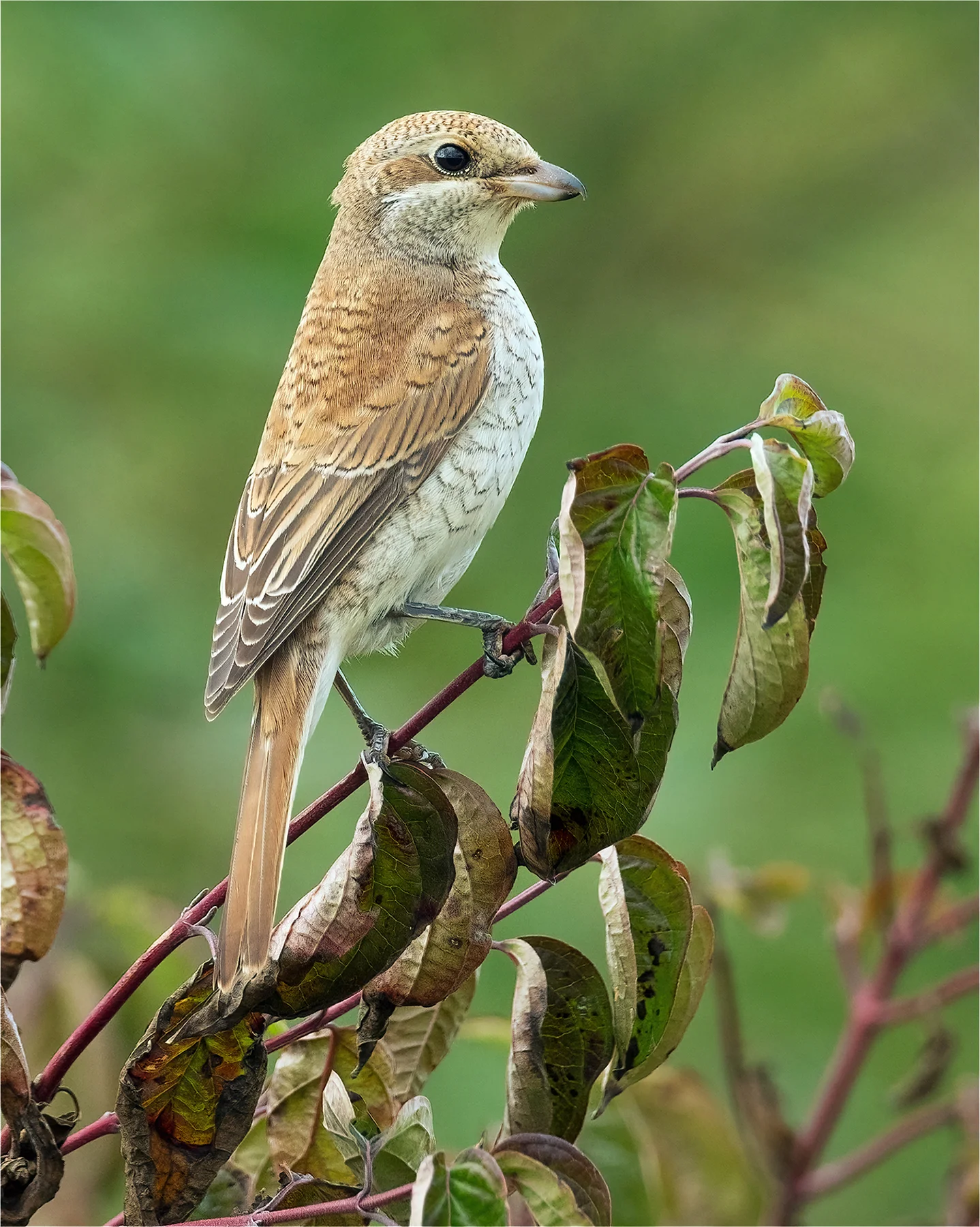
Red-backed Shrike, Milton Keynes, Buckinghamshire (Nigel Kiteley).
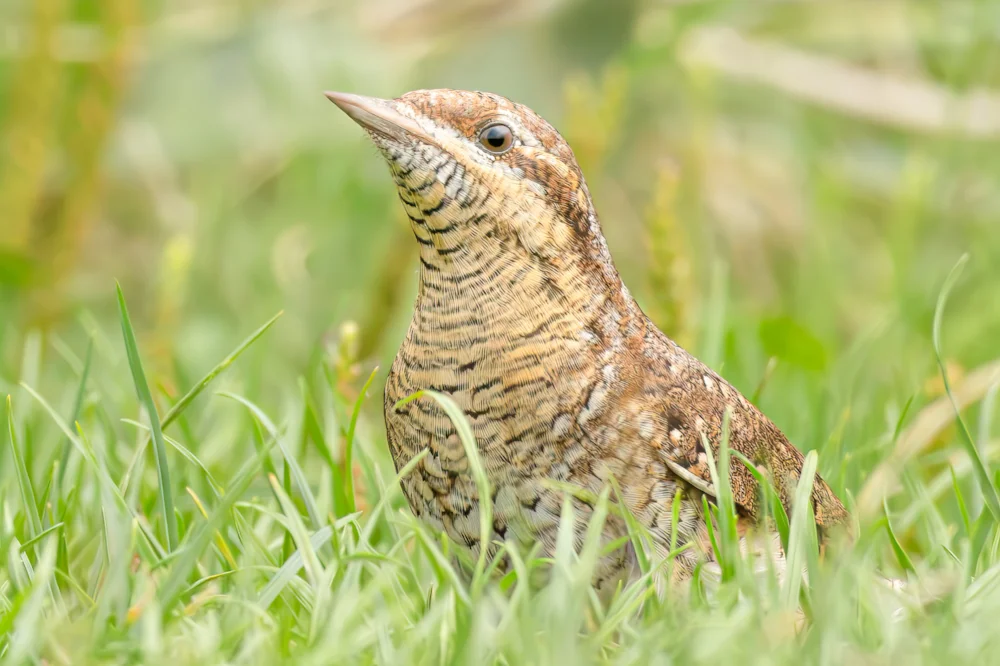
Wryneck, Swalecliffe, Kent (Thomas Inns).
Pallid Harriers were reported from four sites in southern England, with a further two in Shetland. A juvenile Montagu's Harrier was in Suffolk and a Red-footed Falcon was photographed at Welney WWT, Norfolk.
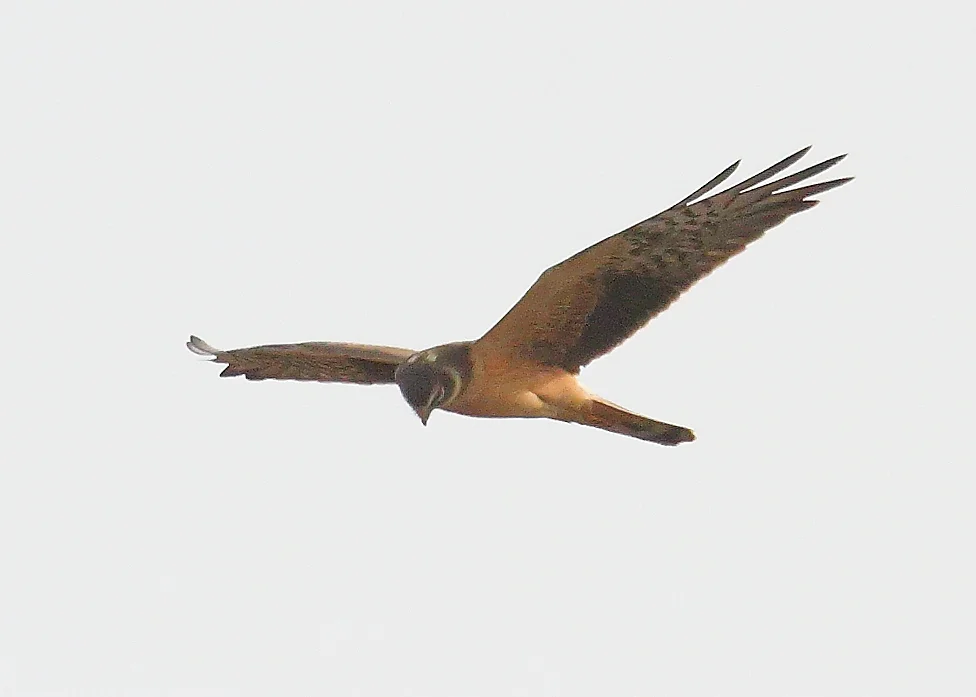
Pallid Harrier, Salisbury Plain, Wiltshire (Mike Trew).
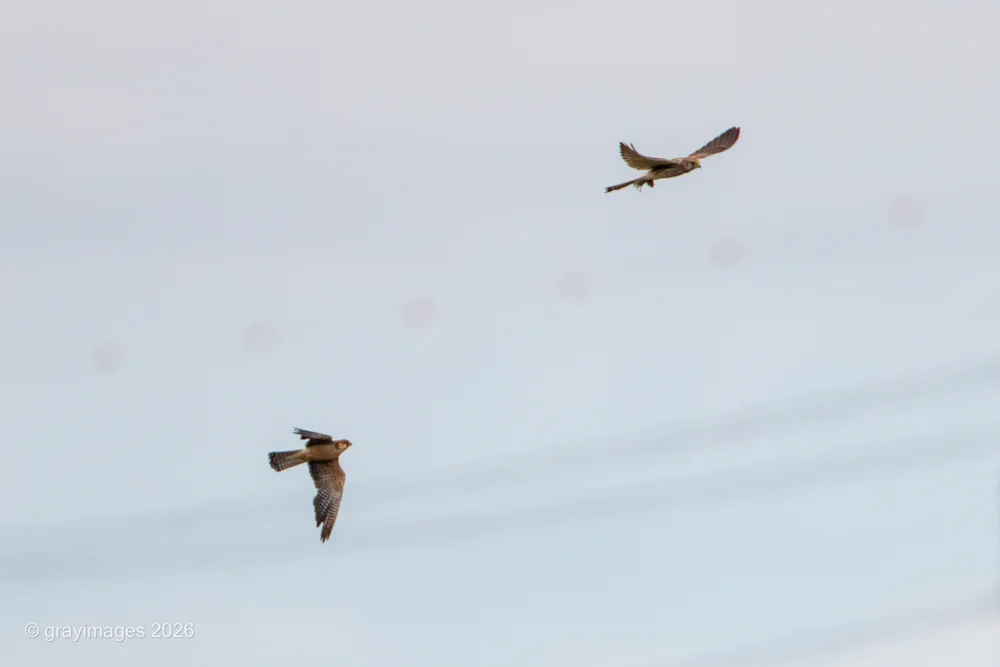
Red-footed Falcon (left bird) with Common Kestrel, Welney WWT, Norfolk (Sean Gray).
Sadly, a Bridled Tern was found recently deceased at Killeenaran Bay, Co Galway, on 19th. A moulting adult White-winged Tern was on the Dublin, Co Dublin, outskirts and a first-winter Bonaparte's Gull was in Caithness, with the juvenile American Black Tern still in Shetland.
Last but not least, Lesser Scaup were discovered at St Aidan's RSPB, West Yorkshire, and Blanket Nook, Co Donegal.
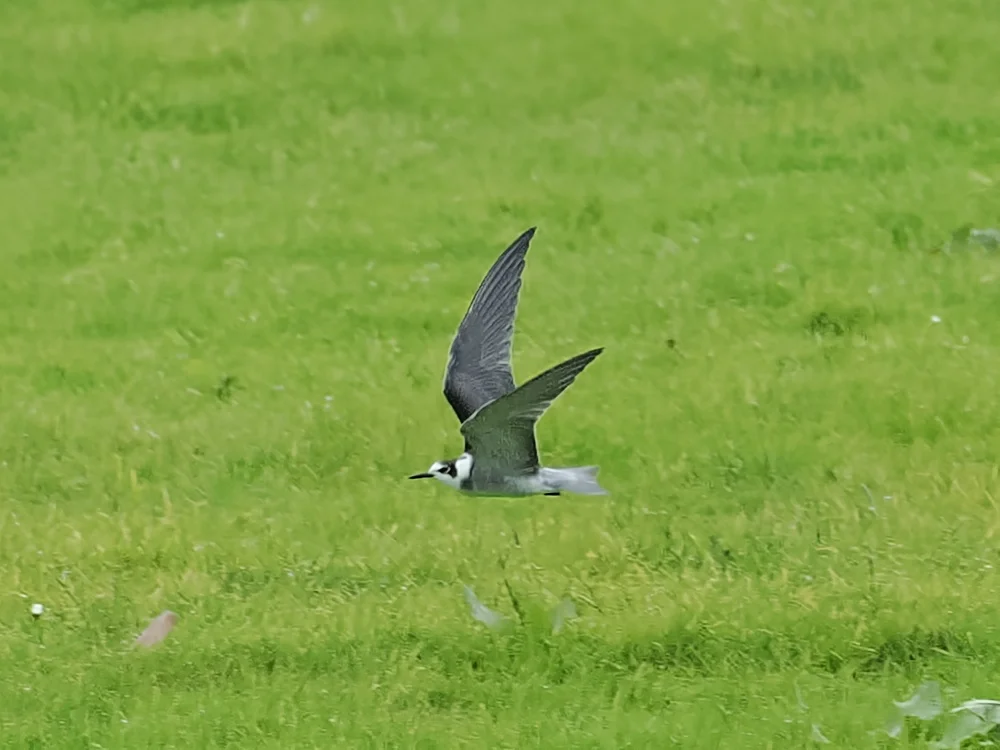
American Black Tern, Loch of Tingwall, Mainland, Shetland (David Cooper).
Western Palearctic
Nearctic arrivals came to the fore across the region, most notably a juvenile Sora on Alderney, Channel Islands, on 14th and a Common Nighthawk taken into care on Pico, Azores, on 19th. Other finds consisted of Green Heron and Stilt Sandpiper in the Azores, Solitary Sandpiper in Spain, Wilson's Phalarope on Sal, Cape Verde, two Black Scoter in France and at least four American Pipits in Iceland.
Lista Fyr, Norway, bagged the most outlandish prize of the week, when a Black-capped Petrel flew past north on 19th. It is, unsurprisingly, the first-ever Norwegian record. Other standout records included two Elegant Terns near Setúbal, Portugal, and the first Greenish Warbler for Israel in Tel Aviv.
Black-capped Petrel, Lista Fyr, Norway (Gonzalo Pardo).

