
A new study published in Biology Letters has revealed how melanin affects the weight of feathers, raising questions regarding the implications of colour for birds.
Birds are well known for exhibiting a range of colours in their plumage, these often serving in mate attraction, communication or camouflage. Colours in feathers are mainly produced by melanin pigments, but until now little has been known about how much these pigments weigh and the implications for flight.
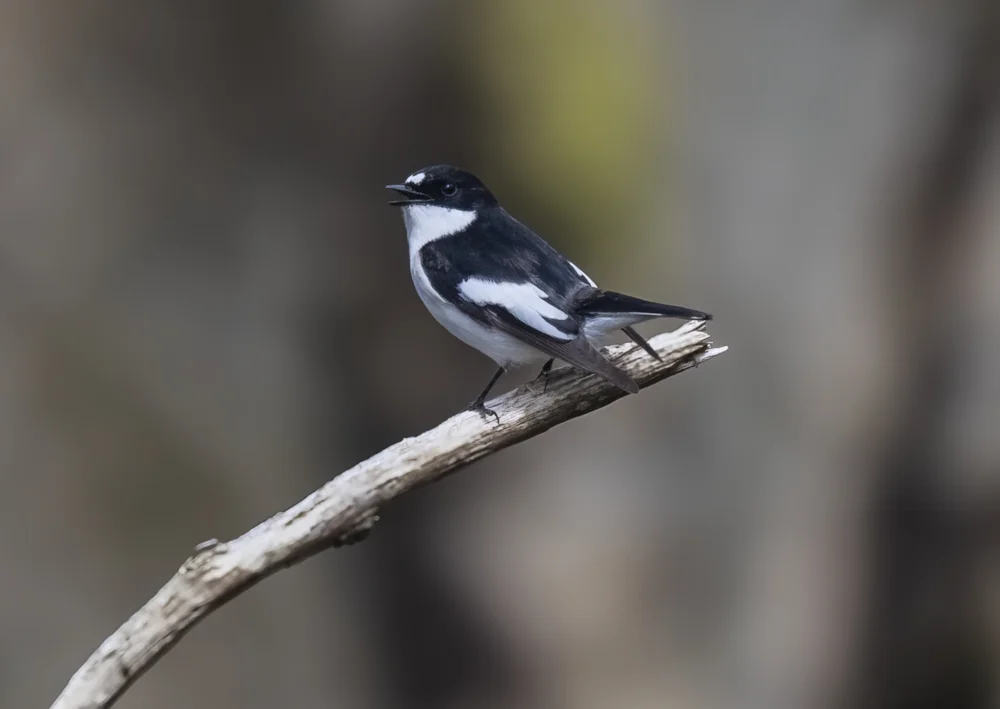
The researchers weighed feathers from species including Pied Flycatcher before and after extracting pigments (Steve Clare).
The Spanish-led research has shown that melanin makes up around 22% of a feather’s total weight. Even in the darkest feathers, it never accounts for any more than 25%. The two main types of melanin differ in weight. Eumelanin, which produces black and brown shades, is heavier than pheomelanin, which gives reds and paler tones.
The team analysed feathers from 109 specimens across 19 species, including Pied Flycatcher, Golden Eagle and Eurasian Bullfinch. They extracted pigments using caustic soda, before they compared the feather weights with data from prior to extraction.
The findings suggest that colour carries a physical cost. Darker feathers weigh more, which could mean extra energy expenditure during flight.
The authors said: “Our findings introduce a novel metabolic cost for flight associated with different plumage phenotypes that may help us understand the evolutionary predictors of bird colour diversity.”
The study proposes that white feathers in species such as Snowy Owl may not just provide camouflage in snow, but could also reduce pigment weight. This would allow denser, warmer plumage without hindering flight. Similarly, lighter-coloured feathers could benefit migratory birds by lowering the energetic cost of long journeys.
Reference
Galván, I, et al. 2025. 'Pigment contribution to feather mass depends on melanin form and is restricted to approximately 25%', Biology Letters. DOI:10.1098/rsbl.2025.0299.
