
A new study has identified significant potential conflicts between mining and the conservation of Philippine Eagle, with approved mining concessions overlapping 41% of highly suitable nesting habitat on the island of Mindanao.
Published in Bird Conservation International and reported by Mongabay, the research mapped likely nesting habitat across eastern Mindanao, the species' main stronghold, using almost four decades of field observations, 48 known nest locations, GPS tracking data from seven adult eagles and satellite-derived information on vegetation, forest condition and terrain.
The researchers found that mining concessions overlap with 65% of the core areas identified within highly suitable nesting habitat. Meanwhile, only around 35% of the suitable habitat mapped across the Eastern Mindanao Biodiversity Corridor lies within protected areas. Indigenous ancestral domains also overlap with 65% of core high-quality nesting habitat, underlining the importance of Indigenous-managed forests to the eagle's future.
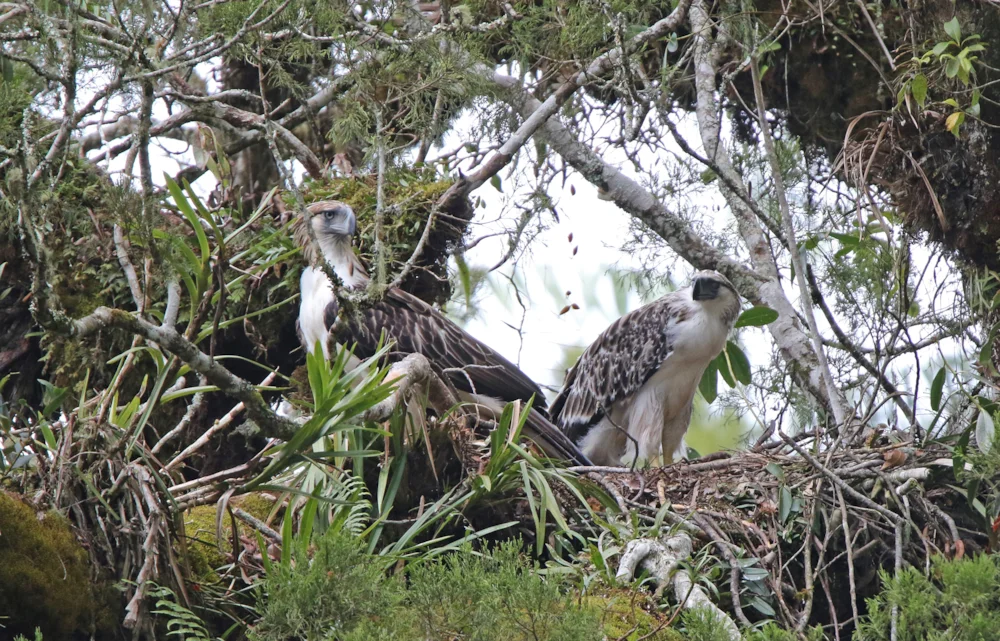
A study has mapped suitable nesting areas for the Critically Endangered Philippine Eagle on Mindanao, finding extensive overlap with mining concessions (Peter Simpson).
Areas for protection identified
The authors stress that an approved mining concession does not necessarily mean extraction has begun or that habitat has already been destroyed. Instead, the maps identify areas where further surveys and safeguards should be prioritised.
They recommend systematic surveys within concessions that overlap suitable habitat, temporary moratoriums where proposed mining could affect breeding eagles, and legal protection and buffer zones for confirmed nesting areas.
The research also highlights the importance of retaining forest beyond known nesting sites. Such areas may provide future breeding habitat, climate refuges and routes that allow young eagles to disperse between larger forest blocks.
The authors call for stronger partnerships with Indigenous communities, whose forest guards and researchers already contribute to nest searches, monitoring and habitat protection. They argue that combining scientific mapping with local knowledge can help direct conservation action before important habitat is irreversibly altered.
Reference
Sutton, L J, Ibañez, J C, Salvador, D I, Sutton, L J, et al. 2026. Directing conservation action for the Critically Endangered Philippine Eagle Pithecophaga jefferyi to mitigate mining impacts and maximise indigenous land management. Bird Conservation International. DOI: doi:10.1017/S0959270926100586

