
European Roller undertakes one of the Western Palearctic's most remarkable migrations, linking breeding grounds in Europe and Central Asia with wintering areas deep within Africa.
According to Mongabay, recent research and conservation projects are revealing how protecting the species requires international collaboration across multiple continents and habitats.
European Roller has declined significantly across parts of its range in recent decades due to agricultural intensification, habitat loss and reductions in large insects, which are the principal prey. In Western Europe, the species has disappeared from several former strongholds, although targeted conservation measures have helped stabilise some populations.
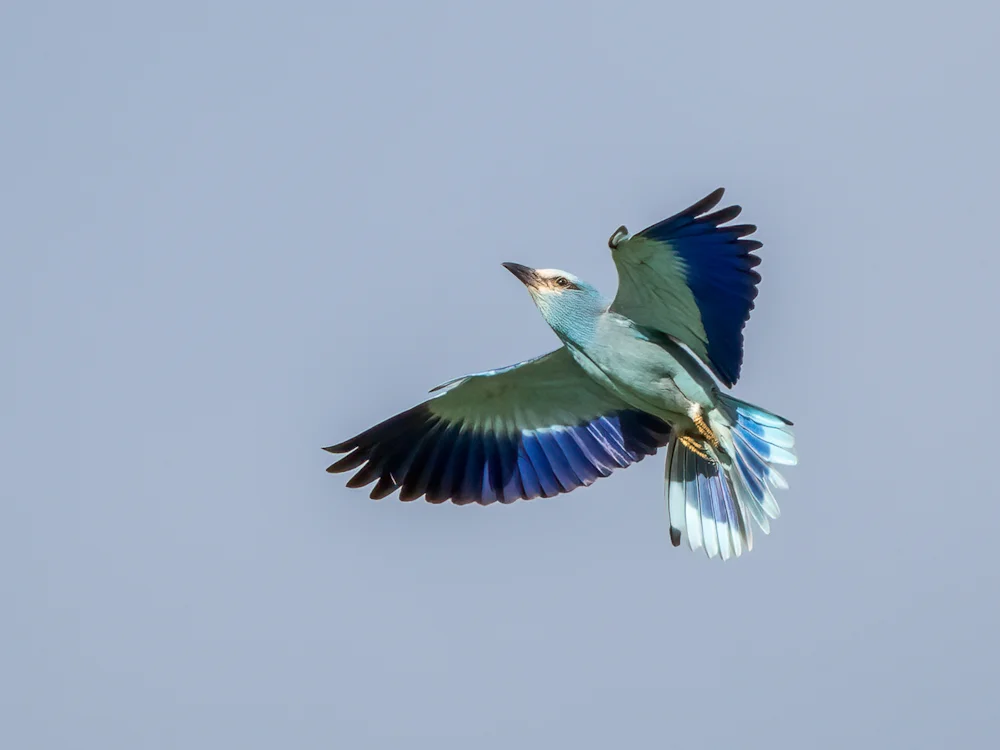
Recent research is revealing how protecting European Roller requires international collaboration across multiple continents and habitats (Terry Laws).
Importance of satellite tracking
Satellite tracking has transformed understanding of the species' movements. Birds breeding in regions as far apart as Iberia, Eastern Europe and Central Asia undertake long-distance migrations across the Sahara into sub-Saharan Africa, using a network of stop-over sites that are increasingly under pressure.
The Mongabay report highlighted the importance of maintaining suitable habitat not only on breeding grounds but also along migration routes and in African wintering areas. Changes in land use, pesticide use and climate conditions across these regions can all affect survival.
Nestbox schemes have become an important conservation tool in several countries, particularly where mature trees and natural nesting cavities have declined. Monitoring projects involving local communities have also helped strengthen awareness and co-operation between countries linked by the species' migration.
Migration connectivity
Conservationists interviewed by Mongabay stressed that European Roller represents a powerful example of migratory connectivity, where ecological pressures in one part of the world can directly influence bird populations thousands of kilometres away.
Despite ongoing challenges, the species remains a conservation success story in some regions, demonstrating that co-ordinated international action can help reverse declines in long-distance migrants.

