
Large protected areas could provide an important buffer against climate-driven declines among cold-adapted birds in Northern Europe, according to research based on more than four decades of bird monitoring in Finland.
Researchers analysed breeding-bird counts from 245 protected areas, comparing surveys conducted between 1980 and 1999 with those from 2010-2022. The dataset covered 100 species across southern, central and northern Finland.
Reserve size alone did not explain population trends. However, a clear relationship emerged in northern Finland when the researchers considered both species' temperature preferences and latitude.
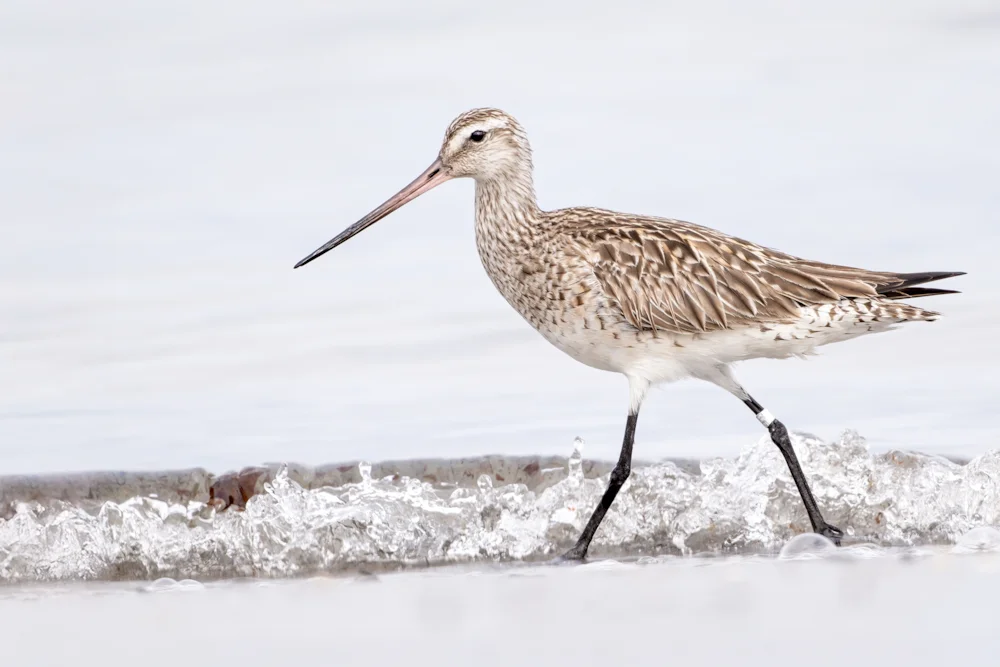
Bar-tailed Godwit was one of the species that featured in the study (Romano Da Costa).
More resilience in larger reserves
Cold-adapted species declined in smaller northern protected areas but remained comparatively stable in larger reserves. By contrast, warm-adapted species increased in smaller northern sites while remaining more stable in larger ones.
The pattern was not statistically significant in southern or central Finland.
The authors suggest that larger reserves may provide more extensive continuous habitat and a greater diversity of microclimates, allowing birds associated with cooler conditions to find suitable areas as temperatures rise. Smaller sites have proportionally more edge habitat and may be more vulnerable to changes in the surrounding landscape.
Extensive reserve network
Northern Finland's protected-area network is particularly extensive, with the 69 northern reserves included in the study averaging 33,600 ha, compared with 3,300 ha in central Finland and only 1,700 ha in the south.
The researchers identify approximately 11,700 ha as a useful planning benchmark for northern protected areas, below which cold-adapted species tended to show more negative trends. However, they stress that this should not be regarded as a universal minimum for protected areas or individual species.
Smaller reserves remain valuable, particularly where they protect scarce habitats or act as stepping stones between larger sites.
Reference
Hintsanen, L, et al. 2026. Large Protected Areas Buffer Against Climate Change Effects on Bird Populations in Northern Europe. Diversity and Distributions. DOI: doi.org/10.1111/ddi.70240
