
Campaign group Right to Roam is confidently predicting a government Green Paper on further access provisions for England and, as I wrote a couple of months ago, this worries me because of the potential harm to wildlife. Increased countryside access sounds like a good thing on paper but it could potentially be both good or bad. I wouldn't trust this wildlife-unfriendly Labour government to do it well.
I've been struck by how my concerns seem to chime with many naturalists. Three supportive letters appeared in the September issue (Birdwatch 399: 68). I talked to Cornish birders a few weeks ago and not surprisingly they were concerned at the existing level of coastal disturbance. Social media and my inbox have also revealed supportive views, although I treasure the remark suggesting I am trying to ingratiate myself with the right of politics by questioning the right (is it a right?) to roam.
It's not clear what our wildlife charities think about disturbance. I suspect that they are keeping their heads down as they do over many contentious issues, but a Green Paper will flush them out. I did notice, however, that in the RSPB's review of how wildlife fared on its nature reserves in 2024, there were a few very relevant mentions of access disturbance. One snippet was that 2024 was the first year that Eurasian Dotterel was not seen at the RSPB nature reserve on the Cairngorm Plateau.
The finger was pointed at recreational disturbance. It may have been accidental and unknowing disturbance, but that doesn't make it any less damaging to the dotterel. Public policy is a blunt instrument; you don't need to pass an exam in bird identification or show that you care passionately about wildlife to benefit from more access. Greater public access equals greater access for all.
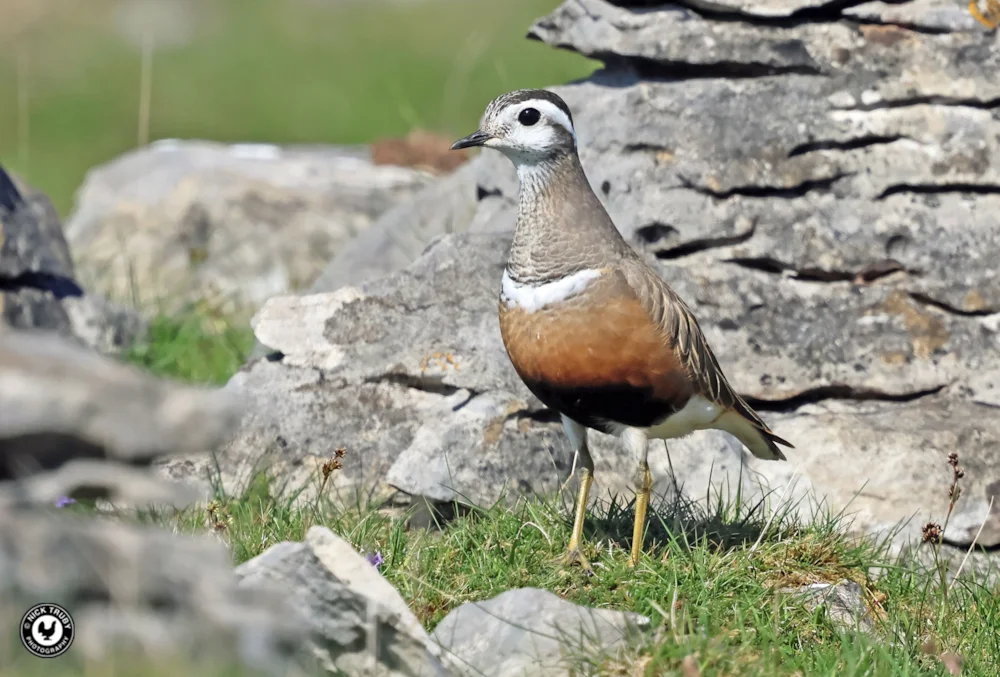
Eurasian Dotterel was not recorded on the Cairngorm Plateau in 2024, with the RSPB citing recreational disturbance as the cause (Nick Truby).
Disturbance overlooked
Sometimes I'm told that disturbance can't be important because we rarely mention it. I think that's because we take the detrimental impacts of disturbance for granted and as somewhat too difficult to change, until their impacts are revealed by events such as COVID-19 or foot-and-mouth disease. Both of these unexpected diseases removed disturbance from many sites – and often wildlife thrived.
In his excellent book, Traffication, Paul Donald analyses the impact of road traffic on wildlife and produces a strong case that disturbance is far more important than we usually admit. The trouble is, it's very difficult to see how to re-route or close (even temporarily) much of our road network to benefit wildlife when the impacts on commerce, trade and peoples' lives would be major. But a consultation to increase access, and potentially disturbance, should concentrate the mind.
Take a look at the Right to Roam website (www.righttoroam.org.uk) and see what you make of it. Earlier I described it as a campaign group and that's what it is. There is no associated address and it does not appear to be a charity or a company, so it is difficult to see how much money the group has or where it comes from. But also, its Wildlife Policy is still described as 'forthcoming', as it has been for ages and ages. This doesn't give the impression of a campaign group that has wildlife at the forefront of its collective mind.
We may soon be able to respond directly to a consultation, so put on your thinking caps! Maybe restrictions should be in the mix as well as new access provision. I think it would be rash to assume that wildlife's needs will be met without a proper public conversation.
- This column first appeared in the October 2025 edition of Birdwatch. To be the first to read the magazine each month, take out a subscription to Birdwatch, or get the magazine alongside your bird news by subscribing to either Bird News Ultimate (paper magazine) or Bird News Ultimate Plus (digital access).

