
Harvest Mouse is Britain's smallest rodent, weighing no more than 4-6 g and measuring 50-70 mm in length, with a tail of similar size. Covered in a sandy-golden or russet coat with a contrasting white underside, it has small, hairy ears, a blunt nose, and remarkably sharp eyesight and hearing – enabling it to detect predators up to 7 m away.
Its most distinctive feature is its prehensile tail, unique among British mammals, which it uses to grasp stems and navigate the dense stalks of long grass and reeds. This allows it to spend much of its life in what is know as the 'stalk zone'.
Primarily nocturnal, Harvest Mice are sometimes active by day in the warmer summer months. They feed largely around dusk and dawn, consuming grass seeds, berries, grain, moss, roots, fungi and occasionally insects – playing a dual ecological role as prey for owls, raptors, foxes, mustelids and corvids, while helping control insect populations.
Despite their small size, they have high metabolic demands and do not hibernate, remaining close to the ground or sheltered within their nests during the winter.
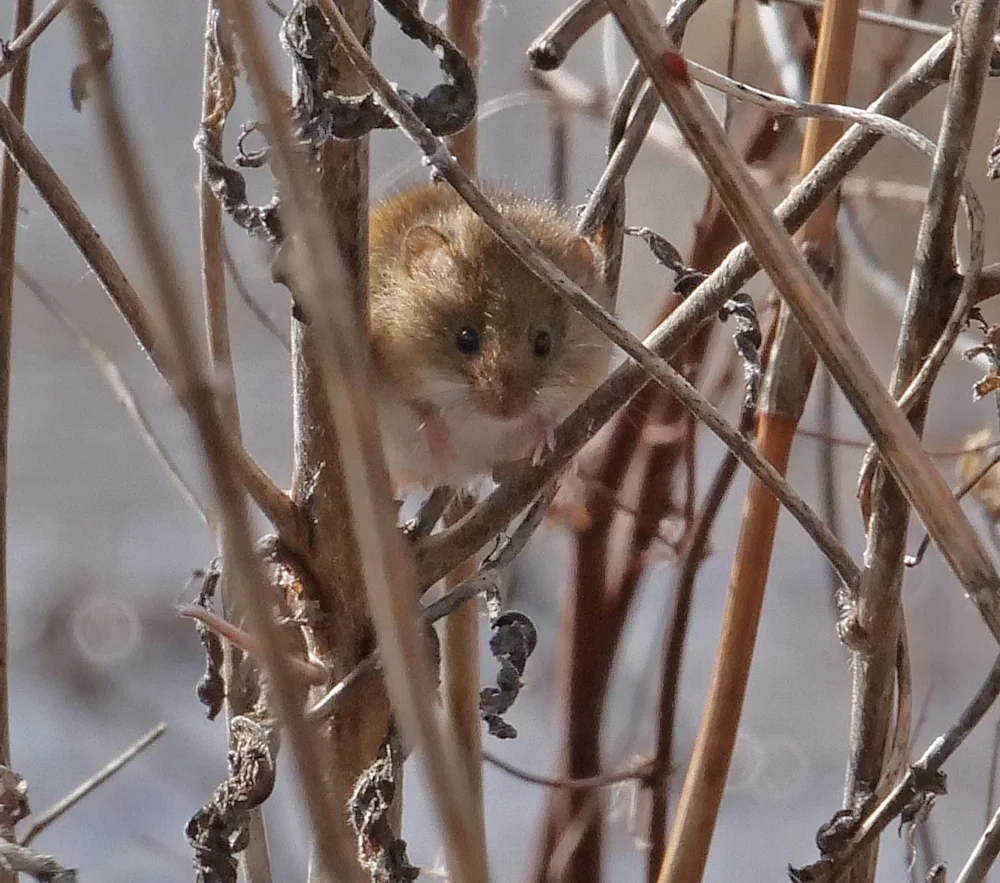
A rare daytime sighting of a Harvest Mouse at Parkgate Marsh/Gayton Sands RSPB in Cheshire (Paul Bateson).
Ingenious nest builders
Harvest Mice are celebrated for their intricate ball-shaped nests, which can be 50-100 cm above ground and woven from grass strips pulled through the teeth. These nests, roughly the size of a tennis ball, are used for breeding, resting and sleeping. They can be looked for in areas of suitable habitat at the end of the breeding season by carefully searching for ones that have fallen to the ground as the summer vegetation dies off.
Females construct multiple nests each season, often secured to stems of cereals, rushes, reeds, brambles and hedgerows. Autumn nests are typically brown, with visible entrances marking them as vacant. Non-breeding or resting nests are smaller.
Breeding occurs from May to October, with most young born in August. Females produce two to three litters per season, each containing between three and eight pups after a gestation of 17-19 days. Newborns are hairless and blind, but by their 11th day, they begin exploring outside the nest.
Weaning occurs at around two weeks, and adults live an average of 18 months. Cold, wet conditions can dramatically affect survival, particularly for young litters.
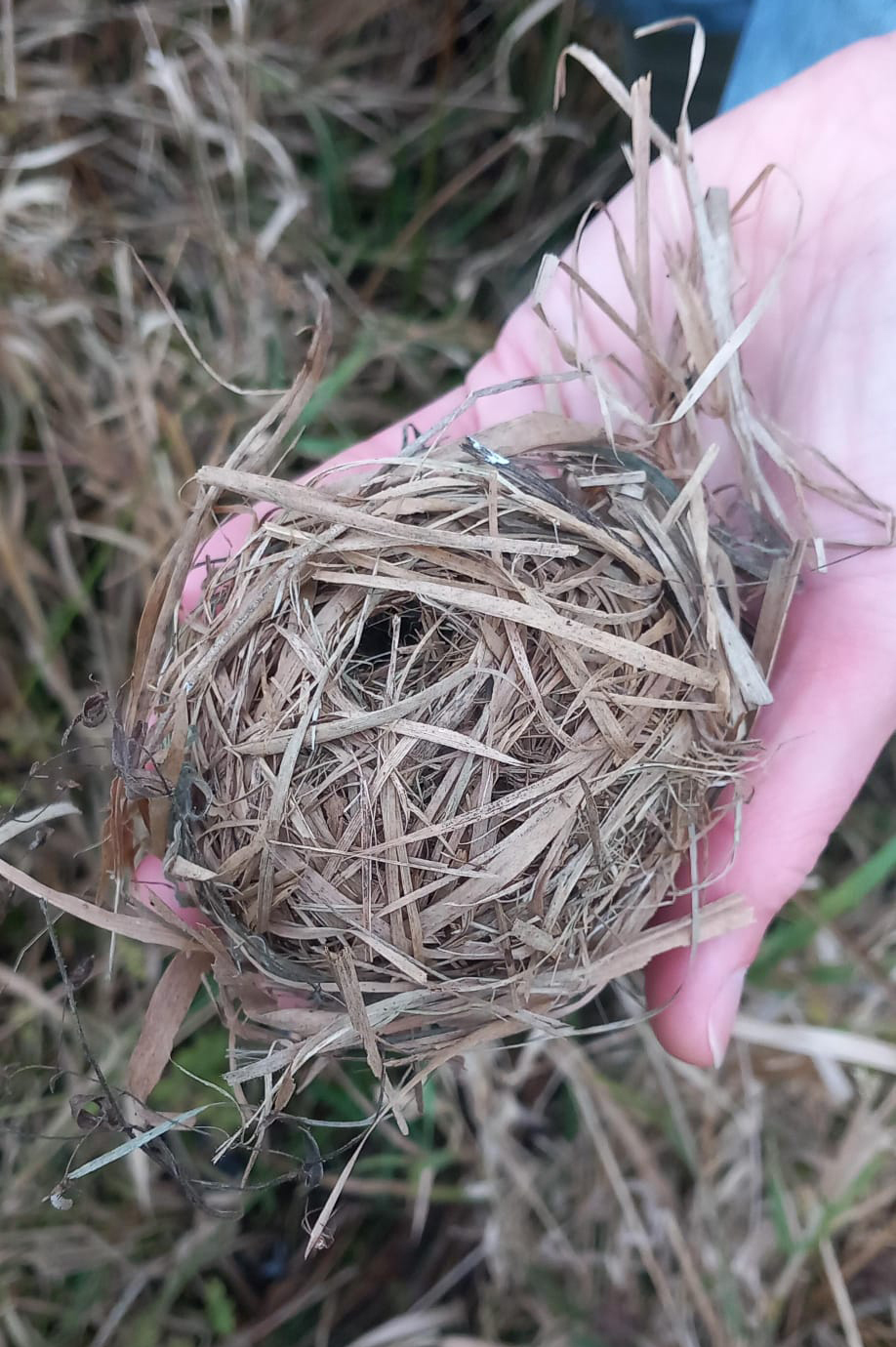
A Harvest Mouse nest is an impressive, intricate piece of work when seen up close (Ed Stubbs).
The clue isn't always in the name
Harvest Mice favour structurally complex vegetation, typically south of Yorkshire, but also in pockets of Wales and Scotland. They are traditionally associated with arable farmland – the English name would suggest as much, too.
However, key habitats increasingly include also reedbeds, saltmarshes, ditches and brambles, as well as the more expected arable field margins and tussocky grasslands – anywhere dense vegetation permits the construction of above-ground nests. Studies indicate that uncultivated land boosts presence, while road verges may provide surprisingly important refuge.
Research by Nottingham University and other studies highlights strong seasonal fluctuations in abundance. Most Harvest Mice are trapped in reedbeds in early autumn, with little movement to other habitats, suggesting population changes rather than habitat shifts. They remain highly active climbers, feeding within the 'stalk zone', and maintain multiple nests throughout the year.
Primarily granivorous, Harvest Mouse feeds on seeds, berries, and cereal grain. Insects supplement its diet, especially in winter when plant food is scarce. The species occasionally leavessickle-shaped marks on cereal heads but rarely damages crops significantly.
Population status and threats
The British population is estimated at approximately 566,000 individuals, though uncertainty is high – post-breeding numbers could reach 1.5 million. Despite this, Harvest Mouse is considered Near Threatened in Britain as agricultural practices – such as combine harvesting, stubble burning and pesticide use – have driven significant declines. Severe winters, starvation and predation also pose risks.
Changes in habitat management, including reduction of hedgerows, field margins and reedbeds, have exacerbated population fragmentation. Connectivity between habitats is crucial to maintain genetic diversity, particularly in smaller or isolated patches.
Harvest Mouse is listed as a Biodiversity Action Plan (BAP) species and as a Species of Principal Importance in England and Wales. Reintroduction efforts, including releases in Ealing (2024) and Cheshire (2002-04), demonstrate attempts to bolster local populations.
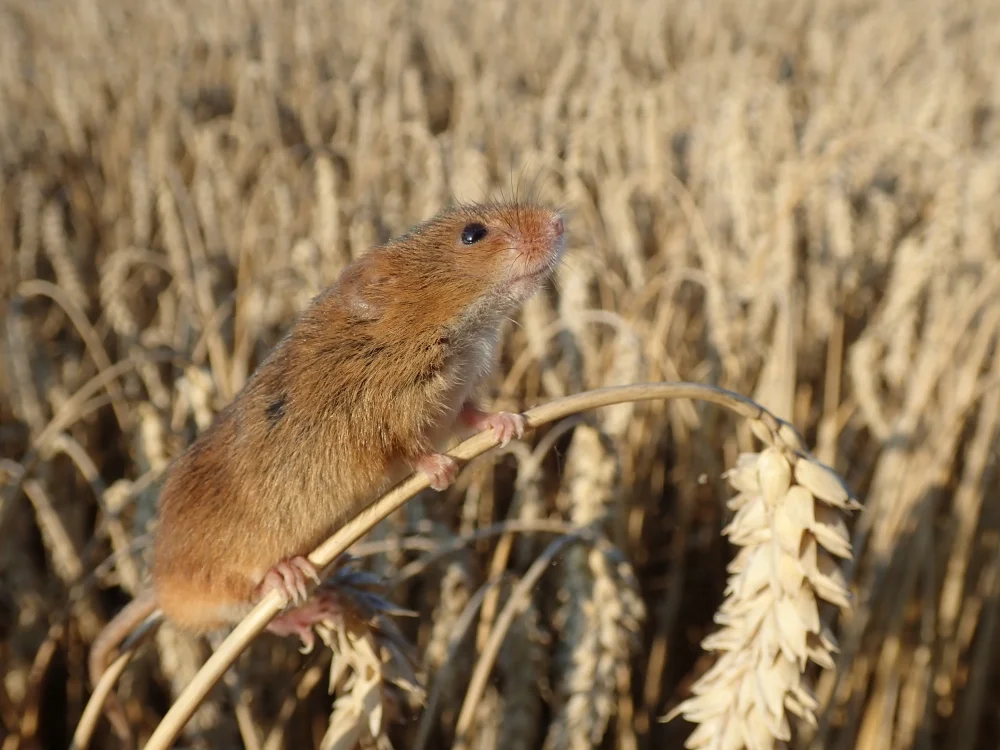
Harvest Mouse is listed as Near Threatened in Britain, with changes to farming practices a significant factor behind the decline (Mark Hows).
Research insights
National monitoring, such as the Mammal Society's Harvest Mouse Survey, relies on volunteer-led nest surveys to map distribution and inform conservation. Research also emphasises the importance of 'Harvest Mouse-friendly' management of road verges and field margins, including phased mowing and habitat connectivity.
Studies using Longworth traps and mouse excluders, including a notable project in Switzerland, have refined methods for capturing this elusive species. Seasonal trapping demonstrates that reedbeds serve as critical refuges, while landscape-scale analyses show that habitat area, hedgerow density and field-margin connectivity influence presence.
Population modelling suggests resilience to environmental fluctuations, though genetic diversity in small, isolated populations remains a concern, as some studies have shown.
Cultural significance
Harvest Mouse may have been present in Britain since the last Ice Age or introduced via transported hay and cereals. The species appears in early Welsh literature, including the Mabinogi, where it is depicted as a crop-consuming creature in mythic tales. Such references highlight both its historical abundance and integration into the cultural landscape.
While Harvest Mouse populations are declining nationally, they remain resilient in suitable habitats. Ongoing habitat protection, connectivity and targeted surveying are key to ensuring that this tiny master of the grasses continues to thrive across the UK.

